
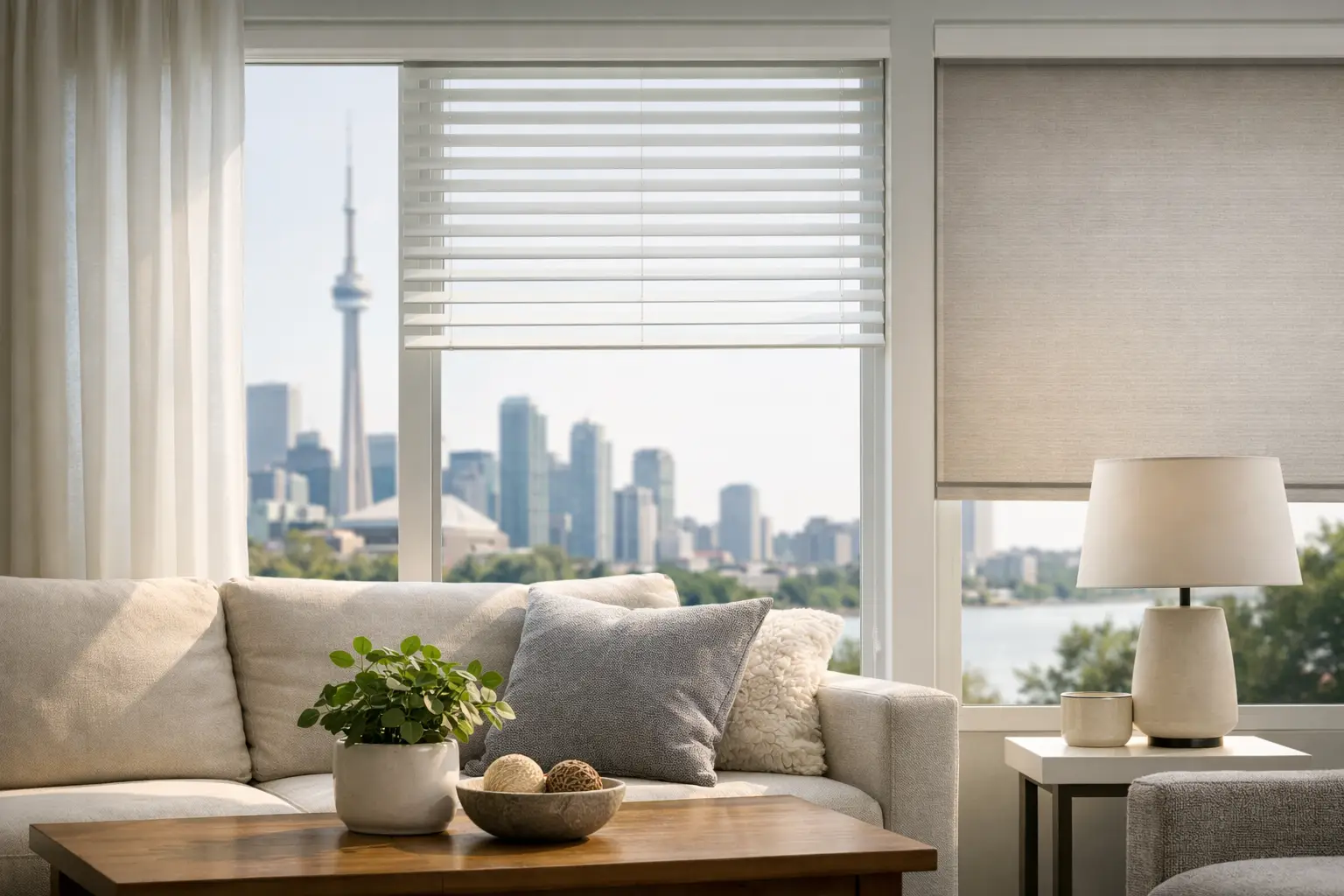
Window Coverings Toronto Homeowners Choose
A glass-heavy condo with west exposure needs a different solution than a family home with oversized bay windows, and that is exactly why shopping for window coverings Toronto homeowners can actually live with starts with function, not fabric swatches. The right treatment has to look polished, but it also has to handle glare, privacy, insulation, child safety, and in many homes, motorization.
In a market where layouts vary from downtown high-rises to larger suburban builds, off-the-shelf options often fall short. Windows are rarely as standard as the box suggests, and the room itself usually asks for more than one thing at once. You may want a cleaner look, softer light, better sleep, lower heat gain, or a treatment that works with a full-home automation system. Good specification comes from balancing those priorities instead of chasing a single trend.
How to choose window coverings in Toronto homes
The first decision is not blinds versus shades. It is what the room needs most. In a bedroom, blackout performance and privacy usually matter more than decorative texture alone. In a living room, you may want filtered daylight during the day without sacrificing the exterior view. In kitchens and bathrooms, moisture resistance and easy cleaning tend to move higher on the list.
Window size also changes the conversation. Large expanses of glass can make narrow slats or busy patterns feel visually cluttered. That is where roller shades, panel systems, or wide-louver shutters often make more sense. Smaller windows, by contrast, can carry more texture, from Roman shades to woven woods, without overwhelming the room.
Then there is the practical side that people often underestimate. Sun exposure can fade floors and furniture. Street-facing rooms may need top-tier privacy. Tall or hard-to-reach windows may benefit from motorization from the start rather than as an afterthought. A well-chosen treatment should solve the daily irritation, not just photograph well.
The most popular window coverings Toronto clients request
Roller shades remain one of the most versatile options because they fit cleanly into modern condos, transitional homes, and new builds. They offer a simple profile, wide fabric range, and strong performance for light filtering or room darkening. For clients who want a minimal look without giving up customization, roller shades are often the starting point.
Zebra shades appeal to homeowners who want flexible light control with a more decorative feel than a standard roller. They alternate sheer and solid bands, allowing you to shift between filtered light and privacy without fully raising the shade. They can work well in living spaces, though they are not always the best answer when full blackout is the goal.
Honeycomb shades stand out when insulation matters. Their cellular construction helps reduce heat transfer, which can be useful in rooms that feel cold in winter or overheated in summer. They also provide a softer, quieter appearance than many hard-window products. The trade-off is style preference – some clients love their clean practicality, while others prefer a more textured or architectural finish.
Roman shades bring softness and a more tailored design presence. They are a strong fit for bedrooms, dining rooms, and spaces where fabric adds warmth. Because they can be customized in a wide range of textiles, they are often selected when the treatment is expected to contribute as much to the room design as to light control.
Shutters remain a premium choice for clients who want a permanent, architectural look. They offer excellent light management, privacy, and durability, especially in spaces where a crisp, finished appearance is part of the design goal. They tend to be a longer-term investment, but they also deliver a distinctive level of structure and resale appeal.
Drapery still has an important place, particularly when layered with shades or blinds. On its own, drapery can soften a room and frame the window beautifully. Paired with a roller shade or honeycomb shade, it creates both function and visual depth. This is often the right direction when a room feels too hard, too echo-prone, or simply unfinished.
When layering makes more sense than choosing one product
Some windows ask for more than a single treatment can provide. A sheer shade may look elegant during the day but fall short on nighttime privacy. A blackout roller may perform well for sleep but feel stark in a formal bedroom. Layering solves that tension.
One of the most common combinations is a functional shade with side panels or full drapery. This allows the shade to handle privacy and light control while the fabric treatment adds softness, scale, and color. In larger rooms, layering can make the architecture feel more intentional. In compact condos, it can also add a finished look without clutter when the palette stays restrained.
Smart home features and motorized window coverings
Motorization is no longer limited to luxury showpieces. It has become a practical upgrade for everyday living, especially in homes with large windows, high ceilings, or multiple treatments that are used throughout the day. If you regularly adjust shades for glare, privacy, or sun protection, automation can simplify the routine.
Systems from leading brands such as Lutron and Somfy allow users to operate shades by remote, wall control, app, or voice integration depending on the setup. Scheduled movement can also help manage morning light, evening privacy, and solar heat gain. For homeowners furnishing a new home or completing a renovation, planning motorization early usually leads to a cleaner result than trying to retrofit later.
That said, not every window needs it. In a guest room or infrequently used area, manual operation may be perfectly appropriate. The smart decision is to automate where convenience, access, or performance truly improves daily use.
Design considerations that matter more than trend reports
Trends can help narrow a direction, but they should not drive the whole purchase. A window treatment is a working part of the home, and it usually stays in place much longer than a paint color or accent pillow. Neutral fabrics, textured weaves, natural-inspired tones, and matte hardware tend to last because they support the room rather than dominate it.
Scale matters just as much as color. A heavy treatment can crowd a small room. A treatment that is too visually slight may disappear on a large wall of glass. Mounting style matters too. Outside mounts can make windows appear larger and improve light blocking, while inside mounts deliver a tighter, more architectural look. Neither is universally better. It depends on the window depth, trim, and desired finish.
Professional measurement also matters more than many buyers expect. Even a premium product can look average if the proportions are off, the stack interferes with the view, or the mounting condition was not considered. This is one reason consultative specification adds value – the details affect both performance and appearance.
What designers, builders, and renovators usually prioritize
Trade professionals often work backward from the project constraints. They need product lines that can meet aesthetic goals, budget targets, lead-time expectations, and installation conditions. Consistency across multiple windows is often just as important as the treatment selected for any one room.
That is where broad assortment becomes useful. A project may call for blackout shades in bedrooms, solar shades in a family room, shutters in a front-facing space, and exterior shading at the patio. Trying to source each from separate vendors can complicate scheduling and finish coordination. A full-service showroom model is better suited to that kind of specification work.
For homeowners, the same logic applies on a smaller scale. The best result usually comes from considering the home as a system rather than buying room by room without a plan.
If you are comparing options, start with the rooms that bother you most and be honest about what is not working now. Maybe the issue is glare on a screen, a lack of nighttime privacy, poor sleep, fading furniture, or simply windows that feel bare in an otherwise finished room. Once the problem is clear, the right product category becomes much easier to identify.
For clients who want guidance across product types, fabric selections, and automation options, a consultation-driven process tends to be the smartest path. A specialist such as Window Fashions Depot can help narrow the field, match function to room use, and quote custom solutions that fit both design goals and day-to-day living. The best window treatment is rarely the one with the most features. It is the one that makes the room work better every single day.