
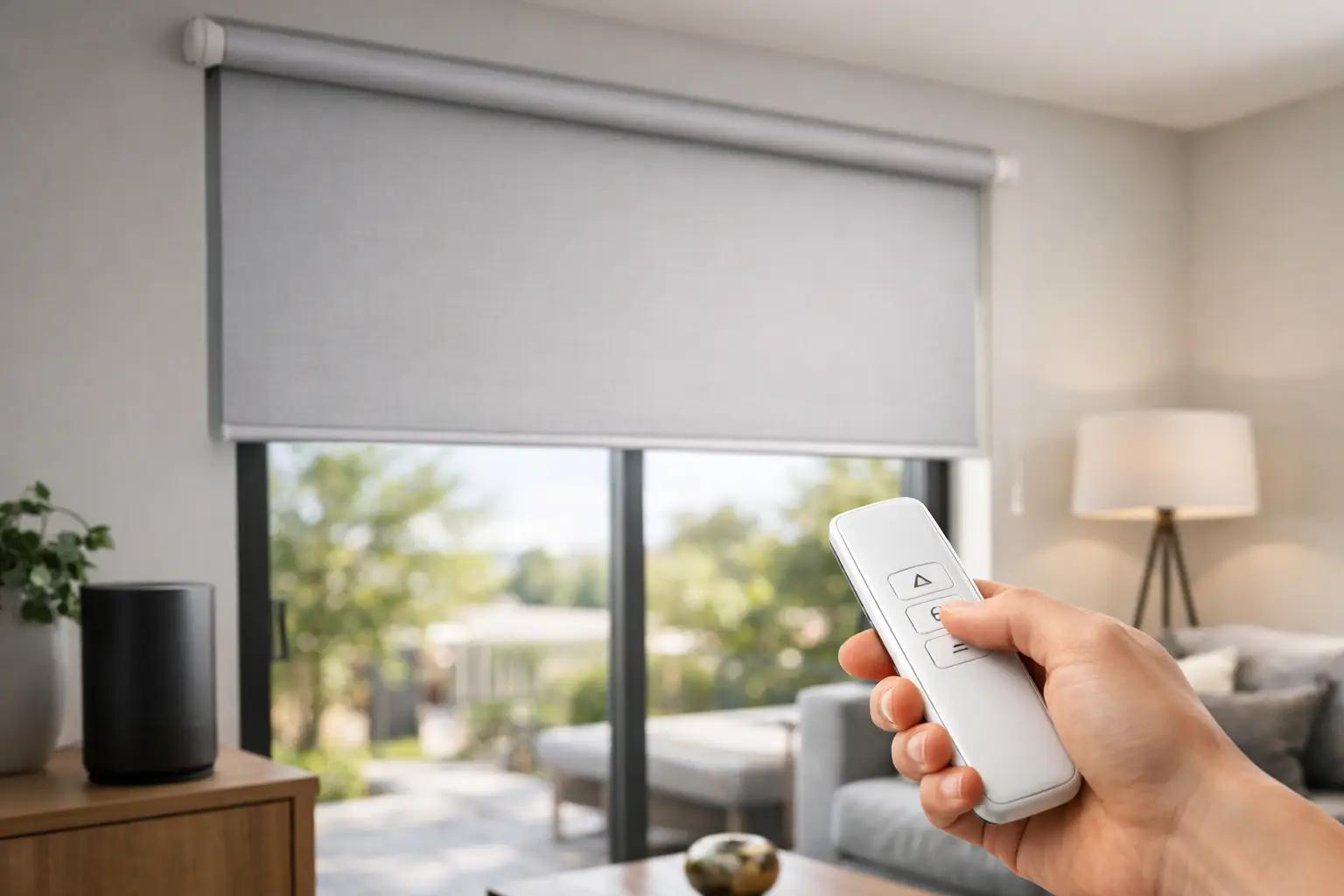
How to Motorize Roller Blinds Right
That tug on a chain every morning gets old fast, especially on tall windows, wide spans, or rooms where you adjust light throughout the day. If you are researching how to motorize roller blinds, the real question is not just whether a motor can be added. It is whether your blinds, window size, power access, and design goals make retrofitting the smart choice, or whether a new custom system will perform better.
For many homeowners, motorization starts as a convenience upgrade and quickly becomes a design and function decision. Clean lines, cordless safety, quieter operation, and app or voice control all sound appealing. But the best result depends on getting the motor type, power source, shade fabric, and control method right from the start.
How to motorize roller blinds without regrets
Roller blinds are among the easiest window treatments to motorize because the mechanism is straightforward. A fabric panel wraps around a tube, and a motor replaces the manual clutch that would normally be operated by a chain or cord. That simplicity helps, but it does not mean every existing blind is an ideal retrofit candidate.
If you already have roller blinds installed, the first step is to determine whether the current tube, brackets, and fabric are compatible with a motorized system. Some manually operated blinds can accept a retrofit motor, especially if the tube diameter matches an available motor and the fabric is still in good condition. Others cannot. A low-cost off-the-shelf blind may not have the structural quality needed for smooth, quiet motorized operation, particularly on wider windows.
This is where many projects split into two paths. One path is a retrofit, where you keep the existing blind and add a motor. The other is a replacement, where you choose a new custom roller shade designed for motorization from the beginning. Retrofitting can save money if the blind is worth keeping. Replacing often gives better long-term performance, better fabric alignment, and a more polished finish.
Start with the blind itself
Before choosing motors or smart-home features, look at the shade as a product. Width matters because larger blinds need more torque. Fabric weight matters because heavier blackout materials place more demand on the motor than light-filtering fabrics. Mounting style matters too, since inside-mounted shades may have tighter bracket clearance than outside-mounted ones.
If your blind already tracks slightly crooked, hesitates during operation, or has a worn clutch, motorizing it may not fix the underlying issue. In that case, a new custom shade is usually the better investment. Design-focused spaces also benefit from a fresh specification because the valance, cassette, hem bar, and fabric can all be selected to suit the room rather than adapted from an older product.
The motor, battery, and wiring choices that matter
The most common way to motorize roller blinds is with a tubular motor installed inside the roller tube. From there, the next decision is power.
Battery-powered motors are popular because they avoid electrical work and keep installation simpler. They are a strong choice for existing homes, condos, and finished spaces where opening walls is not practical. Modern rechargeable battery systems can perform very well, especially on average-sized residential windows. The trade-off is maintenance. Even with good battery life, someone still has to recharge or replace the power source, and usage patterns affect how often that happens.
Hardwired motors are often the premium option for larger projects, new construction, and whole-home automation. They offer consistent power, eliminate charging routines, and are especially useful for oversized shades or rooms with many motorized treatments. The trade-off is planning. Wiring should ideally be considered before drywall and trim are complete. Retrofitting hardwired power after the fact can add cost and complexity.
There is also a middle ground with plug-in power in certain applications, though it is not always the cleanest visual solution. If an outlet is nearby and can be concealed, it may work. If not, the exposed wire can undermine the minimalist appeal that draws many people to motorized roller shades in the first place.
Control options shape the experience
The control method affects daily use just as much as the motor itself. A simple handheld remote works well for many rooms and keeps operation intuitive. Wall switches create a built-in look and are often preferred in primary bedrooms, media rooms, and large living areas. Smart-home integration adds scheduling, scene setting, and voice control, which is especially helpful when shades are part of a broader lighting and climate strategy.
Not everyone needs a fully connected system. If you raise the shades once in the morning and lower them at night, a remote may be enough. If your goal is to reduce glare through the day, protect furnishings from sun exposure, or coordinate multiple shades across an open-concept space, automation features become far more valuable.
DIY retrofit or custom motorized system?
If you search how to motorize roller blinds online, you will find retrofit kits aimed at DIY users. Some are workable for compact windows and basic applications. They can be appealing when budget is the main driver and expectations are modest.
Still, DIY kits come with trade-offs. Tube compatibility can be inconsistent. Motor strength may be limited. Noise levels vary. Integration with major automation platforms is not always smooth, and the finished look can feel more improvised than designed. On a guest room window, that may be acceptable. On a wall of windows in a main living space, it often is not.
Custom motorized roller shades are different because the full system is specified together. The fabric, tube, brackets, motor, controls, and mounting details are selected as one package. That means better fit, cleaner operation, and more dependable performance over time. It also opens access to premium motorization platforms from brands such as Somfy, Lutron, Hunter Douglas, Graber, and others, where reliability and finish quality are part of the value.
Where professional guidance helps most
Motorization sounds simple until details start stacking up. Window depth, header conditions, fabric openness, blackout side channels, battery access, and group control all affect the final result. Designers and renovation professionals usually know this already. Homeowners often discover it mid-project.
A consultation is especially useful when you are motorizing multiple windows, matching existing interiors, or choosing between blackout and light-filtering fabrics. A good specification can prevent common frustrations like weak signal range, hard-to-reach charging ports, light gaps in bedrooms, or shade sizes that push a motor beyond its comfort zone.
Design considerations people often overlook
The appeal of motorized roller blinds is not just convenience. It is also visual control. No chains means a cleaner silhouette. That matters in contemporary interiors, large windows, and rooms where you want the treatment to feel architectural rather than decorative.
Fabric selection still carries most of the design weight. A beautiful motor does not compensate for the wrong fabric color, texture, or opacity. Light-filtering materials soften daylight and maintain a more open feel. Blackout fabrics improve privacy and sleep conditions but create a heavier visual effect. Solar screen fabrics preserve views while cutting glare, though performance depends on openness factor, sun orientation, and what matters more to you – daytime view or daytime privacy.
Valances and cassettes deserve attention too. Some clients want the roller exposed for a minimal look. Others prefer a fascia that conceals the tube and creates a more finished line. Neither is automatically better. It depends on the room, the ceiling height, and whether the shades are meant to disappear or read as a design element.
What to expect on cost and value
Motorizing one roller blind can be relatively straightforward. Motorizing a whole home is a specification exercise. Cost varies based on window count, shade size, motor brand, control system, fabric, and power type. Battery-powered retrofit solutions usually start lower. Premium hardwired systems with advanced automation sit at the higher end.
The value question comes down to use. In a room where the shade rarely moves, motorization may feel optional. In a primary bedroom, family room, stairwell window, or a space with tall or hard-to-reach openings, it quickly feels practical. Cordless operation also adds a safety advantage in homes with children and pets.
For many projects, the smartest move is not motorizing every blind. It is motorizing the windows that benefit most and keeping simpler manual operation where it makes sense. That balanced approach often delivers the best mix of budget control and everyday comfort.
If you are deciding how to motorize roller blinds, think beyond the motor itself. The best result comes from matching the right power source, controls, fabric, and fit to the way the room actually works. When those pieces line up, motorization stops feeling like a gadget and starts feeling like part of the architecture.