
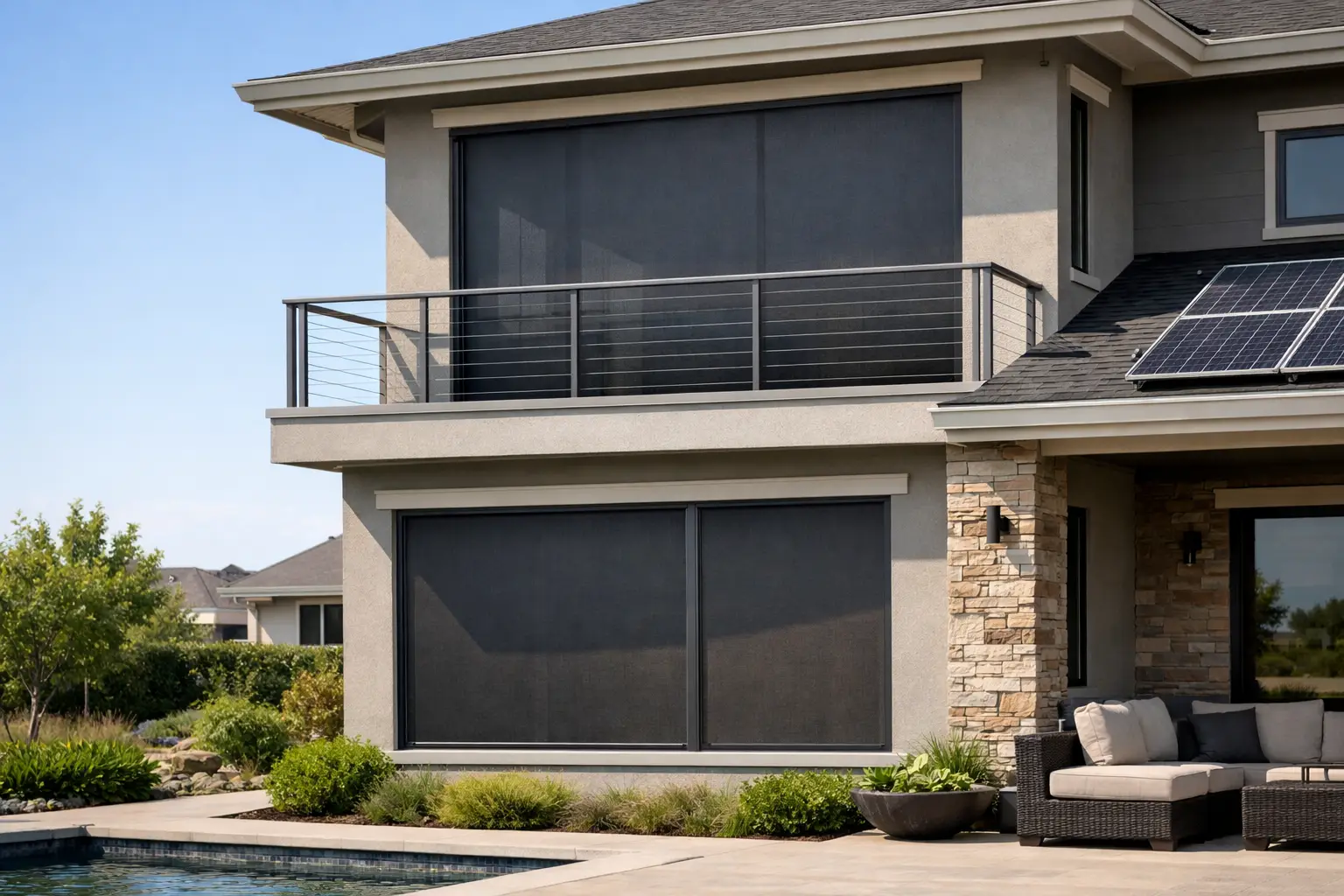
A Guide to Exterior Solar Screens for Homes
A west-facing room can look perfect in the morning and become nearly unusable by late afternoon. The glass is doing its job of bringing in daylight, but it is also admitting glare and solar heat before interior blinds or shades have a chance to respond. This guide to exterior solar screens explains how to stop much of that heat at the window exterior while preserving the view, architectural character, and everyday comfort of your home.
Exterior solar screens are tailored shading systems installed outside a window, door, porch opening, or patio enclosure. Their technical advantage is simple: they intercept sunlight before it passes through the glass. For homeowners planning a renovation, builders specifying high-performance glazing, and designers balancing a clean facade with livable interiors, that placement can make a meaningful difference.
How Exterior Solar Screens Work
Solar screen fabric is a woven mesh, usually made with durable synthetic yarns designed for sun exposure. The weave filters direct sunlight, reduces glare, and cuts a portion of solar heat gain while still allowing air movement and outward visibility. Unlike a solid rolling shutter, it does not fully darken a room. Unlike an interior roller shade, it addresses the sun before the window glass absorbs and radiates heat indoors.
The result depends on the window orientation, glass type, fabric color, openness factor, and how the screen is mounted. A large wall of west-facing glass typically benefits more dramatically than a shaded north-facing bedroom window. In a sunroom or a room with expansive sliding doors, exterior shading may also reduce the load on air conditioning during the hottest part of the day.
These systems are not only for heat control. They can make screens easier to view through, soften contrast on televisions and computer monitors, and add daytime privacy. At night, however, an exterior solar screen is not a privacy shade when interior lights are on. If privacy is a primary requirement, plan an interior treatment as well.
Guide to Exterior Solar Screens: Start With the Opening
The right system starts with how the opening is used. Fixed exterior screens suit windows that need consistent sun protection and no daily adjustment. Retractable or guided screens are better where flexibility matters, such as a patio door, covered terrace, or window with changing seasonal exposure.
For large openings, a cassette and side-guide system provides a more finished, controlled installation than a simple free-hanging shade. The cassette protects the rolled fabric when raised, while side tracks or tension-guided channels help the screen remain stable. This is especially valuable on exposed elevations where wind is a factor.
A professional consultation should assess more than width and height. The mounting surface, trim depth, siding or masonry condition, clearance above the opening, nearby gutters, and the location of electrical access all affect which system can be specified. On a custom home, the screen housing can often be integrated with the facade more discreetly when it is considered early in the design or renovation process.
Fixed, Retractable, and Guided Options
A fixed panel is a practical choice for an upper-floor window that receives relentless sun and does not need an open view at certain times of year. It has fewer operating components and can offer dependable, continuous performance.
A retractable solar screen offers more control. Raise it on cloudy days, in winter, or whenever you want the window completely clear. Lower it when afternoon sun creates heat or glare. For patio doors and wide openings, guided retractable systems are generally the stronger choice because the fabric is supported at both sides rather than relying solely on a bottom bar.
There is a trade-off. More engineered guided systems, larger widths, integrated cassettes, and motorization increase the investment. They also create a more polished exterior solution with better alignment and usability over time. The appropriate choice depends on exposure, architecture, budget, and how often the screen will be operated.
Choose Fabric by Openness, Color, and Performance
Openness factor is one of the most important fabric specifications. It refers to the percentage of open space in the weave. A lower openness fabric, such as 1% or 3%, blocks more light and provides stronger glare control and daytime privacy, but it can make the outward view feel more filtered. A 5% openness fabric is often a versatile residential balance. A 10% openness fabric preserves a brighter view and greater visual connection outdoors but allows more light through.
Do not choose openness by sample alone. Hold the fabric at a window facing the actual exposure if possible. A 5% material may feel ideal on a shaded east-facing window but insufficient for a wall of west-facing glass. Conversely, a very tight fabric can make a dim room feel heavier than intended.
Color matters too. Darker screen fabrics often provide a clearer outward view because they reduce reflected light on the material. Lighter fabrics can coordinate more softly with pale facades and may reflect more solar energy, but the view through the screen can appear less crisp. Exterior color should complement the window frame, trim, cladding, and the visual weight of the building. A well-chosen screen should look intentional when lowered, not like an afterthought attached to the facade.
Some projects also call for insect screening, but solar screen fabric and insect mesh are not interchangeable. A solar fabric is selected primarily for light and heat management, while insect mesh is designed around pest control and airflow. In a porch or outdoor living area, a combined approach may be appropriate, but it requires the right system and fabric specification.
Motorization Makes Solar Control Practical
A screen that is difficult to operate often stays in one position, which limits its value. Motorization makes exterior solar screens especially useful on second-story windows, tall glazing, and groups of openings that should move together. With a wall switch, remote, app, timer, or smart-home integration, you can lower the screens before peak sun hits rather than reacting after the room has already warmed up.
For a connected home, solar sensors and scheduled scenes can automate response to bright conditions. A living room screen might lower in the late afternoon, while bedroom screens can remain raised until privacy or glare is needed. Motorization should be specified with the system rather than treated as a later accessory, since power planning, controls, and integration preferences affect installation.
Manual operation remains a sound option for accessible, smaller windows and projects where simple control is preferred. The key question is not whether motorization is a luxury. It is whether it will help the system be used consistently enough to deliver the comfort you expect.
Measuring and Installation Require More Than Glass Size
Exterior screens are custom products. Ordering from the glass measurement alone can lead to a screen that lacks mounting clearance, interferes with trim, or does not cover the exposure as intended. The required measurement is determined by the installation method: inside a recessed opening, surface-mounted over the frame, or mounted to the wall above and beside the opening.
For a clean, durable result, the installer also needs to verify that the mounting surface can support the cassette and guides. Brick, stucco, aluminum cladding, vinyl siding, and wood trim each require a different approach. Outdoor electrical connections for motorized systems must be planned correctly, particularly where weather protection and concealed wiring are priorities.
In the Greater Toronto Area, exterior products also need to account for seasonal weather, wind exposure, and façade conditions. A properly specified system is not simply a fabric shade placed outdoors. It is a coordinated assembly of fabric, hardware, mounting, and controls designed for the opening.
Pair Exterior Screens With Interior Window Treatments
Exterior solar screens and interior treatments solve different parts of the same problem. The exterior screen handles incoming sun and glare; an interior roller shade, Roman shade, honeycomb shade, drapery, or shutter can provide nighttime privacy, room-darkening, insulation, and a finished decorative layer.
This layered strategy is particularly effective in bedrooms, media rooms, and living areas with large windows. For example, a dark exterior solar fabric may preserve a daytime view and reduce harsh afternoon light, while an interior blackout shade provides the darkness needed for sleep. In a contemporary living room, the exterior system can remain visually quiet while interior woven shades or drapery introduce texture and color.
Window Fashions Depot can help coordinate exterior shading with interior treatments, fabric samples, motorization options, and the architectural demands of the installation. Bring photos, rough opening dimensions, and details about when the sun causes the most discomfort to a consultation. Those practical details usually reveal the best screen system faster than choosing by color alone.
The most successful exterior solar screen is one you notice only when the sun is at its strongest: the room stays brighter without being blinding, cooler without feeling closed off, and connected to the view you chose the window for in the first place.