
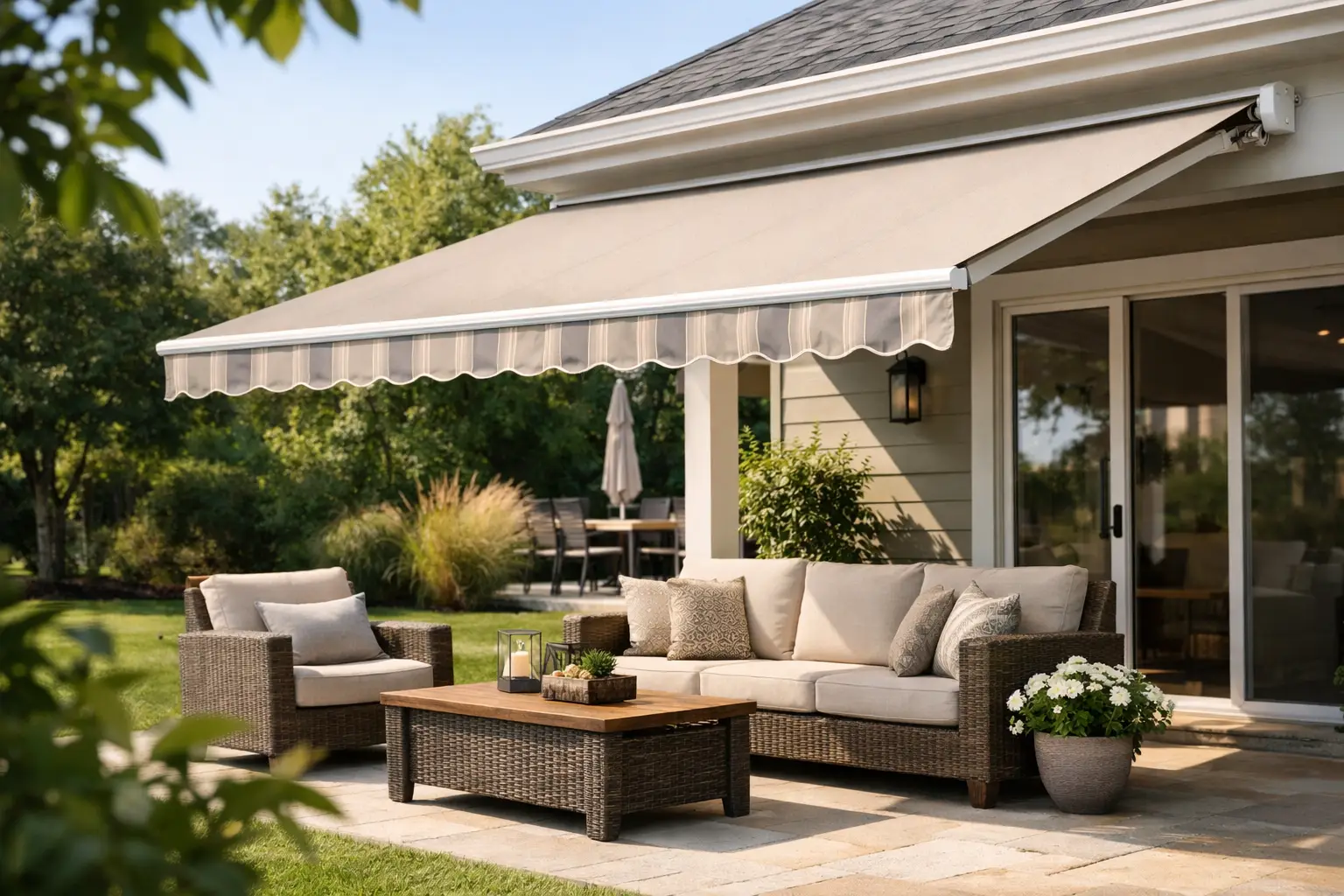
How to Pick Patio Awnings That Fit Your Home
A patio that is too hot to use at lunch or too exposed for an evening gathering is not a patio reaching its potential. Learning how to pick patio awnings starts with the way you actually live outdoors: where the sun lands, how much coverage you need, and whether the awning should disappear when the weather changes.
A well-specified awning does more than create shade. It can reduce glare inside adjoining rooms, protect patio furniture from UV exposure, make outdoor dining more comfortable, and give a home a more finished architectural look. The right choice is rarely the biggest model or the lowest quote. It is the one that suits the structure, climate, design direction, and daily use of the space.
Start With the Patio, Not the Awning
Before comparing fabrics, cassette styles, or motorized controls, assess the patio itself. Measure the width of the wall where the awning will mount and the distance you want shade to reach from the house. Width determines how much of the entertaining area can be covered, while projection determines whether the shade will truly reach the table, lounge seating, or doorway at the times you use them.
Sun direction matters just as much as size. A west-facing patio often needs strong late-day protection, while a south-facing space may benefit from broad overhead coverage for much of the day. East-facing patios can be comfortable in the afternoon but bright during breakfast hours. A professional site review can account for roof overhangs, nearby buildings, trees, glass doors, and the changing angle of the sun through the seasons.
Also consider mounting conditions early. Retractable patio awnings require a structurally sound mounting surface, whether that is wall framing, masonry, or a properly engineered support system. Siding, brick veneer, rooflines, gutters, and exterior light fixtures can all affect placement. This is one reason custom consultation is more valuable than selecting a standard-size awning based on patio dimensions alone.
Choose the Right Type of Patio Awning
The main decision is whether you want fixed coverage, flexible coverage, or a freestanding solution. Each has a different visual and functional role.
Retractable awnings
Retractable awnings are a strong choice for homeowners who want shade on demand without permanently darkening the patio or interior rooms. When extended, they create generous overhead protection. When retracted, they preserve open sky, natural daylight, and a cleaner facade.
They are especially practical over patios beside kitchens, family rooms, and large sliding doors. Motorized retractable models make frequent use more likely, since the awning can be extended or retracted with a wall switch, remote, smartphone control, or smart-home system. A wind sensor can also retract the awning automatically when conditions become unsafe.
Fixed awnings
A fixed awning remains in place year-round and can offer a more permanent architectural statement. It may be appropriate over a doorway, a smaller seating area, or a location where consistent protection is the priority. Fixed systems can be useful, but they need careful design consideration because they affect light levels and exterior appearance every day, not only when deployed.
Freestanding and pergola-style systems
If your seating area sits away from the house, a wall-mounted awning may not provide enough usable coverage. Freestanding awnings and pergola-style shade structures can define a poolside lounge, detached deck, or garden dining space. These systems often require more planning, foundations, and structural coordination, but they provide flexibility where a house wall cannot.
How to Pick Patio Awnings by Coverage and Projection
A common mistake is specifying an awning based only on its width. A wide awning with a shallow projection may shade the wall but leave the outdoor table in full sun. Conversely, an overly deep projection can feel heavy on a compact patio and may be limited by the mounting height.
Think about the actual footprint of your furniture. For a dining area, shade should extend beyond the table edge so guests are covered as the sun shifts. For a lounge area, the desired coverage may be broader but less deep. The awning pitch, or downward angle, also affects how effectively it blocks lower afternoon sun and how water sheds from the fabric.
For larger patios, multiple coordinated awnings can sometimes provide better coverage and a more balanced facade than one oversized unit. The best configuration depends on wall dimensions, door placement, structural attachment points, and the rhythm of the home’s exterior.
Select Fabric for Performance and Design
Awning fabric is a design feature, but it is also a performance material. Premium solution-dyed acrylic fabrics are widely chosen for their color retention, UV resistance, breathability, and ability to handle outdoor conditions. They are available in solids, texture-inspired neutrals, stripes, and contemporary patterns, allowing the awning to complement trim, brick, siding, stone, or outdoor upholstery.
Color selection comes with trade-offs. Darker fabrics can reduce glare more effectively and often create a richer view outward from inside the home. Lighter fabrics reflect more heat and can make the patio feel brighter. A medium-tone neutral is often a practical middle ground for contemporary homes, especially when the goal is shade without making the space feel enclosed.
Look beyond the swatch. Ask to see the fabric in natural light, ideally against the exterior materials of the home. Fabric may appear warmer, cooler, darker, or more saturated outdoors than it does in a showroom. Also consider maintenance expectations. Outdoor fabrics are designed for durability, but regular brushing, occasional cleaning, and proper retraction during severe weather will help preserve their appearance.
Do Not Treat Wind Resistance as an Afterthought
An awning is a sun-control system, not a permanent roof. Even high-quality retractable models have wind limits, and those limits vary by size, installation, projection, exposure, and product design. A patio on an open lot, upper-floor terrace, lakeside property, or windy urban corridor needs a more cautious specification than a sheltered backyard.
Wind sensors are a worthwhile option for motorized systems, particularly for homeowners who may leave the awning extended while away or forget to retract it before changing weather. The sensor is a safeguard, not a reason to leave an awning open during storms. Heavy rain, snow, ice, and strong gusts can damage fabric, arms, hardware, and mounting points.
For locations that need dependable outdoor use beyond calm, sunny days, consider whether a louvered pergola, fixed structure, or exterior screen system may better match the conditions. The best solution depends on the level of weather protection you expect.
Decide Which Operating Features Are Worth It
Manual awnings can work well for smaller, lightly used spaces, but motorization changes the everyday experience. If extending the awning takes one button press, it is more likely to become part of your routine before breakfast, outdoor work, or dinner on the patio.
Motorized awnings can be integrated with automation platforms from established manufacturers such as Somfy and Lutron, depending on the system and project requirements. Timers, sun sensors, and scene-based controls can make outdoor shading feel intentional rather than reactive. For example, an awning might extend during the hottest part of the afternoon, then retract later to restore daylight through adjacent windows.
A full cassette is another feature worth considering. When retracted, it encloses and protects the fabric and moving components from dirt, moisture, and UV exposure. It also creates a cleaner profile on the home. Semi-cassette and open-roll designs may be appropriate when budget, mounting clearance, or a more traditional look takes priority.
Match the Awning to the Home’s Architecture
Patio awnings should look designed with the home, not added as an afterthought. Clean-lined cassette awnings often suit modern and transitional exteriors. Classic stripes can complement traditional homes, while soft neutral fabrics work well with contemporary stone, stucco, and wood details.
Hardware color is part of the composition. Frame finishes commonly include white, cream, bronze, charcoal, and black, but the right choice depends on window frames, soffits, trim, and exterior lighting. A frame that visually disappears into the facade can make the fabric feel lighter. A contrasting dark frame can make the awning a deliberate architectural accent.
For designers and builders, consistency across exterior shading, insect screens, interior window treatments, and automation controls can create a more considered whole-home result. This is especially helpful in projects with large expanses of glass where interior comfort and patio usability are connected.
Plan for Custom Measurement and Installation
Custom patio awnings are not a one-size-fits-all purchase. Accurate measurements, mounting review, fabric selection, projection planning, and product-specific installation requirements all influence performance. A lower upfront price can become expensive if the awning is undersized, poorly attached, incompatible with the wall construction, or difficult to operate.
At Window Fashions Depot, a consultation can help narrow the choices from a broad range of exterior shading systems to the model, fabric, controls, and installation approach that fit the project. Bring patio measurements, exterior photos, inspiration images, and a clear sense of when the space feels least usable. Those details turn an attractive awning into a shade solution you will genuinely use.