
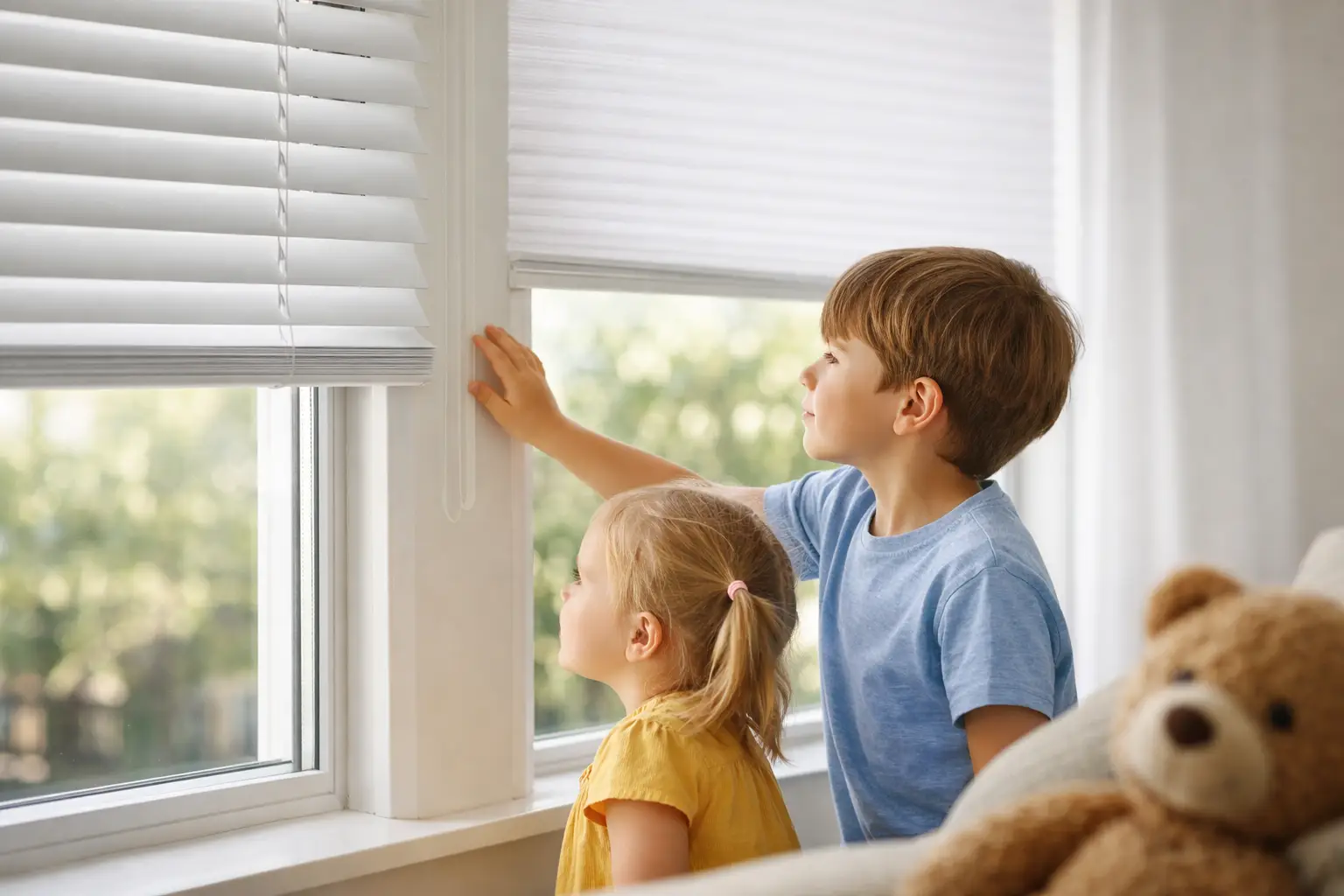
Which Blinds Are Safest for Homes With Children?
A window treatment can be beautifully coordinated with the room and still introduce an avoidable risk. For families asking which blinds are safest, the first priority is simple: choose a design without accessible lift cords or cord loops. The right selection also needs to suit the window’s size, the room’s use, light-control needs, and the way your household actually lives.
Cordless shades and blinds are often the strongest starting point, but they are not the only option. Motorization, wand-operated systems, interior shutters, and carefully specified vertical treatments can all help create a safer, more functional home without giving up a tailored look.
Which Blinds Are Safest? Start With Cord-Free Operation
The safest window coverings for homes with young children or pets are generally those with no reachable operating cords. Traditional free-hanging cords and continuous cord loops can create entanglement hazards, particularly near cribs, beds, play areas, and low furniture that a child can climb.
A cordless system removes the visible lift cord. Depending on the product, the shade may raise and lower with a gentle hand pull, a bottom rail, a handle, or a concealed internal mechanism. Cordless roller shades, honeycomb shades, Roman shades, and many horizontal blind options offer a clean profile that works well in contemporary, transitional, and classic interiors.
Motorized window coverings are another excellent safety-forward choice. A motor raises, lowers, tilts, or adjusts the product by remote, wall control, app, or compatible smart-home system. Because there is no hanging operating cord, motorization is especially useful for tall windows, hard-to-reach glazing, large banks of windows, and bedrooms where daily privacy and blackout control matter.
For many homeowners, cordless operation is the practical value choice, while motorization offers the most convenience and control. The better fit depends on the number of windows, desired controls, fabric or blind style, power access, and budget.
Safe Options Beyond Standard Blinds
“Blinds” is often used as a catch-all term, but the safest solution may be a shade, shutter, or drapery system rather than a conventional slatted blind. A consultation should begin with how the window needs to perform, then narrow the product category.
Cordless Cellular and Honeycomb Shades
Cordless cellular shades are a popular choice for nurseries, children’s rooms, and family spaces. Their structured fabric cells help insulate the window, which can improve comfort during hot summers and cold winters. They are available in light-filtering and room-darkening fabrics, with top-down/bottom-up configurations for privacy while preserving daylight.
The trade-off is that large or unusually wide shades may feel heavier to operate manually. For oversized windows, motorization can provide easier daily use and help keep the shade aligned over time.
Roller Shades With Motorized or Cordless Controls
Roller shades have a minimal, architectural appearance and are available in solar, light-filtering, and blackout fabrics. A cordless spring-assist or pull-control roller shade can work well in many rooms, while a motorized roller shade is ideal where precision, frequent adjustments, or integration with automated lighting scenes is desired.
Fabric selection matters. A solar shade can reduce glare and soften strong daylight while retaining some outward visibility during the day. It will not offer the nighttime privacy of an opaque or blackout fabric. Bedrooms and street-facing rooms often benefit from a more private fabric or a layered treatment.
Interior Shutters
Interior shutters do not rely on lift cords. Their panels open on hinges, and louvers are typically adjusted with a tilt bar or hidden tilt system. This makes shutters a durable, low-maintenance option for family rooms, kitchens, bedrooms, and homes where a permanent, furniture-like finish is desired.
Shutters are particularly effective when homeowners want adjustable light control without raising the entire treatment. They are also well suited to specialty window shapes. Their limitation is less about safety and more about aesthetic and budget considerations: shutters create a defined architectural statement and are a higher-investment custom product than many shades.
Vertical Blinds and Panel Track Systems
For patio doors and wide sliding glass doors, vertical systems can be a sensible alternative to long horizontal blind cords. Wand-controlled vertical blinds allow users to traverse and rotate vanes with a rigid wand rather than a cord. Panel track systems provide a more contemporary option, using wide fabric panels that slide smoothly across the opening.
Motorized vertical and panel systems are also available for large doors. The key is to avoid models that rely on exposed cords and to specify controls that remain easy for adults to reach without creating an accessible loop.
Safer Operation Is Only One Part of the Decision
A cordless product is not automatically the right product for every location. Safety also depends on installation quality, window access, and the surrounding furniture plan. A treatment that is difficult to operate may be left raised, pulled unevenly, or handled improperly, so choosing the correct size, lift method, and mounting style matters.
Custom measurement helps ensure the product fits the opening and performs as designed. An inside mount can create a clean, integrated appearance when the window has enough depth and is reasonably square. An outside mount may provide better light coverage, conceal an uneven opening, or clear window hardware. For a child’s room, the selected mount should also keep the operating area intuitive and avoid interference with window locks or emergency egress.
Window placement deserves attention as well. Keep cribs, beds, chairs, benches, and storage units away from windows. Children can use furniture to reach a sill or operating mechanism, even when a treatment has no exposed cord. Any window that can open should have appropriate safety measures based on the home’s layout and the child’s age, especially on upper floors.
What About Existing Corded Blinds?
Replacing older corded blinds is the clearest long-term solution when young children or pets are present. If replacement cannot happen immediately, keep cords fully out of reach and follow the product manufacturer’s safety instructions for securing them. Do not place a crib, bed, or climbable furniture beneath or beside a corded treatment.
Retrofitting may be possible for certain products, but it is not a universal fix. Older systems can have multiple cords, worn components, or configurations that do not convert neatly to a safer operating method. A professional review can help determine whether an existing covering can be modified responsibly or should be replaced.
How to Specify a Safe Custom Window Treatment
When comparing products, start with the room rather than a color sample. A nursery may need cordless blackout shades with a soft, quiet lift system. A sun-filled living room may call for motorized solar shades that manage glare throughout the day. A patio door may work best with wand-controlled vertical blinds or motorized panels. The safer choice is the one that eliminates accessible cords while still being easy enough to use consistently.
Ask about the operating method, available child-safe configurations, mounting requirements, fabric opacity, and maintenance. For motorized products, discuss battery-powered versus hardwired options, control types, and whether the system can be grouped by room or scheduled around daily routines. Premium systems from manufacturers such as Hunter Douglas, Graber, Lutron, and Somfy offer different approaches to automation, fabric selection, and control integration.
Design still belongs in the conversation. Safety-first window treatments can be warm woven textures, tailored Roman shades, crisp roller fabrics, architectural shutters, or layered treatments that complement the room. The best custom specification does not treat safety as an add-on. It builds it into the lift system, window plan, and finished design from the beginning.
For a home with children or pets, prioritize cord-free operation first, then choose the light control, privacy level, material, and visual finish that make the treatment a pleasure to use every day.
0 comments