
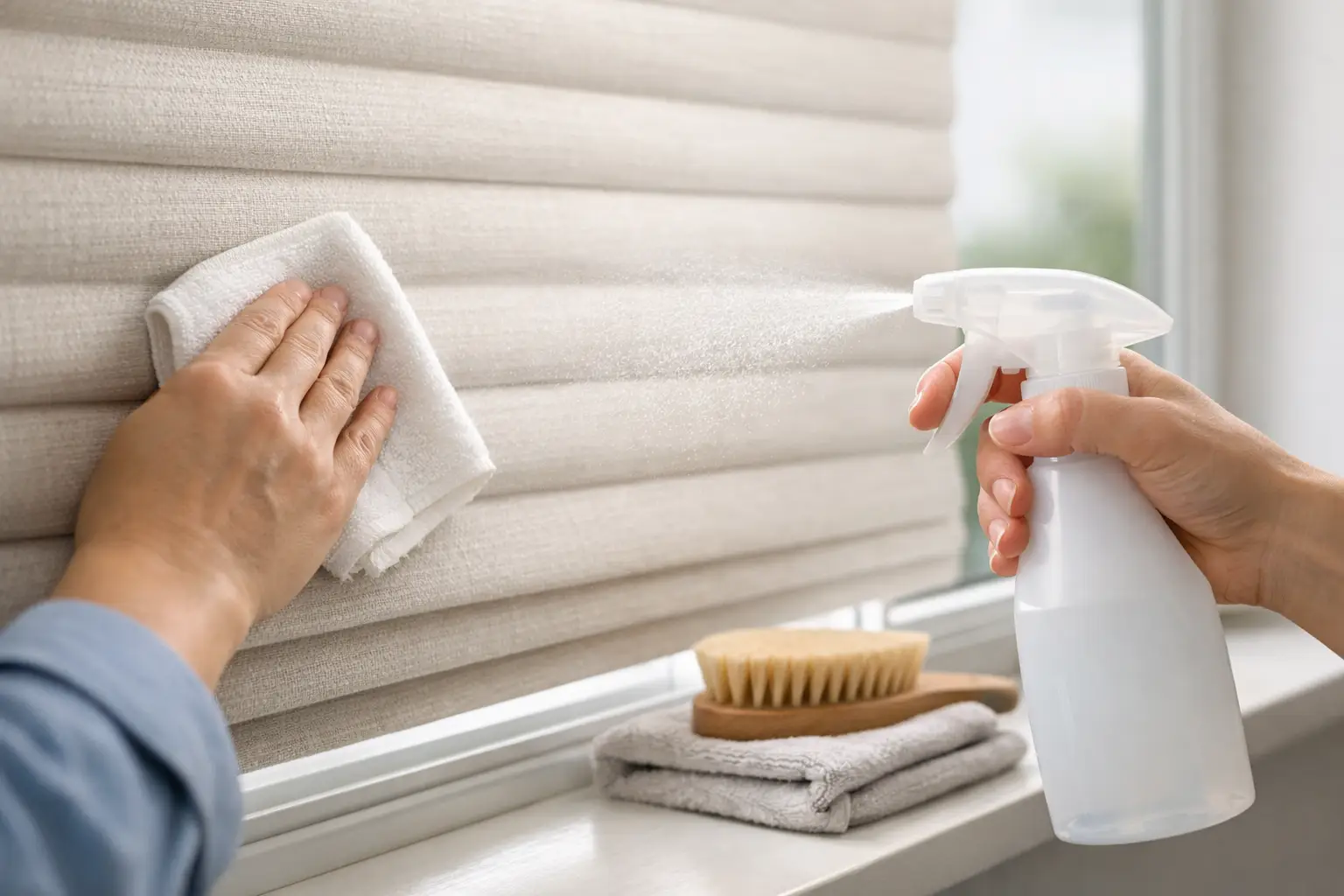
How to Clean Fabric Shades Without Damage
Fabric shades collect more than everyday dust. Kitchen residue, pet hair, fingerprints near lift cords, and airborne particles can gradually dull the texture and color that made you choose them in the first place. Knowing how to clean fabric shades correctly helps preserve their appearance without causing water rings, fraying, discoloration, or damage to delicate operating systems.
The right cleaning method depends on the shade’s construction and fabric treatment. A room-darkening roller shade, a tailored Roman shade, a cellular shade with fabric pockets, and a woven wood shade may all look soft and textile-based, but they do not respond to cleaning in the same way. Start gently, work in small areas, and defer to the manufacturer’s care instructions whenever they are available.
Start With the Shade Type and Care Label
Before bringing out water or a cleaning product, identify what is on the window. Many contemporary roller and solar shades use performance fabrics designed to resist dust and fading. These are often suitable for careful spot cleaning. Roman shades may feature face fabrics, liners, decorative trims, and stitched folds that require more caution. Cellular shades have internal pleats that can trap dust, while woven wood shades combine natural fibers with textile components that should not be saturated.
Look for a care tag, product card, or original specification sheet. Custom shades from leading manufacturers may have fabric-specific instructions, especially where blackout backings, specialty coatings, or motorized systems are involved. If the shade is no longer documented, test every cleaning method in a hidden lower corner first.
A useful rule is simple: dry cleaning methods are appropriate for routine upkeep. Moisture should be reserved for small, isolated marks and only when the material can tolerate it.
How to Clean Fabric Shades for Routine Dust
Dusting regularly is the safest and most effective way to keep fabric window coverings looking fresh. It prevents particles from settling into the weave and reduces the need for more aggressive stain treatment later.
Lower the shade fully so the fabric is flat and supported. Use a vacuum with a clean upholstery brush attachment on the lowest suction setting. Move slowly from top to bottom, following the direction of the weave or pleats. Do not press the brush into the fabric, pull on the edges, or vacuum close to exposed cords, seams, or decorative banding.
For a lightweight roller shade or delicate Roman shade, a feather duster is usually less effective than a microfiber cloth because it tends to move dust around rather than lift it away. Instead, use a clean, dry microfiber cloth and wipe with light, even strokes. Avoid rubbing in circles, particularly on textured fabrics, because friction can create visible changes in the pile or finish.
Cellular shades need a slightly different approach. Fully extend the shade, then use a hair dryer on the cool setting to blow dust from each cell. Hold the dryer several inches away and direct the airflow along the pleats. A vacuum may work on certain cellular fabrics, but excess suction can distort the pleated structure, so use it only if the manufacturer permits it.
For woven wood shades with fabric liners, dust the natural woven surface gently with a soft brush or vacuum brush attachment. Clean the liner separately with a microfiber cloth or low-suction vacuum. Natural reeds, grasses, and bamboo should never be soaked.
Spot Clean Stains With the Least Moisture Possible
A small stain does not automatically mean the entire shade needs to be washed. In fact, broad wet cleaning is one of the most common causes of permanent marks on fabric shades. The goal is to lift the stain while keeping the surrounding material as dry as possible.
First, blot fresh spills immediately with a white, lint-free cloth. Do not scrub. Scrubbing pushes the spill deeper into the fibers and can leave a lighter or darker patch once the material dries. If a substance has dried, use a soft brush to loosen surface residue before trying any damp treatment.
For many washable synthetic fabrics, prepare a mild solution of lukewarm water and a very small amount of clear, gentle dish soap. Dampen a white cloth, then wring it out thoroughly. The cloth should feel barely moist, not wet. Blot the stain from the outer edge toward the center, using a clean section of cloth as color or residue transfers.
Follow with another cloth lightly dampened with plain water to remove soap residue. Then blot dry with a clean towel. Leave the shade fully lowered until it is completely dry. Raising a damp shade can trap moisture in folds or cause fabric layers to adhere.
Never use bleach, strong degreasers, alcohol, abrasive powders, or stain-removal wipes unless the manufacturer specifically approves them. These products may strip protective coatings, damage blackout backings, alter the fabric’s color, or leave a visible ring. Steam cleaning is also risky because heat and moisture can affect adhesives, pleat memory, and laminated materials.
When a Stain Needs Professional Help
Oil, ink, mildew, smoke residue, and large water stains are difficult to remove evenly at home. The same is true for upholstery-grade Roman shade fabrics, silk blends, linen, velvet, and shades with decorative trim. In these cases, a professional window treatment cleaner or dry cleaner with experience in custom shades is the better choice.
Be careful when removing shades for off-site cleaning. Roman shades, layered shades, and motorized treatments can have specialized brackets, cords, and alignment requirements. Photograph the installation before removal and keep all hardware together. If you are uncertain, request service rather than forcing a mechanism or disassembling components that are meant to remain in place.
Treat Common Problem Areas Carefully
The bottom rail, pull handle, and edge nearest a door often show soil before the main fabric does. These high-touch areas can usually be wiped with a barely damp microfiber cloth, provided the material is suitable for moisture. Dry immediately after cleaning.
For pet hair, use a clean lint roller with low-tack adhesive or a rubber pet-hair brush before vacuuming. Test the lint roller first, particularly on open weaves or loosely textured fabrics. Aggressive adhesive can pull fibers from delicate materials.
Kitchen shades may develop a light film that dusting alone will not remove. This is where careful spot cleaning may help, but it depends on the fabric. A washable roller shade can often tolerate a lightly damp cloth with mild soap. A fabric Roman shade close to a range may need professional care instead. For future protection, consider a wipeable performance fabric, solar shade, or another treatment suited to the demands of the room.
Mildew is different from ordinary staining. If you see dark spotting or smell persistent mustiness, address the source of humidity first. Bathrooms, basements, and poorly ventilated rooms may need improved exhaust, dehumidification, or a more moisture-resistant window covering. Cleaning the visible stain without correcting the moisture problem rarely produces a lasting result.
Protect Motorized and Layered Shade Systems
Motorized shades require the same gentle fabric care, with a few additional precautions. Turn off power at the charger or battery source before cleaning around the headrail, and do not spray liquid near motors, wiring, battery wands, charging ports, or control components. Apply any moisture to a cloth, never directly to the shade.
For dual roller systems, clean one shade at a time with the other fully raised or lowered out of the way. This prevents fabric-to-fabric transfer and gives you clear access to the operating mechanism. With layered or zebra shades, dust both the sheer and opaque bands in the fully closed position, then adjust the alignment and repeat if necessary.
If the shade stops operating smoothly after cleaning, do not tug on it. Fabric that has shifted on a roller, cords that have become tangled, or moisture near a mechanism can all affect performance. A qualified service technician can assess the system without risking further damage.
Build Cleaning Into Your Window Treatment Routine
Most fabric shades benefit from light dusting every month or two, with more frequent attention in homes with pets, open windows, heavy cooking, or active family spaces. Spot clean only as needed. A full wash is rarely appropriate for custom fabric window treatments unless the manufacturer explicitly states otherwise.
It also helps to keep shades clear of indoor plants that are regularly misted, candles that produce soot, and kitchen splatter zones. When planning a renovation or selecting new treatments, consider how the room is used alongside color, privacy, and light control. A pale linen-look Roman shade can be a beautiful choice in a formal living room, while a moisture-resistant roller shade may be the more practical fit for a busy kitchen or bath.
For homeowners and design professionals choosing custom coverings, Window Fashions Depot can help match the fabric, operating system, and cleaning expectations to each room. The best shade is not only tailored to the window. It is tailored to the way the space is actually lived in.
0 comments