
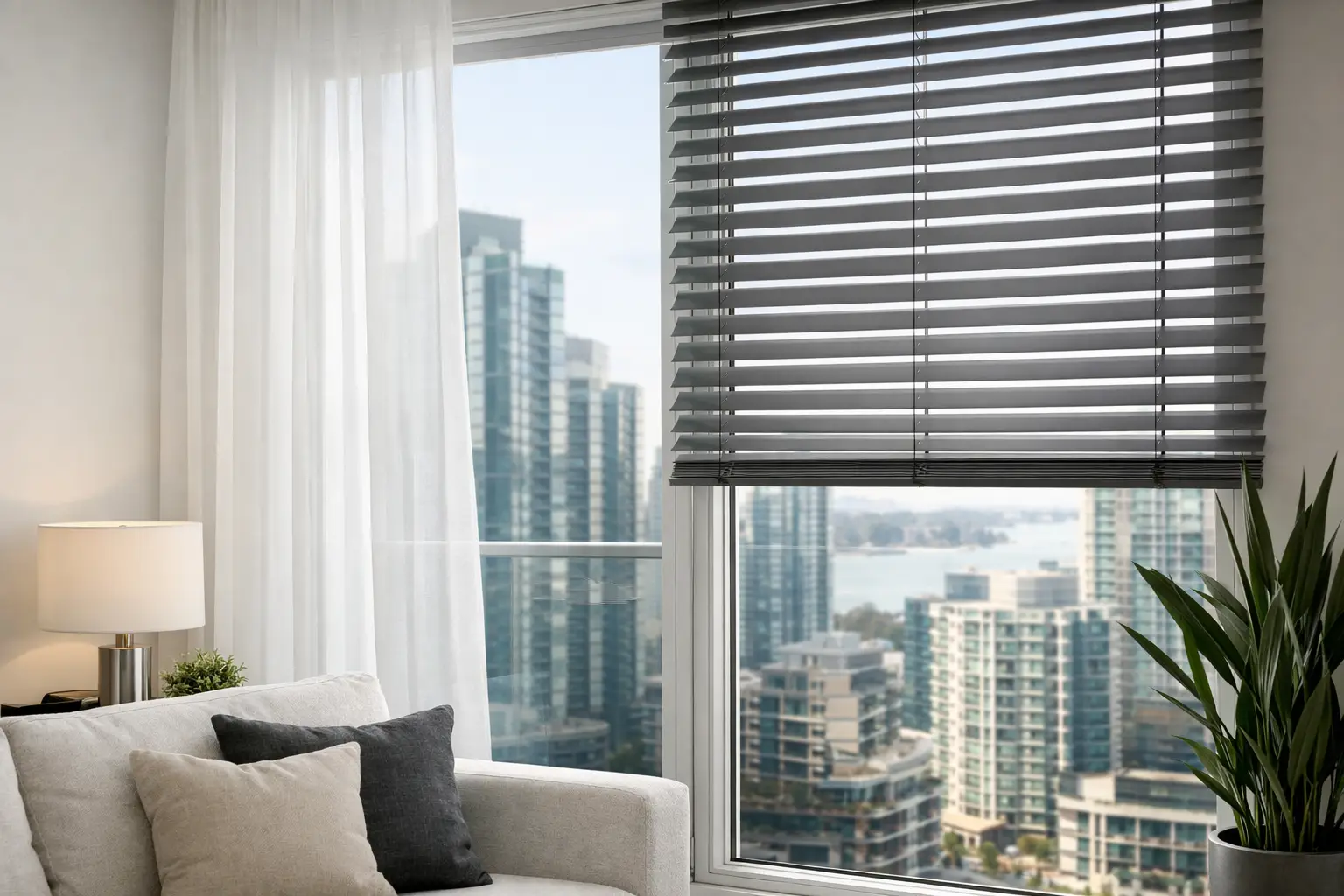
Guide to Condo Window Coverings
Floor-to-ceiling glass can make a condo feel open and impressive at noon, then overly exposed by sunset. That is why a smart guide to condo window coverings starts with real-life function, not just fabric swatches. In a condo, your window treatments need to manage privacy, glare, heat, building rules, and design continuity, often all at once.
What makes condo window coverings different
Condo windows create a different set of priorities than detached homes. You may be dealing with large expanses of glass, narrow wall space, neighboring towers, shared exterior appearance requirements, and sunlight that changes dramatically throughout the day. A treatment that looks great in a sample book may feel too bulky, too casual, or too weak once it is installed across an eight-foot glazing wall.
This is also where custom specification matters. Standard off-the-shelf blinds can work in some rooms, but condos often benefit from a more tailored approach. Precise measurements, stack size, control placement, and fabric openness can make the difference between a polished finish and a frustrating daily compromise.
Start with the four condo essentials
Before choosing a style, define what the room needs most. In most condo projects, the decision comes down to privacy, light control, energy performance, and appearance.
Privacy is usually the first concern, especially in urban buildings with direct sightlines into living rooms and bedrooms. Light control is close behind. Morning sun may be welcome in a kitchen but harsh in a home office or media area. Energy performance matters more than many condo owners expect, especially with large west-facing windows that trap heat. Then there is appearance. Because condos are compact and highly visible, window coverings become a major design element rather than a background detail.
When one room needs all four, layered solutions often perform better than a single product.
A room-by-room guide to condo window coverings
Living room
The living room usually needs the most balance. You want daylight and views, but you also want privacy in the evening and reduced glare on screens. Roller shades are a strong fit here because they keep lines clean and work well with modern condo architecture. A light-filtering fabric can soften daylight without making the space feel closed in.
If the unit faces nearby buildings, dual shades or layered drapery can add flexibility. One layer can filter light during the day, while another gives stronger privacy at night. For a more textured or softer design direction, Roman shades or drapery panels can bring warmth that many glass-heavy condos need.
Bedroom
Bedrooms are usually less about view and more about control. If early light disrupts sleep, blackout shades or blackout-lined Roman shades are worth serious consideration. Side channels or tighter fit options may also help reduce light gaps, though complete darkness depends on the window condition and mounting style.
Cellular shades are especially effective in bedrooms because they combine privacy, softness, and insulation. In colder climates or in units with drafty glass, that added thermal performance can improve comfort noticeably.
Home office
Condo offices often sit in multi-use spaces, so visual simplicity matters. Solar shades are popular here because they reduce glare while preserving a connection to the outside. The key detail is openness factor. A more open fabric keeps the view, but it also allows more light and visibility. A tighter weave increases privacy and cuts glare more aggressively, but you lose more of the outside view.
That trade-off is worth discussing before ordering. Many buyers choose based on appearance alone, then realize their afternoon video calls still suffer from harsh backlighting.
Kitchen and dining area
These areas usually benefit from low-maintenance materials and streamlined profiles. Roller shades, faux wood blinds, or simple sheer shades can work well depending on the amount of moisture, grease, and direct sun. In a condo, the kitchen is often part of the main living zone, so matching or coordinating adjacent rooms usually creates a cleaner result than treating every window differently.
Best product options for condo living
Roller shades
Roller shades are one of the most versatile choices for condos. They suit contemporary interiors, fit well in tight spaces, and are available in light-filtering, room-darkening, blackout, and solar fabrics. They also pair well with motorization, which is especially useful on tall or hard-to-reach windows.
Cellular shades
Cellular shades are a practical choice when energy efficiency and softness matter. Their honeycomb construction helps insulate against heat and cold, and they work well in bedrooms or spaces where comfort is a priority.
Sheer and solar shades
These are ideal when maintaining daylight and view is part of the goal. Solar shades are especially useful for bright condo exposures, but fabric selection matters. Too sheer, and privacy becomes limited. Too dense, and the room can feel flatter and darker than expected.
Roman shades and drapery
These are often chosen for design impact. They add texture, fullness, and a more finished residential feel, which can help offset the sleek, hard surfaces common in condo interiors. The trade-off is that they usually require more stack space and visual volume than shades or blinds.
Shutters and blinds
Shutters are less common in many condos, largely because of space constraints, window depth, and building style, though they can work in selected rooms. Horizontal blinds remain useful in some applications, but many condo owners prefer shades for a cleaner silhouette and quieter operation.
Don’t ignore condo board requirements
One of the biggest mistakes in condo projects is selecting a product based only on the interior look. Some buildings require a uniform exterior-facing appearance, especially for window backing or liner color. Others restrict drilling, attachment methods, or visible components.
This is not a small detail. A beautiful treatment that does not comply with building requirements can delay installation or force a change order. If you are furnishing a new unit or renovating a resale condo, confirm these guidelines early.
Motorization makes more sense in condos than many people think
Motorized shades are not just a luxury add-on. In condos with large windows, multiple openings in one room, or tall glazing walls, automation can make daily use much easier. It also helps keep the look consistent because every shade can be aligned with a button press or scheduled to adjust automatically.
This is especially valuable in sun-exposed units. Shades can be programmed to lower during the hottest part of the day, improving comfort and protecting furnishings. Systems from brands like Lutron and Somfy are often considered for this level of integration, particularly when clients want smart-home control or cleaner cordless operation.
Why custom fit matters
A condo does not leave much room for visual error. Even small gaps, uneven hems, or poorly chosen mount types become obvious quickly, especially against large windows and minimalist interiors. Custom window coverings help address these details with the right widths, fabric selections, hardware finishes, and control options.
This is also where professional guidance can save time. The right product on paper can still be the wrong product for the actual window depth, mullion layout, or daily use pattern. At Window Fashions Depot, that consultative step is often where the best solution becomes clear, especially when a room needs more than one function from the same treatment.
How to narrow your selection without getting overwhelmed
If you are comparing too many options, start with the room that has the hardest problem to solve. It may be a bedroom that needs blackout, a living room with direct tower-to-tower visibility, or a west-facing office with heavy glare. Solve that room first, then carry the design language through the rest of the condo.
It also helps to decide what matters more in each space: view or privacy, softness or clean lines, budget control or premium automation. There is rarely one perfect answer for every room. The best condo projects usually combine consistency with purpose, using different products where function truly changes.
The right finish should feel easy every day
The best condo window coverings are not just attractive at installation. They should make the space more comfortable in the morning, more private at night, and easier to live in year-round. If a treatment solves glare but makes the room feel boxed in, or looks elegant but is annoying to operate, it is not the right fit. Start with how the space works, then choose the product that supports it with precision.