
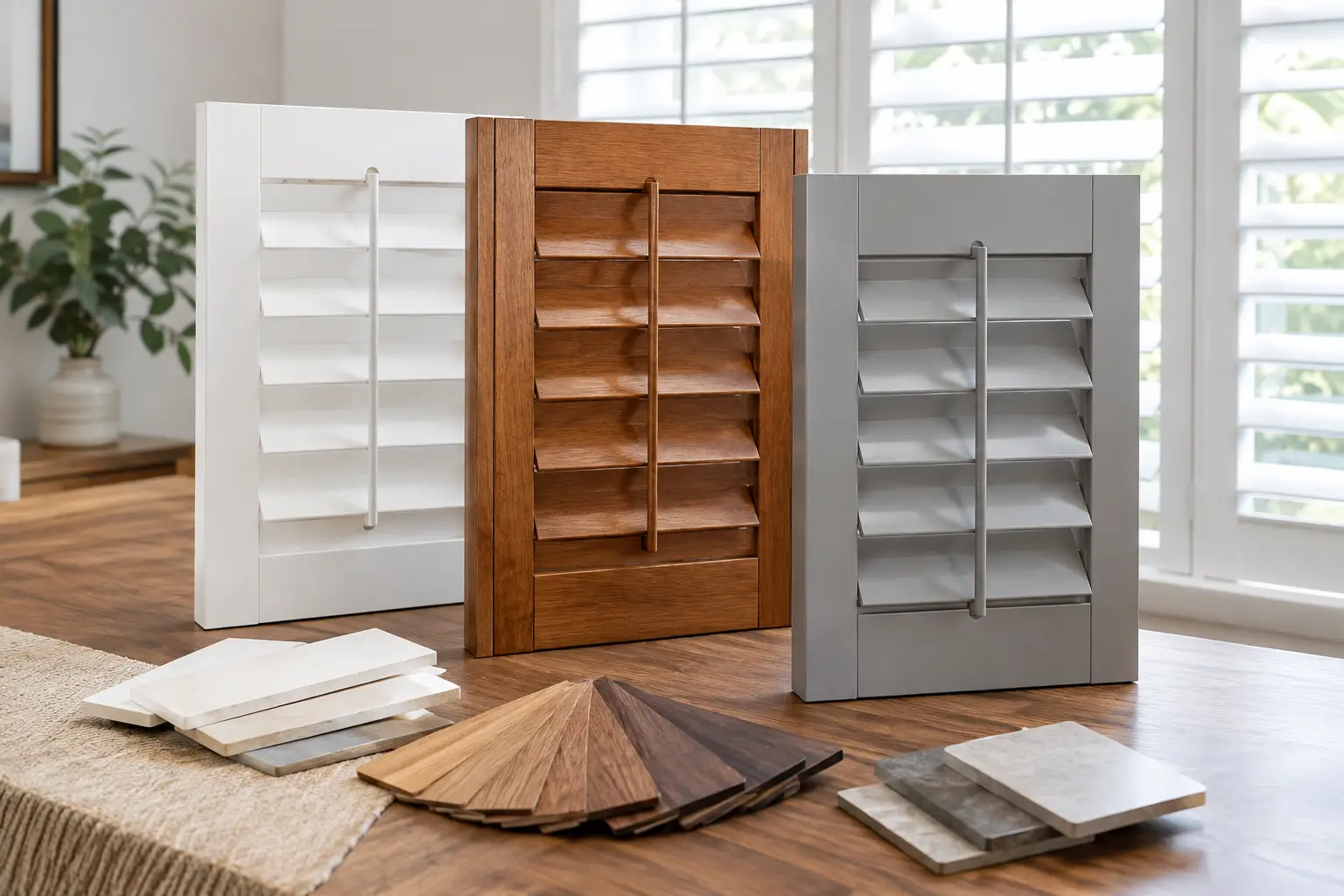
Your Guide to Plantation Shutter Materials
A shutter can look nearly identical in a showroom and perform very differently after a few seasons on a sunny, humid, or heavily used window. This guide to plantation shutter materials helps you look past the louver profile and paint color to choose a shutter that suits the room, the window, and the way you live.
Plantation shutters are a long-term, custom-fit window treatment. Their material affects more than price. It influences panel weight, resistance to moisture, how wide each panel can be, the finish options available, and how the shutter will age. The best choice is rarely one material for every opening. Many well-planned homes use wood in formal living spaces and moisture-resistant alternatives in baths, laundry rooms, or sun-facing kitchens.
Why Shutter Material Deserves Careful Attention
Every plantation shutter is made of a frame, louvers, tilt mechanism, and panels that swing open for access to the glass. Those components must remain straight, aligned, and easy to operate over years of daily use. Material selection determines how well they handle that work.
Wood offers natural character and crisp detailing. Composite products can offer a painted, furniture-like appearance with more tolerance for humidity. Vinyl and polymer shutters prioritize moisture resistance and practical maintenance. None is automatically superior. A large bay window, a compact condo bathroom, and a traditional dining room ask different things from a shutter.
Before comparing samples, consider the room conditions. Does the window receive direct afternoon sun? Is it near a shower, sink, or stovetop? Will the shutters be opened every day for a patio door or simply adjusted for light? These details often point to the right material faster than selecting by color alone.
Guide to Plantation Shutter Materials: The Main Options
Hardwood shutters
Hardwood remains the reference point for clients who want a refined, architectural shutter with the warmth and detail of real wood. It is often chosen for living rooms, bedrooms, dining rooms, home offices, and heritage-style interiors. Because quality hardwood is strong relative to its weight, it can support larger panels and wider openings without feeling overly bulky.
The finish possibilities are a major advantage. Painted wood shutters can be tailored to trim colors, while stained finishes let the grain remain visible. Custom color matching may also be available depending on the collection. For designers, wood provides the most flexibility when shutters need to coordinate with millwork, flooring, cabinetry, or a layered drapery treatment.
The trade-off is environmental sensitivity. Wood can expand, contract, or warp when repeatedly exposed to high humidity or significant temperature changes. Premium construction and proper finishing reduce that risk, but wood is not usually the first recommendation for a shower enclosure, an unventilated bathroom, or a damp laundry space. It also carries a higher price point than many alternative materials.
Composite and engineered wood shutters
Composite shutters are made from engineered wood-based materials, often finished with a durable painted coating. Product construction varies by manufacturer, so “composite” should not be treated as a single specification. Some products use a solid engineered core, while others combine wood components with synthetic finishes or reinforcement.
For many homes, composite strikes a practical middle ground. It can deliver the substantial feel and clean painted appearance people associate with traditional shutters, often at a more accessible price than premium hardwood. It is particularly effective in bedrooms, family rooms, kitchens with normal ventilation, and contemporary spaces where an opaque white or neutral finish is the goal.
Compared with natural wood, composite shutters are generally less affected by routine changes in indoor humidity. They are still not identical to waterproof polymer products, however. Ask where the manufacturer permits installation, especially for windows directly beside a tub or shower. A material that performs beautifully in a kitchen may not be approved for a continuously damp bathroom.
Weight is another consideration. Composite panels can be heavier than hardwood, particularly on oversized windows. A professional consultation helps determine practical panel widths, required framing, and whether a multi-panel configuration will provide a better result than one large shutter panel.
Vinyl and polymer shutters
Vinyl and polymer shutters are built for rooms where moisture, splashes, and easy cleaning are priorities. They are popular choices for bathrooms, laundry rooms, pool-adjacent spaces, and kitchens that see frequent activity. Their non-porous surfaces are easy to wipe down, and they do not absorb moisture in the same way as wood-based materials.
Not all vinyl shutters are constructed alike. Some have hollow louvers or frames, while more substantial polymer designs may use internal reinforcement to improve rigidity. This is worth examining in person. A quality material should feel stable when louvers are adjusted and should keep its shape across the width of the panel.
Most vinyl and polymer shutters come in a focused palette of painted-look whites and neutrals. That limitation can be an advantage in clean, modern interiors, but it offers less decorative flexibility than stained or custom-painted hardwood. Large dark shutters can also absorb heat at sunny windows, so color and sun exposure should be reviewed together.
For moisture-prone rooms, polymer is often the safest material decision. For a formal room with large windows and detailed millwork, its appearance or panel scale may not be the best fit. The right answer depends on whether the room’s primary demand is design expression or environmental durability.
Match the Material to the Room, Not Just the Budget
A material’s installed cost matters, but a lower initial price is not a value if the shutter is poorly suited to the environment. A bathroom shutter that resists humidity can avoid premature replacement. Conversely, choosing a basic polymer shutter for a prominent front living room may save money while sacrificing the custom architectural look that made shutters appealing in the first place.
In living rooms and dining rooms, hardwood is often worth considering when the shutters are a central design feature. Wood’s lighter weight can be useful for taller panels, and the finish can be coordinated with existing architectural details. Composite is a strong choice for painted interiors where consistency, durability, and budget need to work together.
For kitchens, assess ventilation and proximity to water. A well-ventilated kitchen may accommodate composite or wood, especially on a window away from the sink. For a window that regularly sees steam, splatter, and direct water exposure, a polymer material provides more peace of mind. In bathrooms and laundry rooms, moisture-resistant polymer is usually the more dependable specification.
Bedrooms can accommodate nearly any shutter material, making this a design-led decision. Consider room-darkening needs, louver size, and privacy. Larger louvers provide a more open view when tilted, while smaller louvers create a more traditional look and can offer finer light adjustment. Material does not replace good shutter design – it supports it.
Details That Affect Performance as Much as Material
The material label is only one part of the specification. Construction quality, frame depth, hinge finish, louver connection, and panel layout all affect how a shutter looks and operates. A custom-measured shutter should be designed around window depth, handles, trim, and access to the glass.
Ask how the shutter will be configured on wide windows. Multiple panels may be required to maintain proper alignment and manageable weight. For patio doors or frequently opened windows, panel clearance and hinge placement deserve special attention. If you need a clear view during the day, discuss whether panels can fold back cleanly against the wall or whether a different window treatment may better suit the opening.
Color is also more technical than it appears. Bright whites can vary from cool to warm, and a shutter that looks perfect beside one paint swatch may clash with existing trim. Bring cabinet samples, flooring samples, or paint information to the selection appointment whenever possible. For a polished result, compare the shutter finish under the actual lighting conditions of the room.
Caring for Each Shutter Material
Routine care is simple: dust louvers regularly with a soft cloth or brush attachment, then wipe as needed with a lightly damp cloth. Avoid abrasive scrubbers, harsh solvents, and excessive water around hinges and hardware. Always follow the manufacturer’s care guidance, particularly for painted wood and specialty finishes.
Wood shutters benefit from stable indoor conditions and should be protected from standing water. Composite shutters need similar sensible care, even though they are more forgiving of everyday humidity. Vinyl and polymer shutters are the easiest option for wet-area cleaning, but they still deserve gentle treatment to preserve their finish and moving components.
The most successful plantation shutter projects begin with a real sample, accurate measurements, and an honest conversation about each room. Window Fashions Depot can help you compare material construction, finishes, panel layouts, and light-control options before the shutters are custom specified. Choose the material that will still look intentional and operate smoothly long after the renovation dust has settled.
0 comments