
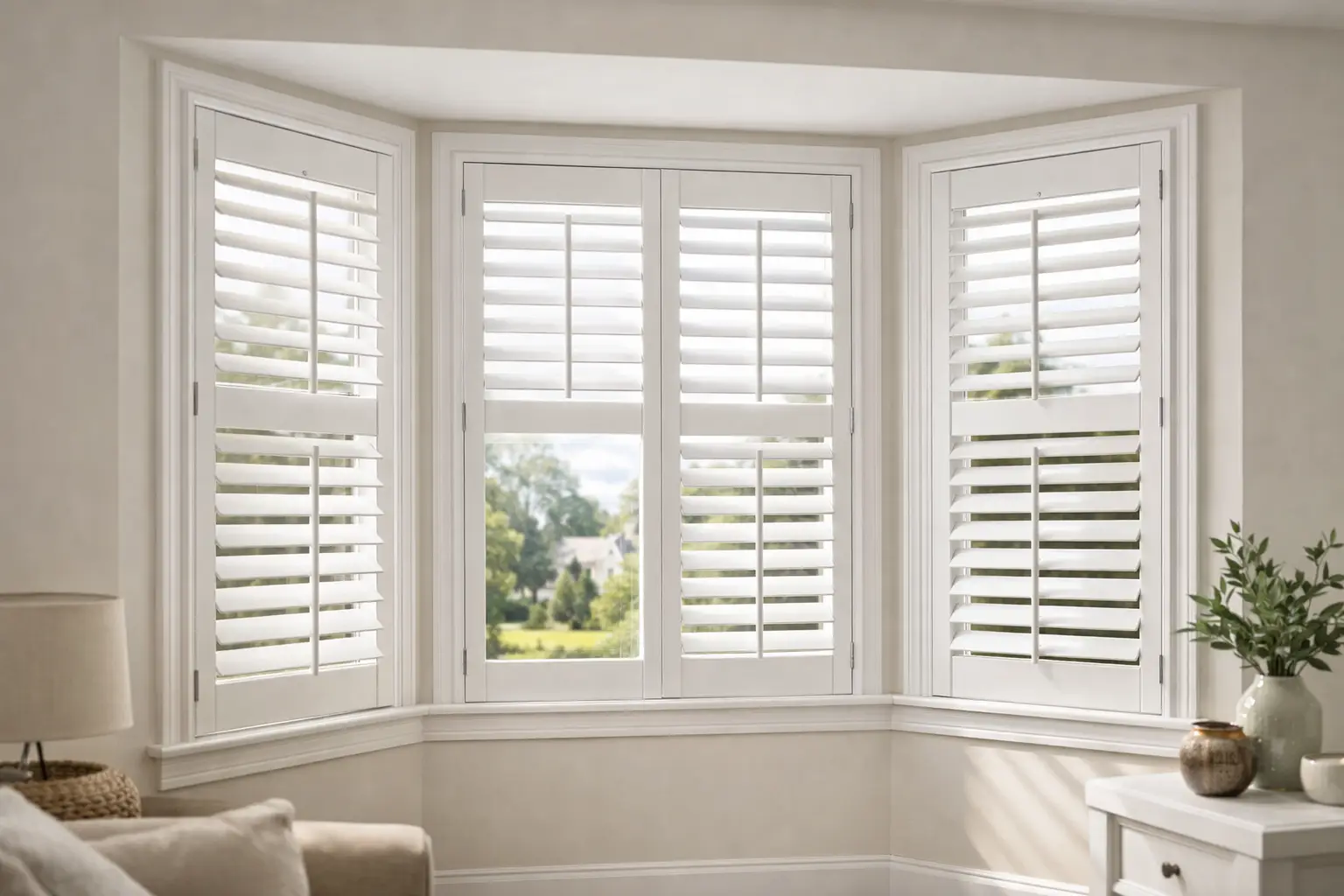
Plantation Shutters for Bay Windows
Bay windows can make a room feel larger, brighter, and more architectural – but they are rarely the easiest windows to cover well. Standard blinds can look pieced together, and drapery can hide the very feature you want to show off. That is why plantation shutters for bay windows remain one of the most requested custom solutions. They follow the angles, preserve the structure of the bay, and give you precise control over light and privacy without making the space feel overworked.
For homeowners and designers, the appeal is not just visual. A properly designed shutter installation can make an awkward projection feel intentional. It can also solve practical issues like street-facing exposure, glare in a sitting area, or heat gain in a sunny front room. The key is getting the fit, panel layout, and material right for the specific bay.
Why plantation shutters work so well in bay windows
Bay windows have presence. They project outward, draw in light from multiple directions, and often become a focal point in living rooms, dining rooms, and primary bedrooms. Plantation shutters support that architecture instead of competing with it.
Because shutters are built to the shape and dimensions of each section, they create a cleaner finish than many off-the-shelf treatments. The frames and louvers give definition to each window panel while still reading as one cohesive design. That balance matters in bays, where too much visual interruption can make the area look busy.
They also offer a strong mix of privacy and flexibility. You can tilt louvers to soften glare while keeping daylight, or close panels more fully when the room needs privacy. In a bay that faces a street or neighboring property, that adjustability is often more useful than a single open-or-closed treatment.
Plantation shutters for bay windows: what makes the fit different
Not every bay window is built the same way. Some have three sections with a wide center window and angled side units. Others are more curved, include five panels, or extend down to a window seat. The angle between sections, depth of the casing, and protruding hardware all affect the shutter design.
This is where custom specification matters. With plantation shutters for bay windows, measurements are not just about width and height. The installer or designer also needs to account for how each panel will open, whether the louvers will clear handles or cranks, and how the frames will meet at each angle. A bay may look symmetrical from across the room but vary enough from panel to panel to require slight adjustments.
Inside mount is often the preferred look because it keeps the shutters integrated with the trim and lets the bay shape remain visible. But that depends on having enough mounting depth. If the window is shallow, has protruding locks, or lacks consistent casing, an outside mount may be the better choice. It is less about rules and more about what gives the cleanest operation and appearance.
Panel configuration matters more than most people expect
One of the biggest design decisions is how the shutter panels will be divided. Larger panes may work well with full-height panels, while narrower side sections may need smaller individual panels to avoid crowding the opening. If the bay includes a window seat or a frequently used ledge, the panel swing needs extra consideration.
Too few panels can make shutters feel heavy and harder to operate. Too many can create excess lines and break up the view. The right layout usually comes from balancing sightlines, ease of use, and the scale of the room.
Frame style affects the finished look
A decorative frame can add formality, especially in traditional interiors, but not every bay needs that level of detail. In more contemporary spaces, a simpler frame profile often feels better matched to the architecture. The frame should support the shape of the windows, not overpower them.
Choosing the right shutter material
Material selection is where appearance and performance come together. Wood shutters are often favored for their warmth, fine furniture-like finish, and lighter weight. They suit living rooms, dining rooms, and front-facing bays where aesthetics are a top priority.
Composite or engineered shutters are also popular, especially in homes that need durability and value. They typically hold up well in spaces with temperature swings or stronger sun exposure. Depending on the product line, they can deliver a substantial look with good stability.
For very large bay windows, panel weight becomes a real factor. Heavier materials may require more careful panel sizing to maintain smooth operation over time. This is one reason a showroom consultation is useful – the best-looking option on a sample board is not always the best-performing option for a wide or complex bay.
Light control, privacy, and room function
The right shutter choice depends partly on how the bay window is used in the room. In a formal sitting area, the priority may be preserving the shape of the window while filtering natural light. In a breakfast nook, glare control at certain hours may matter more. In a street-level bedroom, privacy can be the deciding factor.
Louver size plays a role here. Larger louvers often create a more open, modern look and can give a clearer view out when tilted open. Smaller louvers can feel more traditional and create a tighter visual rhythm. Neither is automatically better – it depends on the scale of the windows and the style of the home.
There is also the question of whether every section of the bay needs the same level of control. In some layouts, the center panel takes the strongest sun while the angled sides face neighboring homes. A well-planned shutter design accounts for those differences without making the installation look inconsistent.
Design considerations for modern and traditional interiors
Plantation shutters are versatile, but they are not one-style-fits-all. In a classic home, they can reinforce trim details, millwork, and more formal furnishings. In a newer interior, they can look crisp and architectural, especially in white, off-white, or soft neutral finishes.
Color should be selected with the window trim, wall paint, and flooring in mind. Matching the trim creates a built-in look that many homeowners prefer. Contrasting finishes can work, but they need intention. In most bays, a quieter finish helps the shape of the window stand out more than the treatment itself.
For designers and builders, shutters are often a specification decision as much as a decorative one. They can create consistency across a facade while still giving each room practical control. That becomes especially valuable in renovation projects where one front-facing bay has a strong impact on curb appeal from both inside and outside the home.
What affects cost
Bay window shutters are usually more expensive than covering a standard flat window wall, simply because they are more complex to measure, fabricate, and install. Angles, multiple panels, specialty frames, larger openings, and premium materials all add to the quote.
That said, cost should be evaluated against lifespan, fit, and daily use. A lower-priced treatment that never sits properly in the bay or blocks the architecture can feel like the more expensive mistake. Shutters tend to make the most sense when the goal is a long-term, custom-fitted solution rather than a quick decorative layer.
If you are comparing proposals, make sure you are comparing more than material alone. Ask about panel configuration, frame depth, finish options, and who is handling final measurements and installation. Bay windows leave less room for error than standard openings.
Why professional measuring is worth it
Bay windows expose shortcuts fast. A small error at one angle can affect alignment across the whole installation. That is why professional measuring is often the difference between shutters that look tailored and shutters that look forced into place.
A consultative retailer can also help you compare options that are not obvious at first glance. You may start out assuming wood is the right answer, then find that a composite shutter gives you a better panel layout. Or you may prefer an inside mount visually but learn that your hardware clearance makes an outside mount more practical.
For homeowners in Toronto and the GTA, and for trade professionals sourcing custom solutions more broadly, working with a full-service provider like Window Fashions Depot can simplify that process from specification through quote and installation support.
Bay windows deserve a treatment that respects the architecture instead of covering it up. When the shutter design is customized to the angles, room use, and overall interior style, the result feels less like a window covering and more like part of the room itself.