
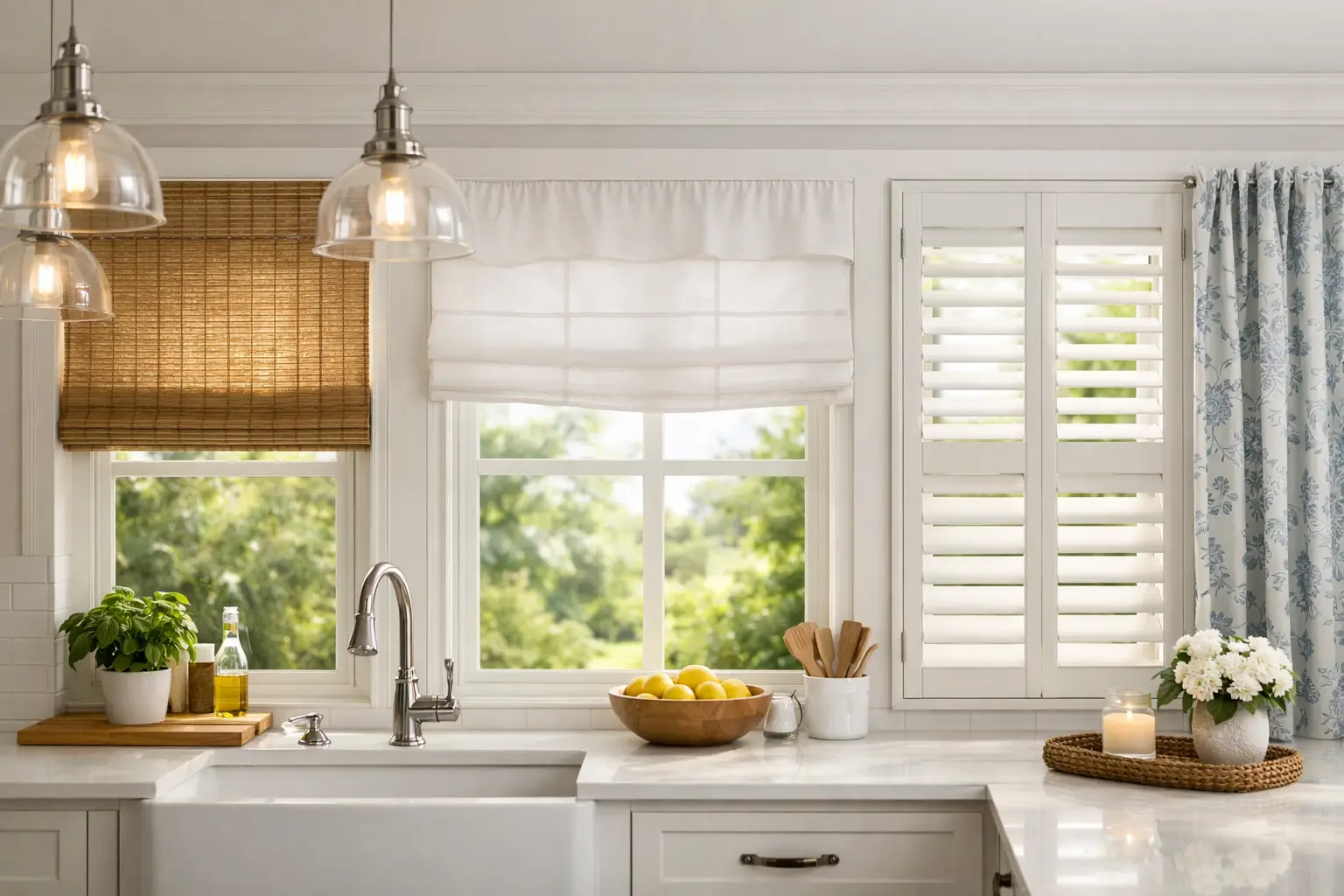
8 Top Window Treatments for Kitchens
Steam from the cooktop, late-afternoon glare at the sink, and the need for privacy after dark all land on one small design decision – what goes on the kitchen window. The top window treatments for kitchens are the ones that handle moisture, grease, sun, and daily use without making the room feel heavy or fussy. In most kitchens, the best choice is not just about appearance. It is about performance, cleanability, and getting the right balance of light and coverage.
What makes kitchen window treatments different
Kitchen windows work harder than windows in almost any other room. They sit near sinks, range tops, breakfast nooks, and back doors. That means fabrics and finishes need to stand up to humidity, occasional splashes, and frequent handling.
This is also a room where natural light matters. Too much direct sun can create glare on counters and heat up the space, but too little coverage can leave the kitchen feeling exposed. That is why the most successful kitchen treatments are usually custom-fit and chosen by how the window is actually used, not by trend alone.
If your window sits directly above a sink, for example, a long drapery panel is rarely the practical answer. If you have a wide kitchen with patio doors and multiple openings, matching every window exactly may not be the best visual move either. The right solution often depends on window size, proximity to water and heat, and whether the room needs soft filtered light or strong privacy.
Top window treatments for kitchens by function
Roller shades
Roller shades are one of the cleanest and most versatile options for kitchens. Their profile is minimal, they fit neatly inside the frame, and they are available in a wide range of screen, light-filtering, and blackout fabrics. For kitchens, light-filtering and solar screen materials are often the strongest fit because they reduce glare without darkening the room too much.
They also work well in modern and transitional spaces where you want the window treatment to support the cabinetry rather than compete with it. Moisture-resistant and easy-care materials matter here, especially near prep areas. If your kitchen gets strong west-facing sun, a performance fabric can make a noticeable difference in comfort.
Faux wood blinds
Faux wood blinds remain a popular kitchen choice because they give you flexible light control and a familiar architectural look. You can tilt the slats to preserve privacy while still letting in daylight, which is useful for street-facing kitchens or homes with close neighbors.
The key advantage over real wood is durability. In kitchens, humidity and temperature swings can be tough on natural materials. Faux wood is generally the safer pick near sinks and cooking zones, and it is easier to wipe down when airborne grease builds up over time. If you want a classic look with practical maintenance, this category deserves a close look.
Cellular shades
Cellular shades, also called honeycomb shades, are often chosen for bedrooms, but they can be excellent in kitchens that struggle with heat gain or drafts. Their insulated construction helps regulate temperature, which can be especially useful on large windows or breakfast-area bump-outs.
The trade-off is that some fabric styles may require more care than a hard-surface product. In a lower-splash zone, though, they deliver a softer look than blinds while still keeping a kitchen streamlined. Top-down bottom-up operation can be especially effective if privacy is needed but you still want daylight entering from above.
Roman shades
Roman shades bring more decorative presence than roller or cellular shades, which makes them a strong fit for kitchens connected to open-concept dining and living spaces. They soften the room and can tie together upholstery, wall color, and finish selections.
That said, not every Roman shade belongs in every kitchen. Fabric choice matters. In a hardworking family kitchen, washable or easy-maintenance materials are more practical than delicate textiles. Flat Roman shades usually feel cleaner and more tailored than heavily relaxed styles in this setting. They are often best for kitchen windows that are away from direct splatter and heat.
Plantation shutters
Shutters are one of the most durable and polished kitchen window treatments available. They offer excellent light control, solid privacy, and a built-in look that suits both traditional and updated homes. For kitchens, composite or moisture-resistant shutters are often more practical than natural wood.
They are particularly effective on windows over sinks because there is no dangling fabric or stacked shade to interfere with daily tasks. The structured look is also ideal when you want the window treatment to feel like part of the architecture. The main consideration is budget, since shutters tend to be a more premium investment than many shade options.
Woven wood shades
If the kitchen needs warmth and texture, woven wood shades can be a beautiful answer. They soften painted cabinetry and add an organic layer that works well in coastal, transitional, and contemporary homes. In design terms, they bring depth that smoother shade materials cannot always match.
Still, this is a category where placement matters. Natural woven materials are generally better in dry zones than directly beside a sink or heavy cooking area. Many homeowners pair woven woods with a privacy liner to improve light control and evening coverage. If style is the priority and the location is suitable, they can be one of the most distinctive choices.
Sheer shades
Sheer shades suit kitchens where preserving daylight is the main goal. They diffuse harsh sun beautifully and create a refined, airy appearance. In breakfast areas or kitchen-adjacent spaces, they can feel elegant without becoming formal.
The limitation is that they are not usually the toughest option for high-splash or high-grease areas. They are better for perimeter windows that need soft light rather than hard-wearing utility. In the right kitchen, though, they can elevate the room significantly.
Drapery and side panels
Full drapery is not the first recommendation for most kitchen windows, but it still has a place. Side panels can frame a breakfast nook window or soften a larger wall of glass without interfering with function. In open-concept homes, they can also help the kitchen feel visually connected to nearby living spaces.
For true working kitchen windows, drapery should be used carefully. It needs to stay clear of water, food prep, and heat. When it is used, tailored panels in performance fabrics usually make more sense than anything overly ornate.
How to choose the right option for your kitchen
The best kitchen treatment starts with the window location. Over-the-sink windows usually call for compact treatments such as shutters, roller shades, or faux wood blinds. Larger picture windows and dining extensions can support softer products like Roman shades or woven woods.
Next, consider what problem you are trying to solve. If glare is the issue, screen rollers or light-filtering shades may be enough. If privacy is limited, blinds and shutters give you more precise control. If the kitchen runs hot in summer or chilly in winter, cellular shades may offer the best performance benefit.
Style should follow function, but it still matters. A sleek city kitchen often benefits from roller shades or minimalist banded shade systems. A more traditional kitchen may look better with shutters or tailored Romans. The goal is to choose a treatment that supports the cabinetry, backsplash, and hardware rather than introducing a competing design statement.
Custom fit matters more in kitchens
Kitchen windows are often smaller, more varied, or interrupted by trim, tile, and cabinetry. That is one reason off-the-shelf products can be frustrating in this room. A treatment that is slightly too wide, too long, or poorly mounted can interfere with faucet clearance, block valuable light, or simply look out of place.
Custom specification allows for tighter measurements, better operation, and more finish options. It also opens the door to motorization, which can be especially appealing on hard-to-reach windows or in homes where convenience is a priority. For homeowners and trade professionals looking at a larger renovation, coordinated window treatments can help the kitchen feel integrated with the rest of the home rather than treated as a standalone room.
A note on motorization and modern kitchens
Motorized shades are no longer reserved for formal living rooms. In kitchens, they offer practical value. A shade over the sink or above a breakfast banquette becomes much easier to operate when you can adjust it by remote, wall control, or smart-home system.
This is particularly useful for large windows, tall openings, and homes that get intense sun at certain times of day. The right motorized solution can improve comfort and protect finishes from UV exposure while keeping the room visually clean. For many remodeling projects, it is worth considering from the start rather than treating it as an upgrade later.
A kitchen asks more of a window treatment than most rooms do. It needs to look right, work hard, and hold up over time. If you start with the conditions around the window and choose materials built for the way your kitchen functions, the final result will feel less like an accessory and more like a smart part of the room.