
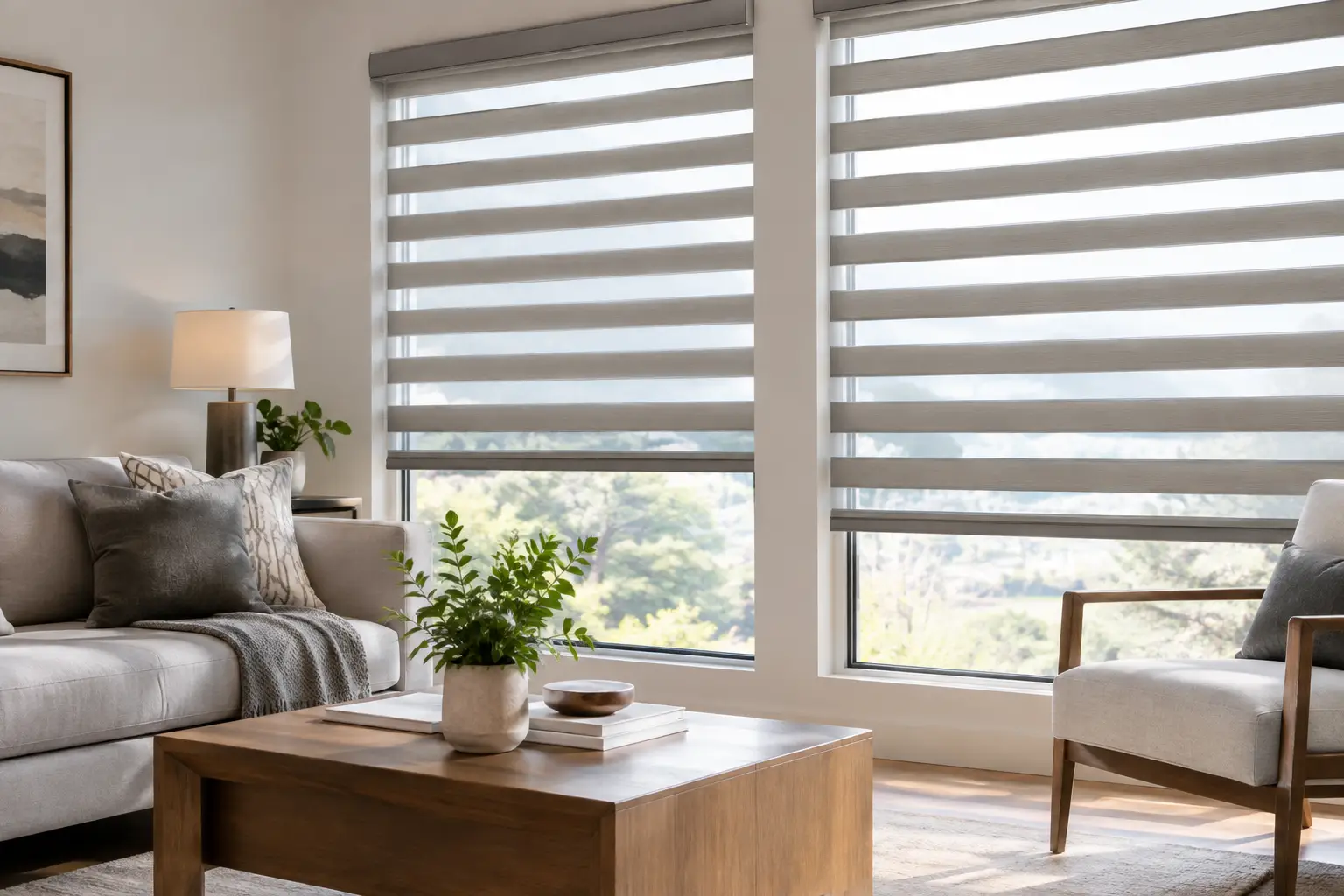
Zebra Shades Explained for Modern Home Design
A bright living room can feel open and polished at 10 a.m., then become uncomfortable when afternoon sun hits the television or reflects across a dining table. Zebra shades explained simply are a response to that everyday problem: they give you the clean profile of a roller shade with more flexible control over daylight and privacy.
Also called dual shades, banded shades, or transitional shades, zebra shades have become a popular choice for homeowners who want a contemporary window treatment without committing to heavy drapery or the fixed look of traditional blinds. Their appeal is visual, but their real value is adjustability.
What Are Zebra Shades?
A zebra shade is made from one continuous loop of fabric with alternating sheer and opaque horizontal bands. The fabric moves through a roller system, creating two layers at the window. As those layers shift over one another, the sheer and solid bands either line up or overlap.
When the sheer bands align, filtered daylight enters the room and the view outward remains partially visible. When the opaque bands overlap, the shade blocks more light and increases privacy. Raise the entire shade, and the fabric rolls neatly into the headrail, leaving the window mostly clear.
That changing alignment is what makes zebra shades different from a standard roller shade. A roller shade is typically either raised or lowered, while zebra shades can stay down at the window and still transition between a more open and more private setting.
How Zebra Shades Control Light and Privacy
The operation is straightforward, though the fabric selection has a major effect on performance. In the open position, the sheer sections diffuse direct sun rather than fully eliminating it. This softens glare and gives a room a lighter feel than a closed opaque shade.
In the closed position, the opaque bands cover the sheer portions more fully. The room becomes more private and noticeably dimmer, but most zebra shades should not be treated as total blackout products. Small areas of light can remain between bands and around the sides of the shade, especially on inside-mounted windows.
For this reason, zebra shades are particularly effective in spaces where light filtering is the priority. They work beautifully in living rooms, kitchens, dining rooms, home offices, and condos with expansive glass. In these rooms, the ability to adjust the mood throughout the day often matters more than creating complete darkness.
Bedrooms require a more specific conversation. A room that receives streetlights, early sunrise, or intense exterior illumination may benefit from room-darkening zebra fabrics, side channels, layered drapery, or a separate blackout solution. The right answer depends on how dark the sleeper needs the room to be and how the window is positioned.
Daytime privacy is different from nighttime privacy
This distinction helps avoid a common disappointment. During the day, a zebra shade in its open sheer position can provide a degree of privacy because outdoor light is brighter than indoor light. From inside, you may still enjoy a softened view; from outside, the interior is less visible.
At night, that relationship reverses when lights are on indoors. If privacy is essential after dark, the opaque bands need to be positioned in the closed setting. In bathrooms, ground-floor bedrooms, or windows facing close neighbors, a consultation should account for sightlines as carefully as fabric color.
Zebra Shades Explained: The Design Advantage
Zebra shades have a distinctly modern appearance. Their horizontal bands create a tailored, architectural look that complements contemporary furnishings, clean-lined kitchens, urban condos, and renovated family homes. Because the material rolls into a relatively compact headrail, the treatment does not compete with a window’s trim, view, or surrounding design details.
Fabric choices range from crisp whites and soft neutrals to charcoal, black, linen-inspired textures, and subtle woven effects. Lighter colors generally preserve an airy appearance and reflect more daylight. Darker colors can add definition and may provide a clearer outward view in bright conditions, but they can also make a small room feel more enclosed when the shade is closed.
The openness of the sheer band matters as well. A more open weave lets in more light and offers better visibility outside. A tighter weave provides stronger glare control and privacy, though the view becomes less distinct. This is one reason a fabric sample in a showroom or at the actual window is more useful than choosing from an online image alone.
Zebra shades can stand on their own in a minimalist interior, but they also layer well. Decorative side panels or drapery can add softness, color, and improved nighttime coverage, while the zebra shade handles daily light control. For designers, that combination allows a window treatment to perform well without losing visual depth.
Where They Work Best
Large windows and patio doors are common applications, provided the product is specified for the size and use of the opening. In a living room, zebra shades can reduce glare on screens while keeping the space connected to the outdoors. In a kitchen, they offer a clean, easy-to-manage alternative to fabric treatments that may require more care.
Home offices are another strong fit. A slight adjustment can soften direct daylight on a monitor without making the room feel shut off. For condo owners, the slim, contemporary profile is especially useful where windows are a central architectural feature and heavy treatments can feel out of scale.
They are less ideal when complete darkness, maximum insulation, or an unobstructed full view at all times is the top priority. Cellular shades generally provide better insulating value, while blackout roller shades and layered treatments are stronger options for dedicated media rooms and light-sensitive bedrooms. Traditional shutters may be preferable for homeowners who want a more substantial, architectural finish.
Inside Mount, Outside Mount, and Custom Fit
Most zebra shades are installed as an inside mount, meaning the shade sits within the window frame. This produces a clean, built-in look and is often the preferred choice when the window has adequate depth and a reasonably square opening.
An outside mount places the shade above and beyond the window opening. It can cover uneven frames, accommodate shallow windows, and improve light control by extending past the glass. The trade-off is that more wall space is visible in the treatment’s footprint, so careful proportion and headrail placement matter.
Accurate measurement is essential because zebra shades are custom-made to the opening and installation style. Window width, height, frame depth, obstructions such as handles or molding, and the desired stacking position all affect the final specification. On wide or frequently used openings, the lift system and fabric weight deserve as much attention as the color.
Manual or Motorized Operation?
Manual zebra shades are available with cordless lift systems and other child-safe operating options. They are practical for many standard windows and offer a simple, uncluttered appearance.
Motorization becomes especially valuable on tall windows, wide banks of glass, hard-to-reach openings, and rooms with several shades operating together. A motorized system can be controlled by remote, wall control, app, or integrated smart-home automation, depending on the product line. Scheduled operation can help manage sun exposure during the day, while scene-based control makes it easy to set a room for entertaining, working, or watching television.
Battery-powered motors are often convenient for retrofit projects, while hardwired systems may suit new construction and larger renovations. The best choice depends on access to power, number of shades, control preferences, and whether the home already uses a platform such as Lutron or Somfy.
Choosing the Right Zebra Shade
The best zebra shade is not only the one that matches the room’s palette. It should also reflect the window’s orientation, the need for daytime glare reduction, nighttime privacy expectations, and how often the shade will be adjusted. A south- or west-facing room may need a denser fabric than a shaded north-facing space. A street-level window may call for more privacy-focused positioning than a high-rise living room.
At Window Fashions Depot, a custom consultation can narrow those variables down quickly, from fabric openness and color to mounting method, motorization, and layering options. Bring photos of the room, window measurements if available, and a clear sense of how the space is used at different times of day. The right zebra shade should feel less like a compromise between daylight and privacy, and more like control that fits naturally into the way you live.
0 comments