
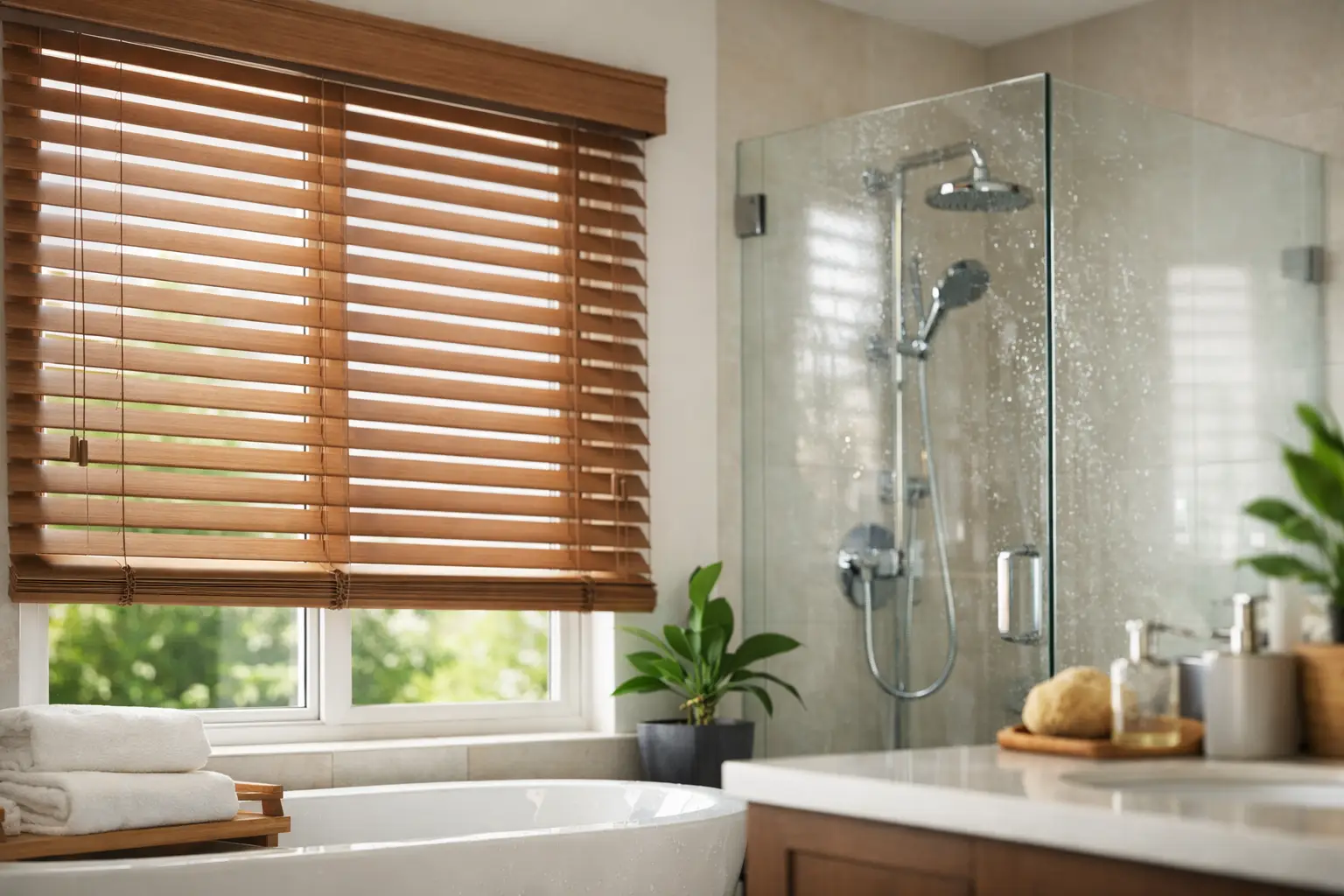
Faux Wood Blinds for Humid Rooms
Steam from the shower, heat from the stove, and day-to-day moisture in the air can shorten the life of the wrong window treatment fast. That is exactly why faux wood blinds for humid rooms are such a practical choice – they give you the familiar look of painted wood while standing up better in bathrooms, kitchens, laundry rooms, and other spaces where moisture is part of daily life.
For many homeowners and designers, the challenge is not just finding a blind that survives humidity. It is finding one that still looks tailored, coordinates with the room, and delivers privacy and light control without turning into a maintenance problem. Faux wood blinds do that job well, but the details matter.
Why faux wood blinds for humid rooms work so well
Real wood has undeniable warmth, but humid spaces ask more from a blind than appearance alone. Repeated exposure to moisture can lead to warping, swelling, cracking, or finish issues over time. Faux wood is engineered specifically to avoid many of those problems.
Most faux wood blinds are made from composite or PVC-based materials that resist moisture far better than natural wood. In a bathroom, that means they are less likely to distort after months of steam exposure. In a kitchen, they can handle humidity along with grease and splatter more easily than painted wood. In a laundry room, they offer a more forgiving surface in a space where warm, damp air is common.
That does not mean every product performs the same way. Construction quality, slat thickness, hardware, lift system, and overall fabrication all affect long-term durability. A well-made custom blind will usually perform better than a basic off-the-shelf option, especially when the fit and mounting are right for the window.
Where they make the most sense
Bathrooms are the most obvious match, especially primary baths and shared family bathrooms where steam builds up daily. Faux wood blinds provide privacy without forcing you into a purely utilitarian look. They also suit powder rooms, where a clean architectural window treatment often works better than fabric.
Kitchens are another strong use case. Many homeowners want the crisp horizontal lines of blinds over sinks, breakfast nooks, or side windows, but they also need a material that can be wiped down easily. Faux wood works well here because it balances appearance with easier upkeep.
Laundry rooms, mudrooms, and basement windows can also benefit. These spaces often have fluctuating temperatures and occasional dampness, and that is where a moisture-resistant blind earns its keep. In condos and urban homes, faux wood blinds are also useful in compact rooms where ventilation is limited and moisture lingers longer.
The look: what you gain and what you trade off
The biggest reason people choose faux wood is that it delivers a classic, finished appearance. The profile feels more substantial than many aluminum or vinyl blinds, and white or off-white finishes work especially well in transitional, traditional, coastal, and modern farmhouse interiors. They also fit comfortably into many contemporary spaces when the lines are kept clean.
There are trade-offs. Faux wood blinds are generally heavier than real wood blinds, particularly in larger windows. That weight can matter for very wide openings or for households that raise and lower blinds frequently. In those situations, lift system quality becomes more important, and sometimes a different treatment style may be worth considering.
Faux wood also mimics wood rather than replacing it. In a formal living room or finely detailed design scheme, some clients still prefer the authentic grain and lighter weight of real wood. But in humid rooms, performance usually takes priority, and faux wood often wins because it is the more practical specification.
Choosing the right faux wood blinds for humid rooms
Not all humid spaces demand the same blind. A small guest bath with occasional use has different needs than a busy kitchen or a family bathroom used several times a day. When selecting faux wood blinds for humid rooms, focus on how the room functions first, then refine the style details.
Slat size affects both style and light
Two-inch slats are the most common choice because they offer a balanced, tailored look and good view-through when open. They work well in most bathrooms and kitchens. A wider slat can feel more substantial and current, but window size and proportion should guide the decision.
Smaller windows often benefit from a cleaner, simpler configuration. Larger windows may need stronger components and careful consideration of blind weight, especially if you want the blind lifted often rather than just tilted for light control.
White remains the safest design choice
White faux wood blinds continue to be the most versatile option for humid rooms. They reflect light, coordinate with plumbing fixtures and trim, and keep bathrooms and kitchens looking bright and crisp. Off-whites and soft neutrals can also work well when walls, cabinetry, or tile lean warmer.
Wood-look finishes are available, and in the right room they can add warmth. Still, in high-moisture areas, painted and neutral finishes often feel cleaner and more architectural. They also show less visual conflict if the room already has multiple material finishes.
Privacy matters as much as moisture resistance
In a bathroom, privacy is usually non-negotiable. Faux wood blinds offer precise control because you can tilt the slats to let in daylight while limiting direct views. That flexibility is part of their appeal, especially compared with treatments that are either open or closed.
If the window faces close neighbors or a street, consider the mount position carefully. An inside mount can look sleek, but an outside mount may provide better coverage if the window frame is shallow or if privacy gaps are a concern.
Installation details that make a difference
A moisture-resistant material helps, but proper installation still matters. If blinds are mounted too close to a tub or shower splash zone, they will need more frequent cleaning and may show wear faster. Placement should account for both moisture exposure and ease of operation.
Window depth matters for inside mounts, and so does hardware quality. In humid rooms, better components can make a noticeable difference over time. Smooth operation, durable headrails, and stable valances all contribute to a more polished result.
This is one reason custom specification is valuable. A made-to-measure blind fits the opening properly, looks more intentional, and often performs better than a product trimmed to approximate size. For designers, builders, and homeowners planning a renovation, this is one of those details that elevates the finished room.
Cleaning and maintenance are part of the appeal
Fabric window treatments in humid rooms can be beautiful, but they are not always the easiest option to maintain. Faux wood blinds are popular because routine care is straightforward. A light dusting or wipe-down usually handles day-to-day buildup, and in kitchens they can be cleaned more easily than many textile-based treatments.
That said, easy care does not mean no care. Grease, hairspray, soap residue, and mineral deposits can collect over time, especially in heavily used rooms. Choosing a smooth, quality finish helps because it is easier to keep looking fresh.
When faux wood is the right answer – and when it is not
Faux wood blinds are a strong solution for many humid rooms, but not every window calls for them. If the room has a very large window wall, a blind may feel heavy or require too much lifting effort. If the design direction is softer and more minimal, a moisture-tolerant shade may suit the space better. If the window sits directly inside a shower enclosure or an extremely wet area, you may want to evaluate whether any blind is the best fit there.
That is where a broader product approach helps. Instead of forcing one category into every room, it makes more sense to compare privacy, maintenance, style, and daily function window by window. In some homes, faux wood blinds belong in the bathrooms and laundry room while another treatment works better in the adjacent kitchen or main living areas.
For homeowners and trade professionals who want a more tailored result, product selection should be tied to the whole project. Window size, trim style, finish palette, and operating preference all influence the right specification. If you are comparing options for a renovation or new build, working with a showroom-driven source such as Window Fashions Depot can make it easier to review materials, custom sizes, and branded systems in context rather than guessing from generic samples.
The best window treatment for a humid room should not feel like a compromise. Faux wood blinds earn their place because they solve a real performance problem while still giving the room a finished, design-minded look.