
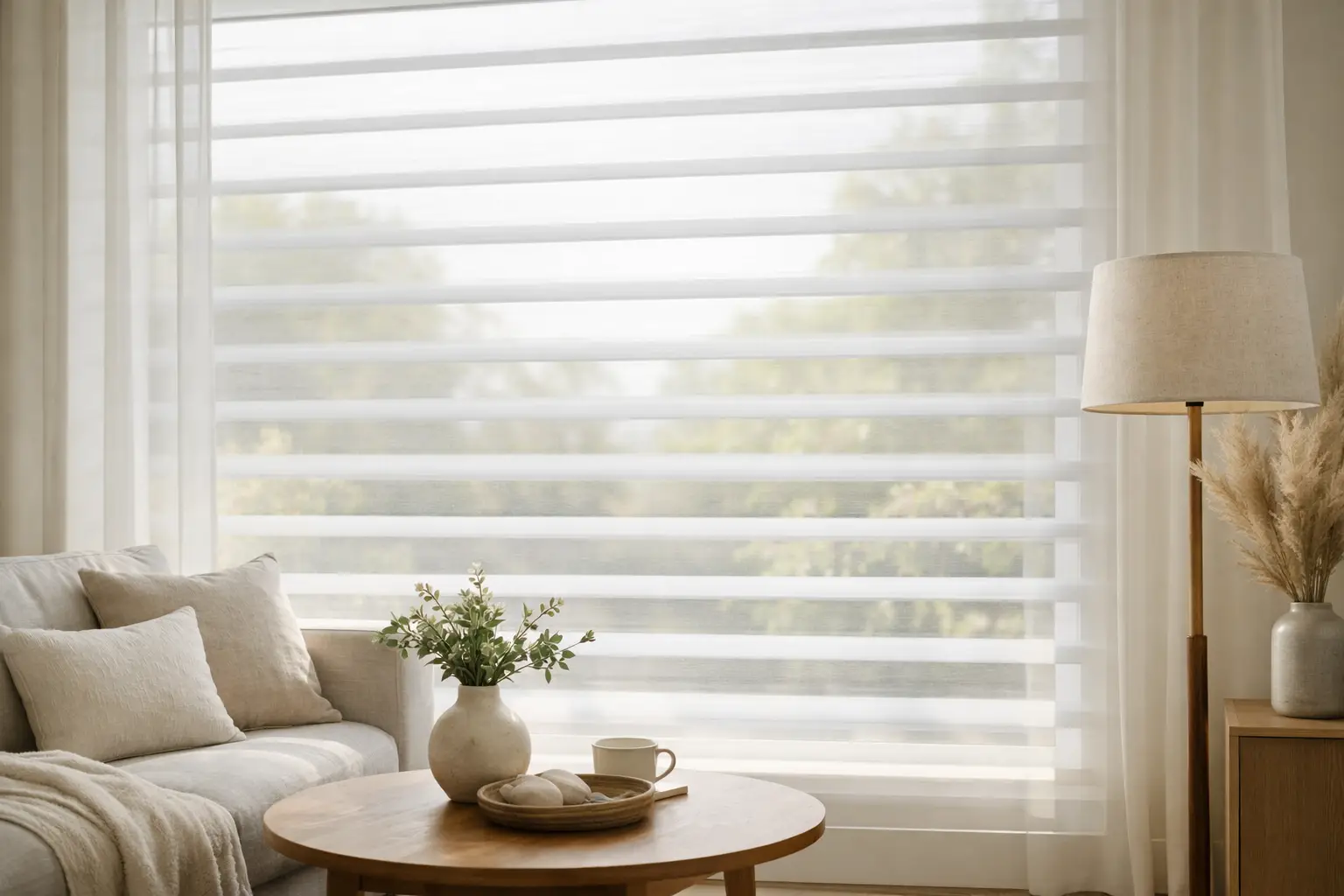
Sheer Shades for Soft Natural Light at Home
Morning light can make a room feel open and polished, but bare windows often bring glare, heat, and too much visibility. That is exactly why sheer shades for soft natural light appeal to so many homeowners and design professionals. They filter daylight instead of blocking it outright, giving you a gentler, more controlled look that works in living spaces, bedrooms, dining rooms, and full-home projects.
Unlike a standard blind or a basic roller shade, sheer shades are designed to soften the sun while still preserving a connection to the outdoors. That balance is what makes them such a strong choice in modern interiors. If you want daylight without harsh brightness, and privacy without turning the room dark, this category is worth a closer look.
What makes sheer shades different
Sheer shades combine fabric vanes with light-filtering sheer panels, creating a layered construction that behaves differently from traditional window treatments. When open, they diffuse incoming light and reduce glare while still allowing a view through the window. When tilted or closed, they offer greater privacy and more control over brightness.
That construction matters because it changes the quality of light in the room, not just the quantity. Hard sunlight can flatten finishes, create screen glare, and make seating areas uncomfortable at certain times of day. Sheer shades soften those effects, which is why they are often specified in spaces where comfort and appearance matter equally.
For design-conscious homeowners, there is also a visual advantage. Sheer shades tend to read lighter and more refined than bulkier treatments. They work well in transitional, contemporary, and soft modern spaces, especially when the goal is to keep window lines clean and understated.
Why sheer shades for soft natural light work so well
The main reason people choose sheer shades for soft natural light is simple: they improve the feel of a room without making it look closed off. In rooms with strong sun exposure, they can reduce visual harshness while still letting daylight do its job. Furniture, flooring, and wall color often look better in filtered daylight than in direct glare.
There is also a practical side. In open-concept homes, condos, and street-facing spaces, privacy is rarely an all-or-nothing issue. You may want natural light during the day but still prefer some screening from neighboring homes or passersby. Sheer shades can help manage that middle ground.
That said, they are not blackout products. If complete darkness is the priority, especially in bedrooms or media rooms, another solution may be better on its own or in combination. Layering with drapery or choosing a room-darkening product in select spaces can give you better performance where needed.
Choosing the right opacity and fabric
Not all sheer shades perform the same way. Fabric openness, vane size, and color all affect how much light enters the room and how much privacy you get. Lighter fabrics usually keep the look airy and bright, which is ideal when you want to maximize daylight. They also tend to feel less visually heavy across larger windows.
Deeper tones can add contrast and a more tailored design statement, but they may slightly change how the filtered light reads in the room. The right choice depends on your wall color, flooring, furnishings, and window orientation. A north-facing room often needs a different approach than a west-facing room that gets intense afternoon sun.
This is where a showroom-style consultation adds real value. Looking at fabric samples in person, and ideally in the intended room, gives a much more accurate sense of texture and light behavior than choosing from a screen. Product lines from brands such as Hunter Douglas, Graber, Alta, and Maxxmar offer different fabric looks and control options, so the best fit is often found by comparing performance rather than shopping by appearance alone.
Room exposure changes the decision
South- and west-facing rooms usually need more glare control. In those spaces, sheer shades can soften brightness effectively, but the specific fabric matters. A highly transparent sheer may still allow more intensity than you want during peak sun hours.
East-facing rooms often benefit from the gentle filtering effect in the morning, especially in breakfast areas and kitchens. North-facing rooms tend to have more even daylight, so the focus may shift more toward privacy and style than sun management.
Best rooms for sheer shades
Living rooms are one of the strongest applications. These spaces benefit from daylight, but they also need comfort for reading, working, entertaining, and television viewing. Sheer shades help soften the room without taking away the open feeling many homeowners want.
Dining rooms are another excellent fit because filtered light tends to flatter finishes, artwork, and table settings. In bedrooms, sheer shades can work beautifully when the goal is daytime softness and privacy, but many homeowners still pair them with drapery or add a second shading layer for better darkness at night.
In condos and urban homes, sheer shades are especially useful where large windows bring in welcome light but also create direct sightlines from nearby buildings. They can preserve a clean architectural feel while making the space more livable throughout the day.
Light control, privacy, and the trade-offs
Every window treatment asks you to prioritize something. With sheer shades, the strengths are filtered daylight, refined appearance, and flexible daytime privacy. The trade-off is that they are not the strongest option for complete nighttime privacy or full blackout performance unless paired with another product.
That does not make them limited. It simply means they work best when selected for the right purpose. If your top priority is softening natural light in a main living area, they are often one of the best-looking and most functional choices available. If your priority is insulation, blackout sleep conditions, or maximum seclusion, another shade style may serve you better in that specific room.
This room-by-room approach is often the smartest way to specify window treatments across an entire home. A single product is not always the right answer for every elevation, exposure, and use case.
Motorization makes sheer shades even more effective
Sheer shades perform best when they are adjusted as the light changes. That is one reason motorization has become such a strong upgrade. Instead of leaving the shades in one position all day, you can raise, lower, or tilt them based on time of day, sun angle, or routine.
For hard-to-reach windows, this is almost a necessity. For everyday living spaces, it is a convenience that improves how often you actually use the product as intended. Systems from brands like Somfy and Lutron can integrate with broader smart-home settings, which is especially valuable in larger homes and professionally designed projects.
Motorization also helps preserve the clean look of the shade by removing dangling cords. For families with children or pets, that can be an important safety and design consideration.
Design details that matter more than people expect
A sheer shade is only as polished as its specification. Width, mounting style, stack behavior, headrail finish, and how the shade aligns across multiple windows all influence the final result. Large expanses of glass, corner windows, and sliding door adjacencies need special attention.
Inside mount tends to give a cleaner, more architectural appearance, but it depends on the depth and condition of the window frame. Outside mount can improve light gap coverage and make windows appear larger. Neither is automatically better. The right choice depends on the opening and the visual effect you want.
For designers and builders, consistency across elevations matters. For homeowners, ease of operation often matters just as much. A good specification balances both.
Why custom sizing is worth it
Sheer shades are not a category where approximate sizing delivers the same result. Custom fit improves function, appearance, and light control. It also matters when windows are not perfectly square, which is common in both older homes and some newer construction.
A tailored shade sits better, operates better, and generally looks more intentional. That is particularly important with sheer fabrics, where alignment and hang can affect the whole presentation. If you are investing in premium window treatments, accurate measuring and professional guidance protect that investment.
For homeowners and trade clients comparing options, working with a consultative source like Window Fashions Depot can simplify the process. Product selection, fabric review, measuring guidance, and motorization planning all benefit from expert input, especially when multiple rooms or large windows are involved.
When sheer shades are the right answer
Sheer shades make the most sense when you want light to remain part of the design. They are ideal for spaces that feel better with daylight but need that daylight softened, shaped, and made more private. They are also a strong fit when the goal is a tailored, upscale look that does not visually clutter the room.
If you are choosing window treatments for a whole home, it helps to think less in terms of trends and more in terms of performance by room. The best result usually comes from matching each window to how you actually live with it. When soft daylight is the goal, sheer shades often get that balance exactly right.