
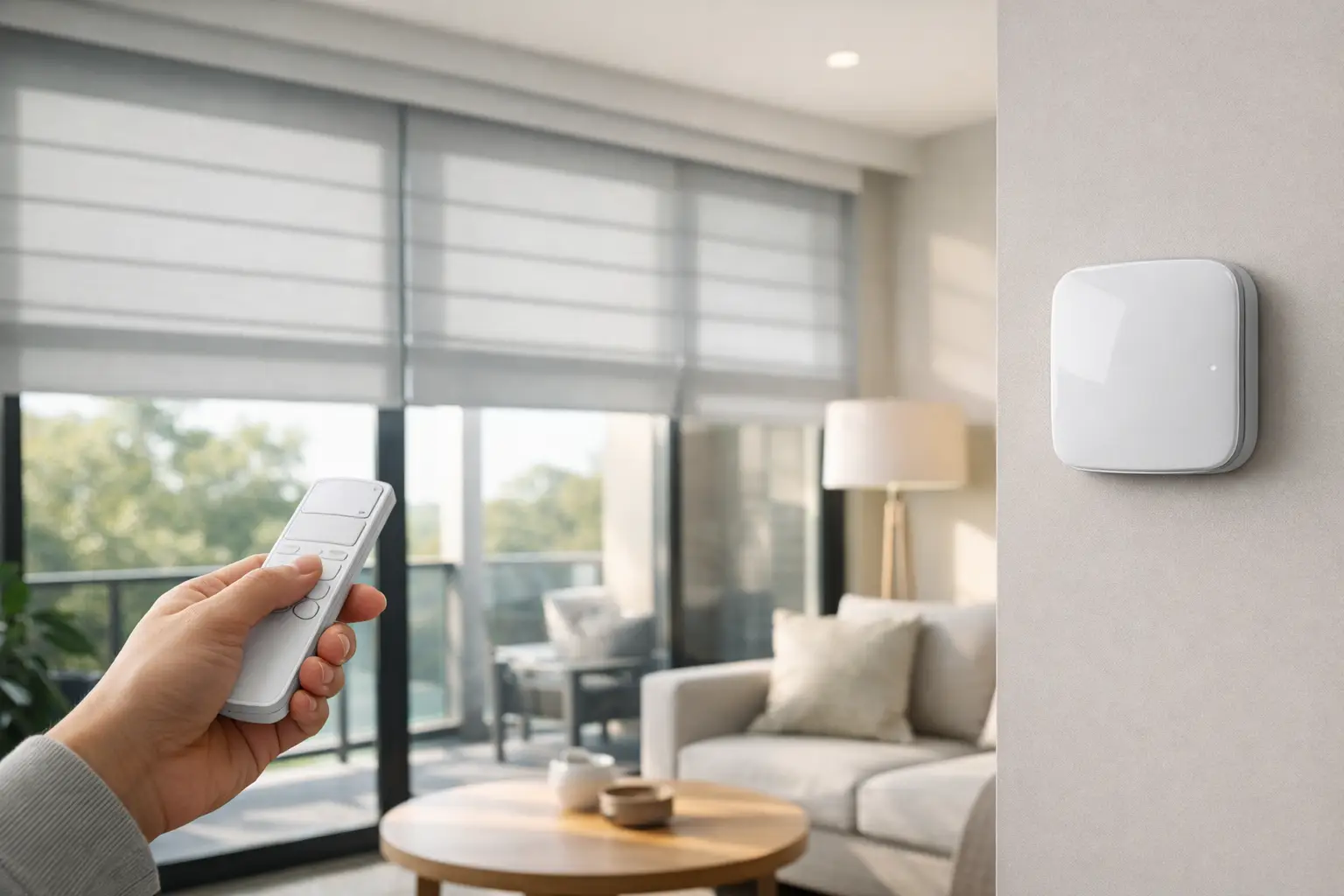
Guide to Motorized Window Treatments
The best motorized shade is not always the most expensive one. It is the one that fits how you live, how your room is used, and how much control you actually want. This guide to motorized window treatments is built to help homeowners, designers, and renovation professionals sort through the real decisions – shade style, power source, controls, smart-home integration, and installation.
Motorization has moved well beyond a luxury add-on. In many homes, it solves everyday issues that manual shades do not handle well: tall windows, hard-to-reach openings, layered treatments, glare control, privacy scheduling, and managing multiple shades in one room. It also changes how a space feels. When shades move quietly and on schedule, the room feels more considered and easier to live in.
What motorized window treatments actually include
When people say motorized window treatments, they often mean roller shades. That is common, but the category is wider than that. Motorization can be integrated into roller shades, honeycomb shades, Roman shades, sheer shadings, drapery tracks, and some exterior shading systems. The right product depends less on the motor itself and more on the result you want from the window.
If your priority is a clean, modern look with strong light control, motorized roller shades are usually the starting point. If energy efficiency matters just as much as appearance, honeycomb shades may be a better fit. For bedrooms and media rooms, blackout fabrics paired with side channels or well-planned mounting details can improve darkness. If the room needs softness and a more decorative finish, motorized drapery or layered shades with drapery may make more sense than a minimalist shade alone.
That is why specification matters. A motor can raise and lower the treatment, but the fabric, opacity, stack, headrail size, and mounting method still determine performance.
A guide to motorized window treatments by room
The fastest way to narrow your options is to think room by room instead of product by product.
In living rooms, the balance is usually between daylight, glare reduction, and preserving the view. Solar screen fabrics and light-filtering rollers are strong options, especially in homes with large glass areas. Motorization is especially useful here because these shades tend to be used throughout the day, not just morning and night.
In bedrooms, privacy and light control usually come first. Blackout roller shades, room-darkening honeycomb shades, and motorized drapery are popular because they can be scheduled to open gradually in the morning and close automatically at night. If there is street lighting outside, the right fabric and installation details matter as much as the motor.
In kitchens and breakfast areas, ease of use is often the main benefit. Windows over sinks or counters are inconvenient to reach, and cordless manual operation is not always ideal when the treatment is used several times a day. A simple remote or wall keypad solves that.
In home offices, the issue is often glare. South- and west-facing windows can make screens difficult to work on by midday. Motorized shades let you adjust light quickly without interrupting meetings or work sessions.
For sliding doors and wide openings, motorized drapery, panel track systems, or wider shade bands may be more appropriate than trying to force a standard solution onto an oversized opening.
Power options: battery, rechargeable, or hardwired
One of the most important decisions in any guide to motorized window treatments is how the system will be powered. This affects installation, maintenance, cost, and long-term convenience.
Battery-powered shades are often the easiest choice for existing homes. They avoid opening walls and work well for many standard-size windows. They are especially attractive in renovation projects where the goal is to upgrade function without electrical work. The trade-off is maintenance. Batteries eventually need replacement, and access matters if the shades are mounted high or grouped across a two-story space.
Rechargeable systems reduce the need for disposable batteries and can be a very good middle ground. Many homeowners like the cleaner maintenance cycle, but charging schedules still need to be considered, especially if there are many shades.
Hardwired motorization is usually the premium specification for new construction or major remodels. It offers the cleanest long-term setup and is ideal for whole-home automation plans. The planning has to happen early, though. Wiring locations, power access, and control integration should be coordinated before drywall is closed.
There is no single best option for every project. A new custom home and a finished condo need different solutions.
Control options and smart-home integration
Control is where motorization becomes either very simple or unexpectedly complicated. The best systems make daily use intuitive.
Most motorized window treatments can be operated by remote, wall switch, app, or voice assistant, depending on the system. For many households, a handheld remote for quick control and scheduled scenes through an app is more than enough. In larger homes, keypads and grouped room scenes become more valuable. Pressing one button to lower every west-facing shade in the afternoon is more practical than managing each opening one by one.
Smart-home integration is worth considering, but only if it matches how the home is actually used. Some clients want shades tied into lighting, temperature management, and daily routines. Others just want quiet, reliable operation with a clean wall control. Both approaches are valid. More integration usually means more planning, a higher budget, and greater dependence on compatibility between systems.
This is where working with established motorization brands matters. Product reliability, app quality, and integration support can vary significantly. A broad product assortment with options from manufacturers such as Hunter Douglas, Graber, Lutron, Somfy, Alta, and Maxxmar gives more flexibility to match the right control system to the project rather than forcing one platform into every room.
Design choices still matter more than the motor
Motorization gets attention because it is the feature people can see in action. But from a design standpoint, fabric and construction still do most of the visual work.
A beautifully integrated motorized shade should disappear into the architecture when that is the goal, or support the room’s design when a softer textile look is preferred. That means choosing the right openness factor, texture, hem style, cassette or fascia, and color. In minimalist interiors, clean-lined roller shades often suit the architecture. In more layered spaces, Romans or drapery may create a more complete finish.
Light control is also more nuanced than many buyers expect. A darker solar fabric may reduce glare better while preserving outward visibility during the day. A lighter fabric may feel brighter in the room but can soften the view. Blackout is not always absolute blackout unless the mounting and side gaps are addressed properly. These are the details that separate a basic online purchase from a custom-specified result.
What affects cost
Pricing varies widely because motorized window treatments are not one product category. Cost depends on window size, product style, fabric selection, power method, brand, control type, and whether the shades are stand-alone or integrated into a larger automation system.
A single battery motorized roller shade with a simple remote will sit in a very different budget range than a hardwired whole-home package with custom keypads, premium fabrics, recessed pockets, and app-based scenes. Larger windows also require more powerful motors or wider shade configurations, which can increase cost quickly.
Installation should be treated as part of the product decision, not an afterthought. Proper measuring, bracket placement, programming, charging access, and alignment all affect the final experience. A treatment that looks slightly off at the top or stops unevenly across grouped windows will never feel truly high-end, even if the product itself is excellent.
Common mistakes to avoid
The most common mistake is choosing motorization before choosing the right treatment. If the shade style is wrong for the room, automation will not fix that.
Another frequent issue is underplanning power. Buyers often prefer hardwired performance after the fact, but the opportunity to wire may have passed. On the other hand, some projects assume hardwiring is necessary when a rechargeable or battery solution would work perfectly well.
It is also easy to overcomplicate controls. Not every room needs voice control, app control, remote control, and wall switches all at once. The best setup is the one that people in the home will actually use.
Finally, do not underestimate fabric samples and in-room review. Screen brightness, privacy level, and color temperature can look very different at a showroom table than they do in a west-facing living room at 4 p.m.
Who benefits most from motorization
Motorized treatments make sense for many homes, but they are especially valuable in a few situations: large walls of glass, tall or inaccessible windows, bedrooms with daily privacy routines, media rooms, nurseries, smart-home projects, and homes where convenience is a major design priority.
They are also a strong fit for designers and builders who want a finished project to feel more polished. Automation adds function, but it also adds a level of refinement clients notice immediately.
If you are comparing options, start with the window’s job first, then choose the treatment, then choose the motorization platform that fits the project. That order usually leads to a better result than shopping by gadget features alone. A well-planned system should feel easy, quiet, and appropriate to the room – something you appreciate every day, not just the first time you press the button.