
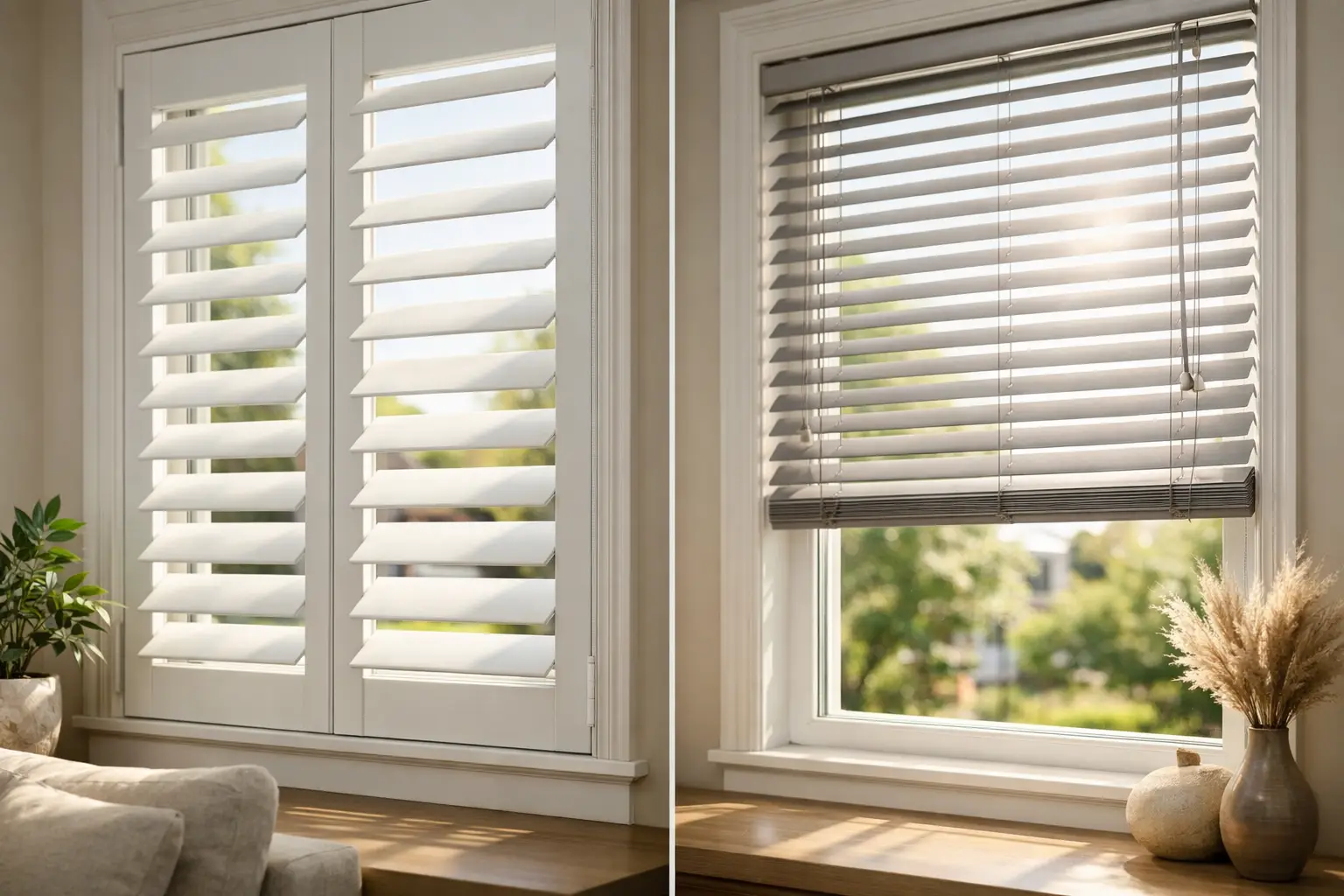
Shutters vs Blinds: Which Fits Your Home?
A wide living room window can make this decision feel bigger than it looks on paper. In the shutters vs blinds conversation, the right answer usually comes down to how you want the room to function every day – not just which option looks best in a showroom photo.
Both products can deliver privacy, light control, and a finished look, but they do it differently. Shutters tend to feel architectural and permanent. Blinds are often more flexible, more budget-friendly, and available in a much wider range of operating styles, materials, and price points. If you are choosing for a full-home project, a renovation, or a single room upgrade, it helps to compare them by performance rather than preference alone.
Shutters vs blinds at a glance
Shutters are rigid window coverings with framed panels and adjustable louvers. They are typically mounted inside the window opening and become part of the window’s overall appearance. In many homes, especially where a clean custom look matters, they read more like millwork than a soft furnishing.
Blinds use slats suspended within a headrail system. Depending on the product, they can be raised, lowered, tilted, split, or motorized. Wood blinds, faux wood blinds, vertical blinds, and aluminum blinds each solve different needs, which is one reason blinds remain such a strong category for both homeowners and designers.
The biggest practical difference is this: shutters are a more fixed, built-in solution, while blinds offer more day-to-day flexibility in style, operation, and budget.
Style and visual impact
If your priority is a tailored, upscale finish, shutters usually have the edge. They frame the window in a way that looks intentional and structured, which suits traditional homes, transitional interiors, and many contemporary spaces that need visual order. They also work well when you want the window treatment to feel permanent rather than decorative.
Blinds are more adaptable stylistically. Real wood blinds can bring warmth and a furniture-like quality. Faux wood blinds give a similar look in moisture-prone rooms. Aluminum blinds suit more utilitarian spaces, and vertical blinds can still make sense for wide openings or patio doors when function matters more than softness. For design professionals specifying multiple rooms with different conditions, blinds provide far more variation without forcing one visual language everywhere.
There is also a scale issue. On small to medium windows, shutters can look crisp and balanced. On very large windows, they can become visually dominant, and the panel configuration matters a great deal. Blinds usually feel lighter, which can be helpful in rooms where you want the glazing to remain the focus.
Light control and privacy
This is where product selection gets more nuanced. Shutters offer excellent control through louver adjustment, and they can give a room a very polished filtered-light effect. In street-facing rooms, that balance of privacy and daylight is a major reason people choose them.
Still, shutters are not always the most precise option. Because they are built with larger louvers and panel structures, some light gaps are normal around frames and panel edges. For many spaces, that is perfectly acceptable. For bedrooms, media rooms, or any room where tighter darkening is important, blinds may offer better control depending on the product and installation.
Wood and faux wood blinds allow you to tilt slats and raise the stack fully when you want an unobstructed view. Some configurations also give you more control over how much of the window remains covered during the day. If privacy is the main goal but you still want variable daylight, blinds often feel more adjustable in everyday use.
For buyers who want near-blackout performance, neither classic shutters nor standard horizontal blinds are always the final answer on their own. Layering, specialized shades, or room-specific product combinations may be the better solution.
Cost and long-term value
For many projects, this is the deciding factor. Shutters are usually the higher upfront investment. They are custom-built, measured closely, and fabricated as a more permanent installation. That higher cost can make sense when you want durability, architectural appeal, and a finished look that may support perceived home value.
Blinds generally offer a broader pricing range. This makes them easier to specify across an entire home, especially when some rooms need premium materials and others simply need dependable performance. A homeowner may choose wood blinds in main living spaces, faux wood blinds in bathrooms and kitchens, and a different treatment altogether in bedrooms. That kind of room-by-room flexibility is harder to achieve with shutters without pushing the budget significantly higher.
Value also depends on how long you plan to stay in the home. If this is a long-term residence and you want a built-in solution you are unlikely to replace soon, shutters can make financial sense. If you anticipate changing décor, moving, or updating finishes in stages, blinds often provide a more practical return.
Durability and maintenance
Shutters have a strong reputation for longevity, especially when well made and properly installed. Because they are fixed to the window, they are less likely to move around, bend, or tangle. They are also relatively simple to wipe down, which appeals to households that want a low-fuss product.
That said, material matters. Not every shutter performs the same in humid conditions or strong sun exposure. In bathrooms, laundry rooms, and south-facing windows, the right material choice is essential.
Blinds vary more widely. Faux wood blinds are popular because they handle humidity well and are easy to clean. Real wood blinds can be an excellent choice in dry, finished spaces where warmth and stain color matter. Aluminum blinds are durable but more prone to denting if handled roughly. With blinds, there is more variation in product quality, so specification matters more than the category name.
For homes with children or pets, operation is another maintenance issue. Cordless and motorized blind systems can improve safety, simplify use, and create a cleaner look. Shutters avoid many of the cord-related concerns entirely, which is one reason they remain attractive for family spaces.
Best rooms for shutters vs blinds
Where shutters tend to work best
Shutters are often strongest in living rooms, dining rooms, primary bedrooms, and front-facing spaces where curb appeal and interior finish matter equally. They also suit homes with well-defined trim details, larger budgets, and a preference for timeless over trend-driven design.
They can be especially effective in rooms where you want privacy during the day without making the window feel heavily covered. Cafe-style or tiered shutter layouts may also make sense on certain windows, though that depends on the architecture.
Where blinds often make more sense
Blinds are an excellent fit for kitchens, bathrooms, kids’ rooms, offices, condos, and whole-home installations where flexibility matters. They are also a smart choice for hard-to-fit windows, layered design plans, or projects that need consistency without giving every room the same treatment.
For wide windows and sliding doors, vertical blind systems can still be highly practical. For homeowners who want smart-home integration, many blind and shade systems also offer strong motorization options that simplify daily light management.
When the answer depends on your window itself
Not every decision should start with style. Window depth, trim profile, handle clearance, specialty shapes, and door swing all affect what will actually work.
Shutters require enough mounting depth and careful planning around cranks, protruding hardware, and divider rails. Large openings may need multiple panels, which changes both appearance and use. Blinds are often easier to accommodate on difficult windows, particularly when space is tight or when you need an outside mount to solve a structural limitation.
This is one reason custom consultation matters. A product can look right in theory and still be wrong for the actual opening.
Which should you choose?
Choose shutters if you want a more permanent, architectural look, strong daytime privacy, and a product that feels built into the home. They are best for buyers who prioritize finish, structure, and long-term visual impact over lowest initial cost.
Choose blinds if you want more material choices, more operating flexibility, easier whole-home budgeting, or room-specific performance. They are often the better fit when you need practical control across different spaces without overcommitting to one design solution.
For many homes, the smartest answer is not one or the other everywhere. A well-planned project often mixes shutters in key front rooms with blinds or shades in utility spaces, bedrooms, and high-moisture areas. That approach usually produces a better result than forcing one product across every window.
If you are weighing shutters vs blinds for a renovation or new furnishing plan, focus on how each room needs to live. The best window treatment is the one that still feels right after the novelty wears off and the daily routine begins.