
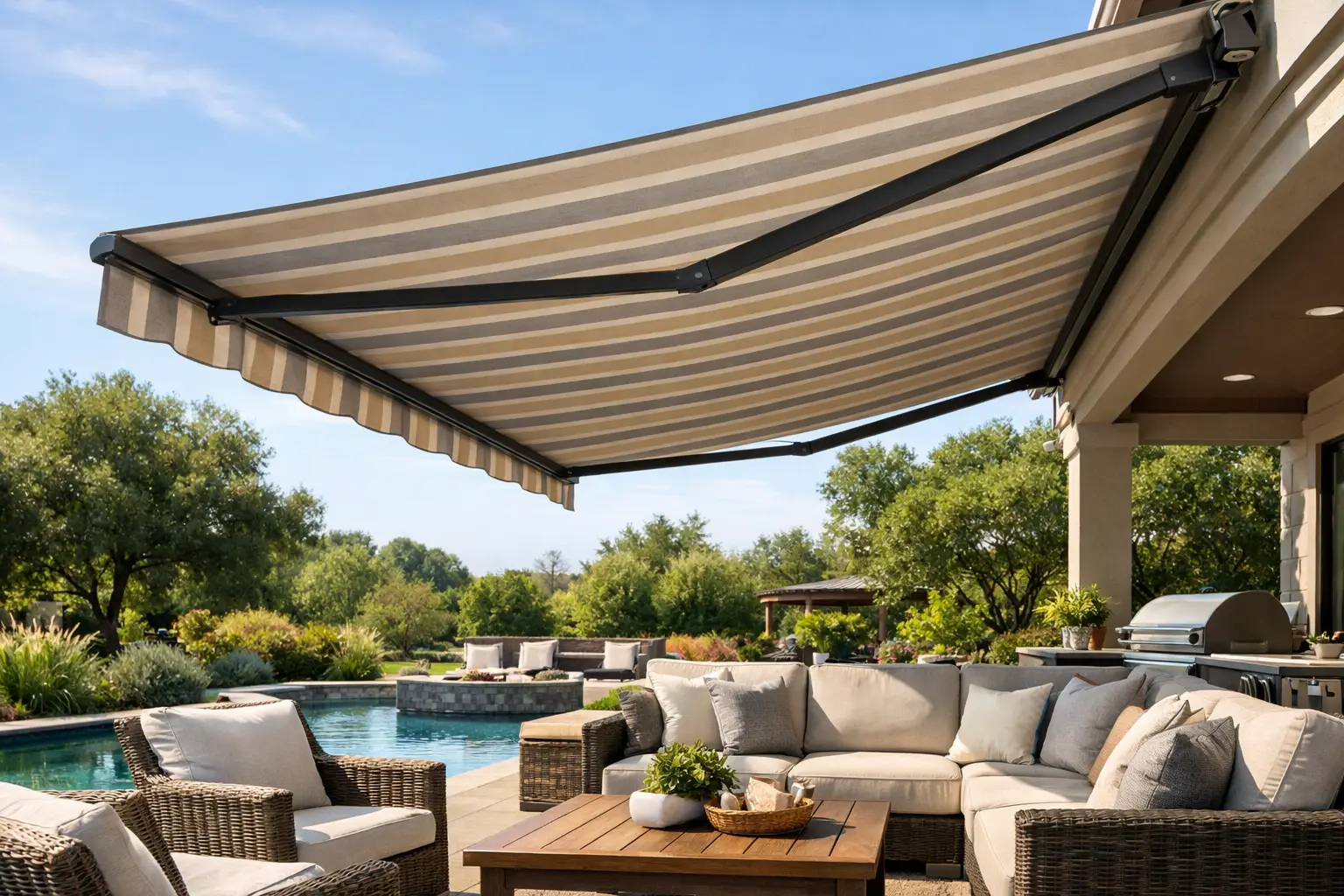
Custom Awnings for Backyard Shade That Last
A backyard that looks great at 10 a.m. can feel unusable by 2 p.m. Direct sun changes how long people stay outside, how hot adjacent rooms become, and whether a patio works for dining, relaxing, or entertaining. That is why custom awnings for backyard shade are less about adding an accessory and more about making outdoor space function properly.
When an awning is selected well, it does three jobs at once. It creates dependable shade, supports the design of the home, and gives you a more precise level of control than umbrellas or temporary shade products ever can. The key word is custom. Backyard spaces vary widely in orientation, size, wind exposure, and architectural style, so the right solution depends on how the space is actually used.
Why custom awnings for backyard shade outperform off-the-shelf options
Most homeowners start by comparing a custom awning to a patio umbrella, shade sail, or a standard-size awning ordered online. The difference usually comes down to coverage, fit, and long-term performance.
A custom awning is built around the dimensions and conditions of your space. That matters if your patio has unusual widths, doors that need clearance, low rooflines, or sun exposure that shifts sharply across the afternoon. Standard products tend to leave gaps, project too far or not far enough, or look visually disconnected from the house.
There is also the issue of usability. Backyard shade needs are rarely one-size-fits-all. A family that wants to cool a dining area has different priorities than a homeowner shading a poolside lounge or an outdoor kitchen. Designers and builders often need to coordinate projection, mounting style, frame finish, and fabric color with other exterior elements. A custom approach gives that level of control.
Choosing the right style of awning
Not every backyard calls for the same system. The best option depends on whether you want flexible shade, permanent coverage, a minimal profile, or a more architectural look.
Retractable awnings
Retractable awnings are one of the most popular choices for backyard applications because they give you control. Extend the awning when the patio is in full sun, then retract it when you want open sky or when weather conditions change. This flexibility is a strong advantage for homeowners who use the backyard differently throughout the day and across seasons.
They also tend to appeal to design-conscious buyers because the structure stays more streamlined when not in use. With premium systems, motorization can make operation far easier, especially on larger widths where manual operation feels less practical.
The trade-off is that retractable systems need proper specification. Projection, pitch, mounting surface, and wind conditions all matter. A poorly matched retractable awning can underperform even if the product itself is high quality.
Fixed awnings
Fixed awnings work well when consistent coverage is the priority. If a patio, grill station, or rear sitting area always needs protection, a fixed structure can make sense. This style can also complement homes with defined architectural lines where a permanent exterior feature feels intentional.
Because they remain in place, fixed awnings can offer a more anchored visual presence. They are often selected when homeowners want shade that is always ready, without depending on extension and retraction.
That said, fixed awnings are less adaptable. If your backyard gets valuable winter sun or if you prefer a seasonally open look, a fixed model may feel restrictive compared with a retractable system.
Pergola-style and specialty shading systems
For larger outdoor living areas, specialty systems such as pergola-mounted shading solutions can be a better fit than a traditional wall-mounted awning. These are often chosen for expansive patios, contemporary homes, or projects where shade needs to cover a broader footprint with a more structural appearance.
They can also be a smart choice where wall mounting is limited or where homeowners want a stronger sense of defined outdoor room design. In many renovation and new-build projects, this category offers more design freedom, but it usually comes with a higher level of planning and investment.
Fabric, frame, and finish are not just cosmetic decisions
One of the biggest misconceptions is that fabric selection is mostly about color. In reality, fabric affects solar performance, glare reduction, maintenance, and overall visual comfort.
Lighter fabrics often reflect more heat and can help keep the area beneath the awning brighter. Darker fabrics may create a more dramatic look and better outward visibility from underneath, but they can change the mood of the space and absorb more heat. Pattern, valance style, and edge detailing also influence whether the awning reads traditional, transitional, or contemporary.
Frame finish matters just as much. The hardware should coordinate with exterior trim, window color, brick, siding, or metal accents. On a well-designed installation, the awning looks integrated with the house rather than attached as an afterthought.
Durability should stay part of the conversation too. Backyard awnings are exposed to UV, moisture, and fluctuating temperatures. Better materials and better fabrication tend to hold their shape, color, and operating performance longer, which is especially important for larger systems and premium outdoor spaces.
What to consider before specifying custom awnings for backyard shade
This is where expert guidance earns its value. A backyard awning should be chosen based on real site conditions, not just inspiration photos.
Sun direction and time of day
A patio that faces west has very different shading demands than one with morning sun only. If late afternoon heat is the main problem, projection and angle become critical. If glare inside the home is part of the issue, the awning needs to address both outdoor comfort and interior light control.
Size of the usable zone
It helps to think beyond patio dimensions alone. What area actually needs shade? Sometimes homeowners want to cover a full slab when only the dining set and doorway need protection. In other cases, the visible patio is large, but the seating arrangement is compact enough that a more targeted awning performs better and looks cleaner.
Mounting conditions
Wall structure, soffits, roof overhangs, and door or window placement can influence what is possible. This is one reason custom specification matters so much. The most attractive awning on paper still needs to mount correctly and operate with the right pitch and clearance.
Wind and weather exposure
Local weather patterns affect product choice. Open backyards and elevated properties may require more careful planning than sheltered spaces. This does not automatically rule out a retractable awning, but it can influence system type, controls, and recommendations for use.
Motorization changes how an awning gets used
For many homeowners, motorization starts as a convenience upgrade and quickly becomes the feature they value most. A motorized awning is simply easier to use, which means it is more likely to be used regularly.
That matters more than it sounds. Backyard shading only works if people actually adjust it when conditions change. Motorization makes that practical, especially for larger installations or for users who want simpler day-to-day operation. It also aligns well with homes that already prioritize automated shades, lighting, or smart-home integration.
For design professionals and builders, motorization can also make a project feel more complete. It supports the premium expectation of a custom exterior shading system and often improves the client experience after installation.
Design matters as much as shade performance
The best backyard awnings do not just block sun. They shape how the outdoor space feels.
A broad striped fabric can create a more classic resort look. A solid neutral with a clean cassette profile may suit a modern rear elevation. The scale of the awning relative to the windows, doors, and patio furniture affects visual balance. So does the relationship between the awning and other exterior elements such as pergolas, railings, landscaping, and outdoor kitchens.
This is where a showroom-guided selection process has an advantage. Seeing fabrics, mechanisms, and finish options together helps narrow decisions that are hard to make from online photos alone. Homeowners get a better sense of proportion and quality, while trade professionals can coordinate finishes and performance needs more precisely.
When a custom quote is the smarter starting point
Pricing for custom awnings varies because the specification varies. Width, projection, operating system, fabric grade, frame design, and installation conditions all affect cost. That is why broad price ranges are rarely useful on their own.
A quote-based process tends to lead to better results because it starts with what the space actually needs. In a market like Toronto, where homes range from compact urban backyards to larger suburban outdoor living areas, the right recommendation can shift significantly from one property to the next. A consultation helps sort out whether you need a simple retractable awning over a small patio door area or a more substantial system for an outdoor entertaining zone.
If you are comparing options, the better question is not just what the awning costs. Ask what level of shade, durability, finish quality, and operating convenience you want the system to deliver over time.
Custom awnings work best when they are treated as part of the outdoor design plan, not a last-minute add-on. If your backyard is getting used less because of harsh sun, heat, or glare, the right awning can change that quickly – and in a way that looks considered from the street, the patio, and inside the home.