
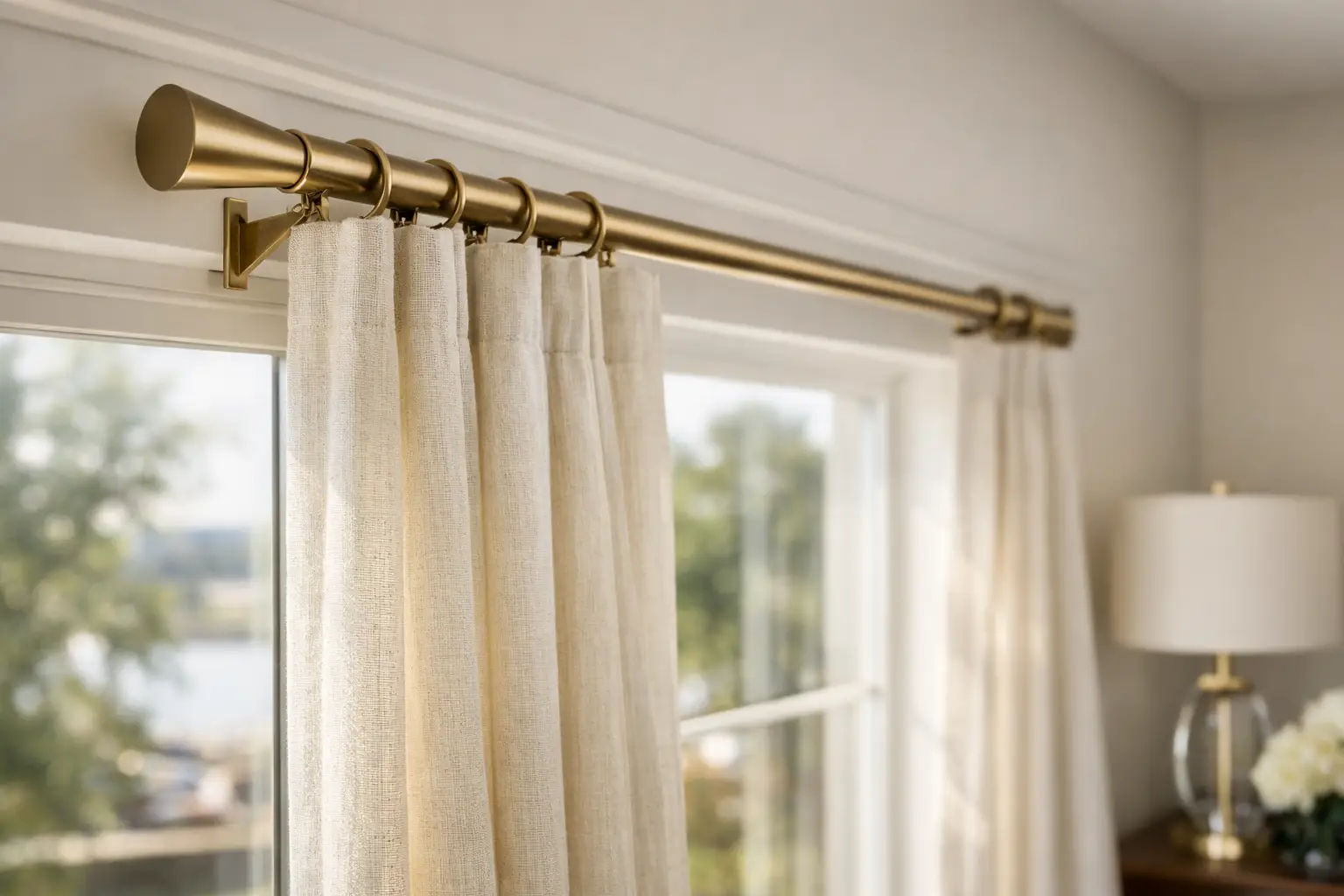
Designer Window Hardware That Finishes the Room
A window treatment can have the right fabric, the right opacity, and the right color – and still feel unfinished. That usually happens when the hardware is treated as an afterthought. Designer window hardware is what gives a treatment its structure, its movement, and much of its visual polish. It is also where practical performance shows up in daily use, from smooth drapery operation to better support for wider spans and motorized systems.
For homeowners and design professionals, this is one of the easiest places to improve the finished result of a room. Hardware affects scale, sightlines, stack-back, durability, and how well a treatment integrates with automation or layered shading. When the hardware is selected with the same care as the fabric or shade style, the whole installation looks more intentional.
What designer window hardware really includes
The phrase often brings to mind decorative rods and finials, but the category is broader than that. Designer window hardware can include traverse rods, curtain rods, rings, brackets, finials, holdbacks, tiebacks, motorized tracks, mounting systems, and concealed components that support Roman shades, woven shades, and drapery panels. In many projects, the most important hardware is the part you barely notice because it makes the treatment sit correctly and operate cleanly.
That distinction matters. Some rooms benefit from visible hardware that acts like jewelry for the window. Others need hardware to disappear so the fabric, trim detail, or architectural lines take the lead. Neither approach is better by default. The right choice depends on ceiling height, window size, room style, and how often the treatment will be opened and closed.
Why designer window hardware matters more than people expect
A good-looking rod that cannot support the panel weight is not good hardware. A sleek motorized track that does not allow proper stack-back can make a large window feel cramped. This is why hardware selection is not only decorative. It affects function every day.
In a living room, the hardware determines how far drapery panels can clear the glass and how neatly they stack when open. In a bedroom, it helps control light gaps and supports blackout layering. In a condo, slim-profile hardware may be the difference between a clean fit and an installation that interferes with handles, doors, or limited wall space.
There is also a durability factor. Lower-grade hardware may flex, sag, bind, or show wear quickly in high-use areas. For wide windows, tall ceilings, and heavier textiles, better hardware is not a luxury detail. It is what keeps the installation working and looking right over time.
Matching hardware to the treatment style
The best hardware choices begin with the treatment, not with the finish sample. Drapery needs one kind of support and movement. Roller shades, Roman shades, and woven woods have different mounting requirements. Layered treatments add another level of complexity because each layer affects projection and clearance.
For decorative side panels, a stationary rod may be enough if the drapery is largely for softness and framing. If the panels will open and close regularly, a traverse system often makes more sense because it improves operation and protects the fabric from excessive handling. This is especially useful on wider windows or in formal spaces where a smooth, even draw matters.
For layered treatments, projection becomes critical. A shade mounted close to the window may need drapery hardware that extends farther into the room so the panels hang properly without pressing into the fabric or obstructing shade movement. If the wrong bracket depth is chosen, the whole treatment can look crowded.
Motorization changes the conversation again. Automated drapery tracks and shade systems require clean power planning, proper mounting conditions, and enough room for operation. The visual result can be minimal and elegant, but the specification needs to happen early, especially in new construction or full renovations.
Finishes, profiles, and the role of style
Once the functional requirements are clear, the design choices become more meaningful. Finish is usually the first thing clients notice. Matte black, brushed nickel, antique brass, bronze, and soft metallics each create a different relationship with the room.
Matte black hardware gives strong definition and works well when a room has black window frames, lighting, or furniture accents. Warm brass and bronze can soften contemporary spaces and add richness to neutral palettes. Brushed nickel tends to feel quieter and more transitional. The best finish is often the one that connects the treatment to other materials in the space without looking too matched.
Profile matters just as much as finish. A thick rod with oversized finials can ground a large traditional room, but it may overwhelm a compact bedroom or condo. Slim hardware often suits modern interiors, especially where clean lines and limited visual clutter are part of the design goal. On the other hand, going too small can make a wide window feel underdressed or under-supported.
This is where scale needs real attention. Ceiling height, panel fullness, wall width, and furniture placement all influence what looks proportionate. Hardware should feel deliberate, not incidental.
Designer window hardware for modern homes
In contemporary homes, designer window hardware often leans toward simpler forms and better integration. Ripplefold drapery on a track, low-profile rods, concealed brackets, and motorized systems are common because they support a cleaner look. They also pair well with roller shades, solar shades, and automated light-control solutions.
That does not mean decorative hardware is off the table. It means ornament has to be intentional. A refined metal finish, a tailored bracket, or a slim end cap can deliver enough detail without competing with the architecture. In open-concept spaces, this restraint often helps the room feel more cohesive.
For design professionals, this is also where brand and system selection can matter. The appearance of the hardware is important, but so is consistency in operation, available sizes, finish quality, and compatibility with shade and automation systems used elsewhere in the project.
Where custom specification makes the biggest difference
Off-the-shelf hardware can work in straightforward situations, but many projects are not straightforward. Large expanses of glass, corner windows, arched openings, layered treatments, and extra-tall rooms usually need more precise planning. The same is true when the treatment has to meet both design goals and functional needs such as blackout, child safety, privacy, or smart-home control.
Custom specification helps with exact rod lengths, bracket placement, return details, track configurations, and mounting conditions. It also helps avoid common problems, such as panels that do not clear the glass, rods that look too short for the wall, or hardware that conflicts with trim, handles, or HVAC elements.
For builders and renovators, planning hardware early can prevent expensive adjustments later. For homeowners, it usually means the finished treatment looks more polished and works better from day one. For interior designers, it protects the visual intent of the room.
Common mistakes when choosing designer window hardware
The biggest mistake is choosing hardware by finish alone. A beautiful finish cannot correct the wrong projection, poor support, or inadequate operating system. Another common issue is underestimating panel weight, especially with lined or blackout drapery. Heavier fabrics need stronger support and sometimes more brackets than people expect.
Mounting height is another frequent problem. Hardware installed too low can visually shorten the room. Installed too narrow, it can block glass and make windows look smaller. The right placement depends on the architecture and the treatment style, but it rarely comes from guesswork.
It is also easy to overlook daily habits. A guest room may not need the same hardware performance as a family room slider used multiple times a day. A decorative rod may be perfectly appropriate in one space and completely impractical in another. Good selection always comes back to how the room is used.
How to choose the right designer window hardware
Start with three questions. Will the treatment be decorative, functional, or both? How often will it be operated? What should stand out – the fabric, the hardware, or the architecture? Those answers narrow the field quickly.
After that, the details matter: span width, mounting surface, treatment weight, layering depth, finish direction, and whether automation is part of the plan. This is where showroom guidance and custom quoting are useful, because hardware is rarely one-size-fits-all when the goal is a premium result. A complete specification can coordinate drapery, shades, brackets, rods, tracks, and motorization so the final installation feels resolved rather than pieced together.
For clients furnishing a full home or managing a renovation, the smartest move is usually to treat hardware as part of the design plan from the start, not as a final add-on. That shift leads to better proportions, fewer compromises, and a result that looks custom because it actually is.
The last thing most people notice in a well-designed window treatment is often the thing holding everything together. That is the quiet value of getting the hardware right.