
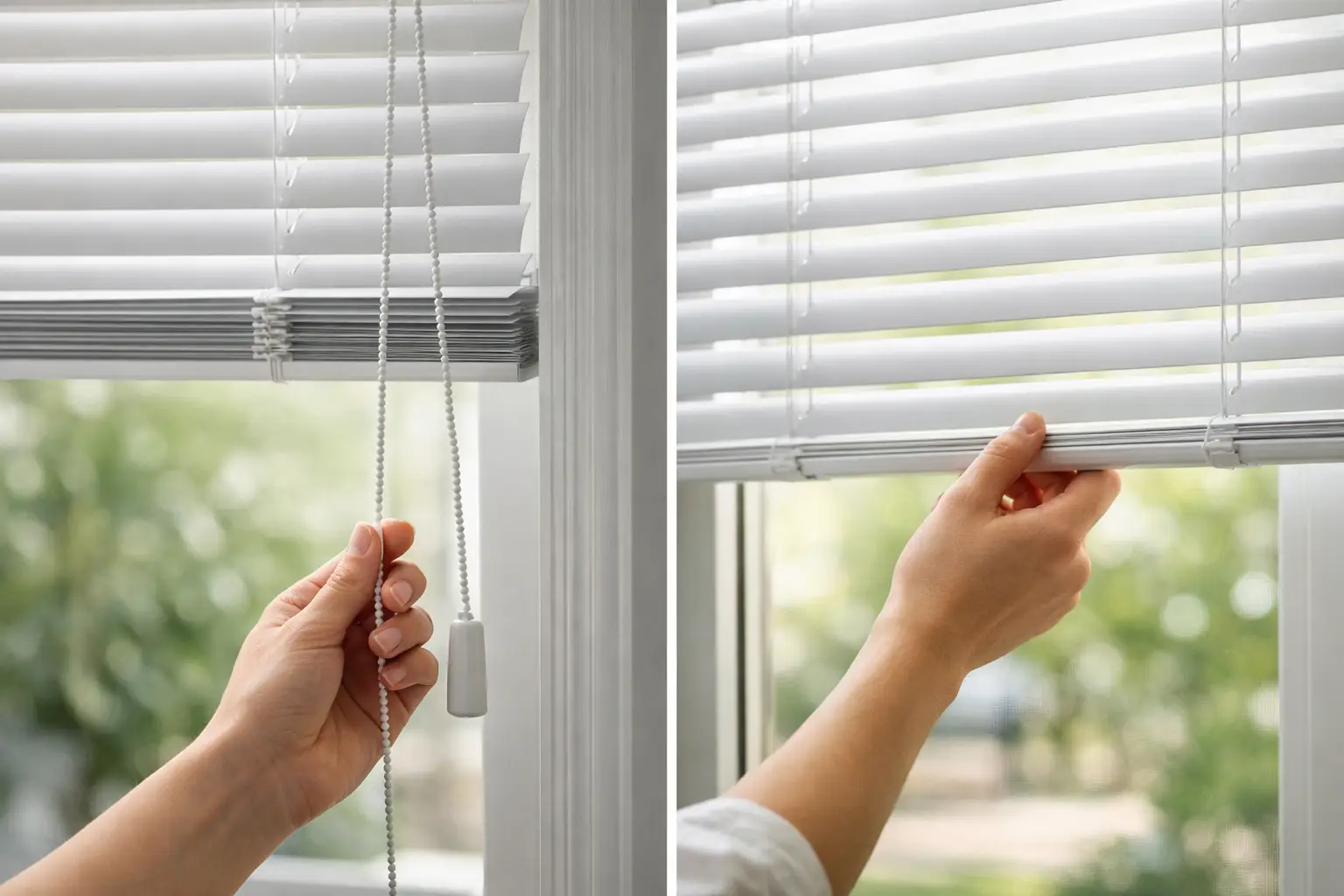
Corded vs Cordless Blinds: Which Fits Best?
A blind can look perfect in the showroom and still feel wrong once you live with it every day. That usually comes down to operation. When homeowners compare corded vs cordless blinds, they are not just choosing a lift mechanism. They are deciding how the window treatment will function in real rooms, with real furniture layouts, kids, pets, privacy needs, and design priorities.
For some spaces, a traditional corded system still makes practical sense. In others, cordless operation is the clear winner for safety, appearance, and ease of use. The right answer depends on the window, the user, and the level of convenience you expect from the finished product.
Corded vs cordless blinds at a glance
The biggest difference between corded and cordless blinds is how the blind is raised, lowered, and adjusted. Corded blinds use visible pull cords or looped control systems. Cordless blinds operate without hanging cords, typically using a spring-assisted or internally controlled lift system that lets you move the blind by hand.
That sounds simple, but the impact is significant. Operation affects safety, especially in homes with children. It affects aesthetics, because visible cords create a more traditional look while cordless systems feel cleaner and more current. It also affects usability, since some people prefer the familiarity and precision of cords, while others want a streamlined product with less visual clutter.
Why cordless blinds have become the default choice
Cordless blinds have moved from premium upgrade to standard expectation in many homes. The reason is not just trend-driven style. They solve several common concerns at once.
Safety is the first and most obvious factor. Exposed cords can create a hazard for children and pets, which is why many homeowners now start their search by asking for cordless options. In bedrooms, nurseries, family rooms, and anywhere younger children spend time, cordless operation often feels less like a feature and more like the responsible choice.
There is also the design side. Cordless blinds present a cleaner window line because there are no dangling lift cords interrupting the look. In modern interiors, condos, and renovated homes where simplicity matters, that detail helps the window treatment feel more integrated with the room rather than added onto it.
Day-to-day use is another advantage. If you open and close blinds often, cordless operation can feel easier and faster. There is no cord to pull, wrap, or manage. That convenience becomes more noticeable in kitchens, bathrooms, and living areas where windows are part of a daily routine.
Where corded blinds still make sense
Corded blinds are not outdated by default. In some applications, they remain a practical and worthwhile choice.
Larger or harder-to-reach windows are one example. Depending on the blind style and size, a corded lift may offer more controlled operation, especially when the treatment is tall or mounted above furniture. If the user wants precise positioning without reaching up to adjust the blind directly, a corded system can be more comfortable.
Budget can also play a role. While the price gap is not always dramatic, corded blinds can sometimes offer a more economical entry point, particularly for straightforward installations or secondary rooms where design polish is less of a priority.
There is also user preference. Some clients simply like the familiar feel of corded operation. In utility spaces, rental properties, or projects where a traditional mechanism is acceptable and safety concerns are limited, corded blinds may still fit the brief.
Safety is not a side issue
If there is one area where corded vs cordless blinds is not an even comparison, it is safety. Homes with young children should take this seriously. Even in well-designed spaces, a hanging cord near a crib, bed, bench, or low furniture can create risk.
That does not mean every corded product is automatically wrong. Some systems use tension devices, cord cleats, or other safety features that improve performance. But if you want the simplest way to reduce cord-related concerns, cordless is the cleaner answer.
For many families, that alone settles the decision. Once safety becomes the top priority, the product selection narrows naturally toward cordless blinds, cordless shades, or motorized solutions.
Design impact: subtle difference, big result
Window treatments influence a room even when you are not actively looking at them. That is why operation style matters more than people expect.
Cordless blinds tend to support a more refined, tailored appearance. Without exposed cords, the window looks less busy. This is especially helpful in spaces with large glass areas, layered treatments, or minimalist design schemes where every visible detail carries more weight.
Corded blinds can still look attractive, particularly in traditional interiors or rooms where function matters more than visual minimalism. But if the goal is a polished custom look, cordless often aligns better with current residential design preferences.
In open-concept homes, the difference is even more noticeable. Clean sightlines matter. A cordless product helps the entire elevation feel quieter and more intentional.
Ease of use depends on the window
The idea that cordless is always easier is mostly true, but not universally true. The better question is easier for which window and which user.
On a standard bedroom or living room window, cordless operation is straightforward and intuitive. Raise the blind. Lower it. Adjust it to the height you want. For everyday use, that simplicity is a strong selling point.
But on oversized windows, very tall openings, or windows behind deep furniture, a corded lift can still offer practical benefits. Reaching to manually guide a cordless blind may be less convenient than using a cord, especially for older adults or anyone with limited mobility.
This is where consultation matters. The best product is not just the best mechanism on paper. It is the mechanism that works comfortably in the room as it is actually furnished and used.
Cost, durability, and long-term value
Price matters, but so does what you are buying for that price. Cordless blinds may cost more in some categories, yet many buyers see that premium as worthwhile because it combines cleaner design, safer operation, and broader resale appeal.
Durability depends on product quality, brand, and usage habits more than on a simple corded-versus-cordless label. A well-made custom blind from a strong manufacturer will usually outperform a lower-grade product regardless of lift style. That said, any operating system has wear points. Corded systems can experience cord wear over time, while cordless mechanisms depend on internal components that should be matched properly to the size and weight of the blind.
For that reason, custom specification matters. The operating system should suit the blind material, window dimensions, and frequency of use. A one-size-fits-all approach is where disappointment tends to start.
When motorization enters the conversation
For some projects, corded vs cordless blinds is only part of the decision. The real comparison is corded, cordless, or motorized.
Motorization is especially appealing for large windows, multiple windows in one room, hard-to-reach openings, and homes where convenience is a priority. It eliminates manual cords while going beyond standard cordless operation. It also fits well with smart-home planning, scheduled light control, and premium whole-home design.
If you are already investing in custom window treatments for a primary bedroom, main living area, or new build, it is worth asking whether cordless is the final step you want, or whether automation would better match the project.
How to choose the right option for your space
The most useful way to decide between corded vs cordless blinds is to think room by room. A nursery and a formal dining room may not need the same solution. A basement window and a feature wall of floor-to-ceiling glass should not be treated as identical problems.
Start with safety. Then consider visual style, accessibility, frequency of use, and budget. Think about who will operate the blind most often. Consider whether the window sits behind a sofa, kitchen sink, freestanding tub, or stair landing. Those details quickly clarify what will feel easy and what will become annoying.
It also helps to think beyond the blind itself. If the project includes layered drapery, room-darkening needs, privacy requirements, or smart-home integration, the operating system should support the broader design plan rather than compete with it.
At Window Fashions Depot, this is typically where a custom consultation adds the most value. The right answer is rarely based on one feature alone. It comes from matching operation, style, scale, and room function so the finished treatment performs as well as it looks.
If you are choosing blinds for a home you plan to enjoy for years, the best decision is usually the one that disappears into daily life – easy to use, appropriate for the room, and right for the way you actually live.