
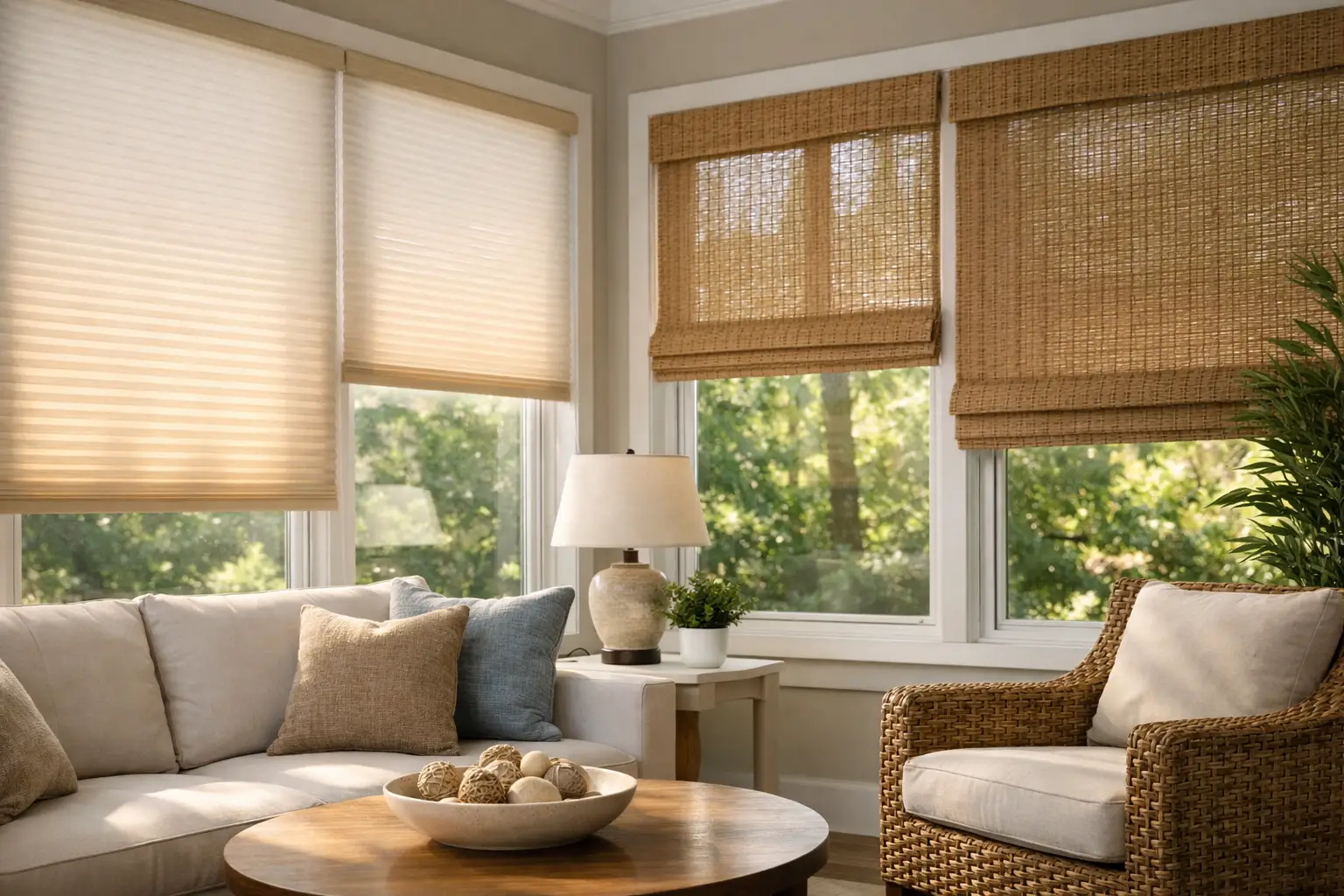
Best Shades for Sunrooms That Actually Work
By 3 p.m., a sunroom can shift from bright and inviting to uncomfortably hot, full of glare, and hard on furniture. That is why choosing the best shades for sunrooms is less about filling a window and more about managing light, heat, privacy, and style at the same time. The right shade should soften the room without taking away the reason you wanted a sunroom in the first place.
Sunrooms are different from standard living spaces because they usually have more glass, stronger sun exposure, and wider seasonal swings. A treatment that looks great in a bedroom may underperform in a south-facing sunroom with afternoon heat. That is where product selection matters. Fabric openness, insulation value, UV filtering, operating system, and even how the shades stack when raised all play a role.
What makes the best shades for sunrooms different
The main challenge in a sunroom is balance. You want to preserve natural light and outdoor views, but you also need relief from solar heat gain, screen glare, and fading on floors or furniture. In many projects, no single feature should drive the decision on its own.
For example, a very sheer fabric may keep the room visually open, but it will not offer the same insulation or privacy as a cellular shade. A blackout option may solve glare, but it can make the space feel closed off during the day. The best result usually comes from matching the shade type to how the room is actually used – morning coffee room, four-season lounge, TV space, plant room, dining area, or multipurpose extension.
Window orientation also matters. West-facing sunrooms typically need more aggressive glare and heat control than north-facing ones. Large slider walls, angled windows, and transoms can also affect which operating systems and fabrics make sense.
The best shades for sunrooms by performance
Solar shades for glare and view preservation
Solar shades are often the first product considered for sunrooms, and for good reason. They are designed to filter sunlight, reduce glare, and help protect interiors from UV exposure while still maintaining a view outside. In a room built around windows, that balance is hard to beat.
The key detail is openness factor. A more open weave preserves view better but lets in more light and heat. A tighter weave gives stronger glare control and privacy, but the room will feel more filtered. For sunrooms used for reading, working, or watching TV, solar shades usually offer one of the most practical solutions.
They also fit cleanly into contemporary spaces. If your goal is a streamlined look with minimal visual weight, roller-style solar shades tend to work well. Motorization is especially useful in sunrooms with tall or hard-to-reach windows.
Cellular shades for insulation and energy efficiency
If temperature control is a major concern, cellular shades are among the best shades for sunrooms. Their honeycomb construction traps air and helps reduce heat transfer, which can make a noticeable difference in rooms that get too hot in summer or feel chilly in cooler months.
This is often a strong choice for four-season sunrooms or enclosed patio conversions where comfort matters beyond just midday sun. Light-filtering cellular fabrics can still keep the room bright, while offering more softness and insulation than a typical screen shade.
The trade-off is view. Unlike solar shades, cellular shades do not preserve an open sightline when lowered. If the scenery is the main feature of your room, that may feel limiting. But if comfort and energy performance are top priorities, they deserve serious consideration.
Roller shades for clean style and flexible light control
Roller shades are a broad category, which is exactly why they work well in sunrooms. They can be specified in light-filtering, room-darkening, solar, and decorative fabrics, so the look can stay consistent even when the performance changes from one area to another.
For homeowners and designers who want a tailored, modern finish, roller shades are often the easiest way to coordinate large expanses of glass. They also pair well with fascia details, side channels in some applications, and smart controls.
What matters most is fabric selection. A roller shade is only as effective as the material chosen for the room. In a high-sun environment, this is not the place to select by color alone.
Roman shades for a softer design statement
Roman shades are not always the first answer for sunrooms, but they can be the right one in spaces where design warmth matters as much as solar control. If the sunroom connects directly to a living room, breakfast area, or sitting room with more traditional or transitional furnishings, Romans can create a more finished interior look.
They are best used where the room does not face extreme direct sun all day, or where layered planning addresses performance elsewhere. Fabric choice is critical, especially in bright exposures where fading and heat buildup can affect longevity.
Roman shades are usually more about style, softness, and decorative impact than maximum technical performance. That does not make them wrong for a sunroom. It just means they need to be chosen with realistic expectations.
Natural woven shades for texture and filtered light
Woven wood and natural-texture shades can look beautiful in sunrooms because they echo the relaxed, indoor-outdoor character of the space. They add dimension, organic texture, and a casual upscale feel that many homeowners want.
Their filtered light effect can be especially appealing in morning rooms or sun-filled sitting areas. But these shades vary significantly by material density and liner options. Some offer minimal privacy and limited glare control on their own, while others can be upgraded for better performance.
If your main objective is to create atmosphere rather than precise solar management, woven shades can be a strong aesthetic choice. If heat and glare are the bigger problem, a more technical shade system may serve the room better.
How to choose the best shades for sunrooms
Start with the room’s strongest pain point. If the issue is heat, focus on cellular or performance-driven solar fabrics. If glare on screens is the problem, solar shades with the right openness factor are often the best place to start. If the room feels exposed at night, privacy needs to be part of the specification from the beginning.
Next, look at how much view retention really matters. Many people say they do not want to lose the view, but they also want the room usable all day. That tension usually narrows the field quickly. A filtered view with comfort is often more livable than a full view with constant glare.
Then consider operation. Sunrooms often have oversized windows, stacked windows, or awkward reach conditions. Manual controls can work on standard openings, but motorized shades are frequently worth it here. They make it easier to adjust multiple shades throughout the day and help the room perform the way it should.
Finally, think about the room from both inside and outside. Since sunrooms have so much glass, uniformity matters. Shade style, fabric color, and stack height all affect the finished result.
When layered solutions make more sense
Some sunrooms need more than one treatment strategy. A common example is pairing solar shades for daytime glare control with drapery panels for softness and evening privacy. Another is using one fabric type on the most exposed elevation and a different but coordinated product on side windows.
This is often the difference between a decent result and a well-resolved one. A sunroom with mixed exposures may not perform well with a one-product-fits-all approach. Custom specification allows the room to look cohesive while still responding to actual sunlight conditions.
Details that matter more than people expect
Fabric color affects performance. Lighter fabrics can reflect more heat, while darker fabrics often preserve outward view better. Neither is universally better. It depends on whether your priority is solar reflection, view clarity, or the overall interior palette.
Mounting also matters. An inside mount can look crisp and architectural, but it may allow more light gaps. An outside mount can improve coverage and light control, especially on window frames that are shallow or uneven.
Then there is automation. In a sunroom, motorized shades are not just a luxury feature. They can be the practical answer for tall glass, grouped openings, and changing sun angles throughout the day. Integration with timers or smart-home systems can also help protect interiors when the room is unoccupied.
For homeowners and trade professionals planning a custom project, this is where expert guidance pays off. Product breadth matters because sunrooms rarely fit into a single standard answer. A showroom-driven selection process, like the one offered by Window Fashions Depot, makes it easier to compare fabrics, operating systems, and shade styles based on how the room will actually be used.
The best shade for a sunroom is the one that makes the space usable more often, not the one that disappears most completely when you first look at samples. If your sunroom feels too bright, too hot, or too exposed, the solution is usually in the details – and the right custom shade can change the room from occasional space to everyday favorite.