
Sound Absorbing Window Treatments That Work
A street-facing bedroom can look beautifully finished and still feel unsettled when traffic, conversation, or hard-surfaced room echo keeps carrying through the space. Sound absorbing window treatments can make a noticeable difference, but choosing the right solution starts with a clear distinction: absorbing sound inside a room is not the same as blocking sound from outdoors.
Soft, substantial window coverings reduce reflected sound waves, helping a room feel quieter and less sharp. Reducing noise entering through a window requires a more complete strategy involving the glass, frame, seals, wall construction, and the treatment itself. The best custom specification often addresses both goals without sacrificing the light control, privacy, and design character the room needs.
What sound absorbing window treatments actually do
When sound hits a hard surface such as glass, bare drywall, wood flooring, or a painted shutter, much of it reflects back into the room. This creates reverberation – the lingering, busy quality often noticed in open-concept living areas, home offices, condos, and rooms with high ceilings.
Textile window treatments help by breaking up and absorbing some of that reflected energy. Full drapery is generally the strongest window-covering option for this purpose because its fabric surface, folds, air space, and potential lining all contribute to a softer acoustic environment. The effect is particularly welcome in rooms with large expanses of glazing, minimal furniture, or contemporary finishes such as stone, tile, and glass.
A treatment alone will not turn a noisy urban bedroom into a recording studio. If sound is leaking through gaps around the window, through a poorly sealed frame, or through single-pane glass, the window assembly remains the limiting factor. Still, a properly selected treatment can reduce perceived noise, soften room echo, and make the space more comfortable for rest, work, and conversation.
The best options for sound absorption
Custom drapery with a full, layered profile
For acoustic comfort, drapery is the first product category to consider. Heavier fabrics such as velvet, dense woven textiles, suede-like materials, and quality dim-out fabrics tend to absorb more sound than thin sheers or lightweight linen alone. A lined drapery panel adds body and can also improve light control, fabric protection, and visual polish.
Fullness matters as much as fabric selection. Panels that are generously sized and retain deep folds when closed present more soft material to the room. Drapery that extends beyond the window opening and reaches close to the floor is typically more effective than narrow, short panels mounted tightly within the frame. For bedrooms, media rooms, and street-facing living rooms, a design professional may recommend a room-darkening or blackout lining depending on the desired level of darkness.
The trade-off is volume. A fuller drapery treatment requires sufficient wall space, a suitable track or rod, and a fabric choice that fits the room’s style. In a compact condo, a carefully designed ripplefold system can provide a clean architectural look while still delivering more acoustic benefit than a flat shade alone.
Cellular shades for a quieter, more insulated feel
Honeycomb or cellular shades are valued primarily for energy efficiency, but their air-cell construction can also soften the sound experience around a window. They will not provide the same room-wide absorption as substantial drapery, yet they can be a practical choice where a streamlined profile, privacy, and thermal performance are priorities.
Cellular shades work especially well in bedrooms, nurseries, offices, and spaces where the treatment needs to fit closely to the window. Options with larger cells, opaque fabrics, and side channels may improve darkness and reduce light gaps. Their compact stack is useful when clients want acoustic improvement without covering architectural details or adding a wide drapery stack.
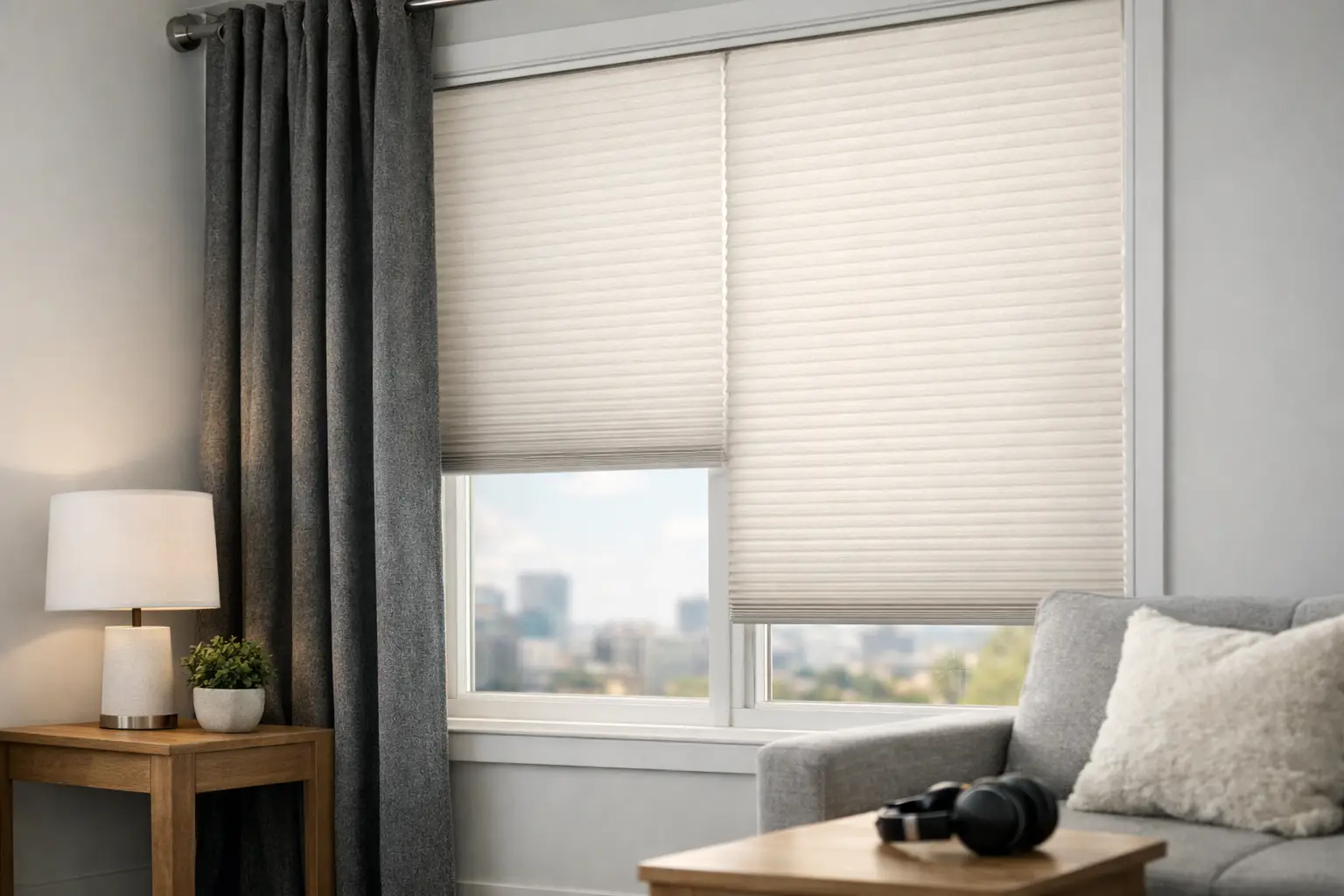
For stronger results, pair a cellular shade with decorative side panels or operable drapery. The shade provides everyday insulation and privacy, while the fabric layer adds softness and visual depth.
Roman shades and fabric roller shades
Roman shades introduce textile softness and can contribute modestly to sound absorption, particularly when made with a substantial fabric and lining. They are an excellent design-led option for dining rooms, offices, and bedrooms where tailored fabric detail is more appropriate than full drapery.
Fabric roller shades offer clean lines and broad performance choices, including solar, light-filtering, room-darkening, and blackout materials. On their own, most roller shades are not a leading acoustic solution because they sit relatively flat against the glass and use less material. They can, however, play an important supporting role in a layered treatment, managing glare and privacy behind drapery panels.
Woven woods and layered textures
Woven wood shades bring natural texture and warmth to a room, helping visually soften large windows. Their acoustic contribution varies significantly by weave, backing, and installation. An open weave may diffuse some reflections but will not offer the privacy, darkness, or sound control of a lined fabric treatment.
Adding a privacy liner and combining woven woods with drapery can create a more complete result. This approach is often chosen for living rooms and dining spaces where material character is as important as performance.
Sound absorption versus outdoor noise reduction
This distinction prevents costly disappointment. If the concern is interior echo from lively conversations, television audio, or a hard-finished great room, soft window treatments can help considerably. If the concern is a siren, train, construction noise, or a neighbor’s music coming through the glass, drapery may reduce the perception of that sound but cannot fully stop it.
For exterior noise, inspect the window first. Gaps in weatherstripping, poorly sealed frames, operable sash, and aging glazing can allow sound to enter. Upgrading seals, repairing the window, adding acoustic-grade glazing, or considering a secondary interior window system may have a greater impact than changing the window covering alone.
That does not make drapery an afterthought. A layered solution can improve the finished result after the window itself has been addressed. Close-fitting cellular shades or blackout shades behind full drapery are often a sensible combination for urban bedrooms and homes near busy roads.
Design and installation details that affect performance
The treatment should cover more than the glass whenever possible. Drapery tracks mounted near the ceiling and extended past each side of the window minimize exposed glass and create a more continuous fabric plane. Ceiling-mounted tracks are particularly effective for large windows, sliding doors, and floor-to-ceiling condo glazing.
For a treatment that will be closed often, motorization is worth considering. Motorized drapery tracks and shades make it easy to adjust coverings at bedtime, during work calls, or whenever outdoor activity increases. This is less about adding technology for its own sake and more about ensuring the treatment is used consistently. Systems from leading motorization platforms can also be scheduled around sleep routines and connected with broader smart-home controls.
Fabric selection should balance acoustics with maintenance and light. A dark, heavily textured velvet may offer excellent softness but can feel too formal for a bright coastal-inspired interior. A medium-weight lined fabric in a tailored wave may be the better fit for a modern family room. In rooms with moisture, pets, or frequent use, durability and cleanability deserve equal attention.
How to specify the right treatment for each room
Start with the problem you want to solve. A home office with echo needs more soft surfaces across the room, not just a window covering. A nursery beside a busy street may need room-darkening drapery, a close-fitting shade, and attention to window seals. A designer working on a large open-plan renovation may use drapery to improve acoustics while also defining the room’s scale and color story.
Measure carefully before selecting a style. Window width, ceiling height, stack-back space, door operation, radiator clearance, and nearby furniture all affect whether drapery, shades, or a layered system will function well. For difficult openings, custom consultation helps align fabric, hardware, lining, mounting method, and automation with the way the room is actually used.
Window Fashions Depot can help homeowners, designers, and builders compare custom drapery, cellular shades, Roman shades, and motorized systems in the context of the full room. The most successful sound-conscious treatment is not simply the heaviest fabric available. It is the one that fits the window precisely, supports the room’s design, and gives people an easier way to enjoy the quiet moments at home.