
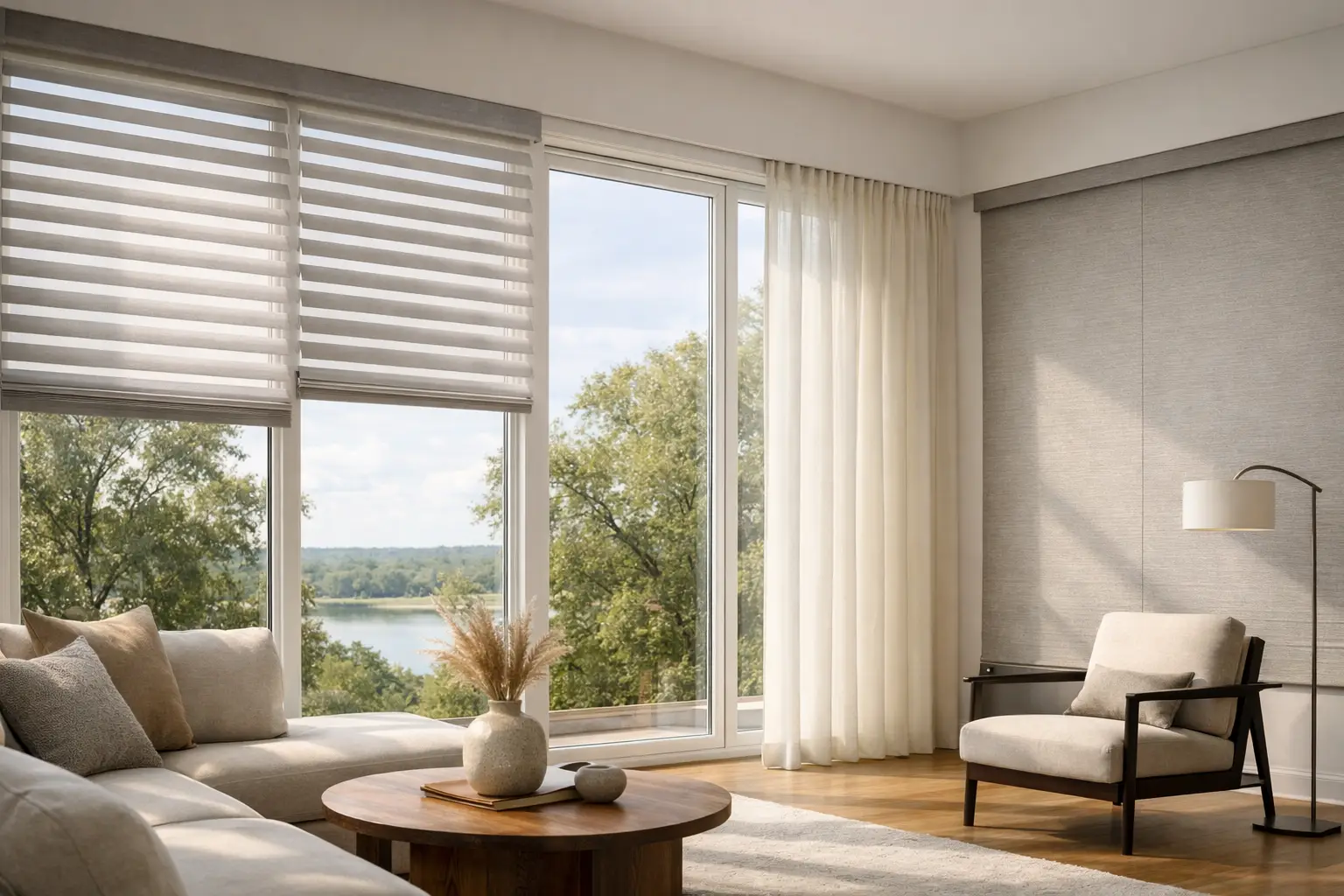
Best Blinds for Large Windows That Work Beautifully
A large expanse of glass can make a room feel extraordinary, but it also raises the stakes for every window-covering decision. The best blinds for large windows need to do more than look good from across the room. They must control glare without sacrificing the view, provide privacy after dark, operate reliably across wide openings, and feel proportional to the architecture.
A small ready-made blind may cover glass, but custom window treatments are designed around the realities of the opening: its width, height, exposure, window configuration, and how the room is used. The right choice is usually less about finding one universally “best” product and more about matching the system to the window.
What Large Windows Need From a Blind
Wide windows introduce challenges that are easy to overlook during a first showroom visit. A single oversized shade can become heavy to lift, while a treatment with too many narrow sections may interrupt a beautiful view. Sun-facing glass can create intense glare and unwanted heat, especially in living rooms, home offices, and condos with floor-to-ceiling windows.
Before choosing a style, consider whether the priority is daytime glare reduction, full privacy, insulation, room darkening, or preserving sightlines. Also consider the direction the treatment needs to travel. Vertical movement often suits wide, low windows. Side-to-side operation is usually more natural for sliding doors and tall patio openings.
A professional measurement is particularly valuable for large windows. Even small variations in width, depth, or sill clearance affect whether a shade can be mounted inside the frame, whether it needs an outside mount, and how neatly multiple units will align.
Best Blinds for Large Windows by Application
Roller Shades for Clean, Modern Coverage
Roller shades are one of the most versatile choices for large windows. Their simple profile works well in contemporary homes, condos, and spaces where the window itself is a focal point. Available in solar screen fabrics, light-filtering materials, blackout fabrics, and decorative textiles, they can be specified for very different performance needs.
For a wide picture window, several roller shades installed on a shared fascia can look intentional while allowing each section to operate independently. This approach reduces the weight of each shade and gives more precise light control. For example, a homeowner can lower only the section receiving direct afternoon sun while leaving the rest of the window open.
Solar roller shades are especially effective where glare and heat are the main concerns. Their openness factor determines how much view and daylight remain visible through the fabric. A lower openness factor provides more screening and privacy during the day, while a higher openness factor preserves a clearer outward view. At night, however, solar shades do not provide complete privacy when interior lights are on, so a secondary layer may be appropriate.
Cellular Shades for Energy Efficiency
Honeycomb, or cellular, shades are a strong option for wide windows that lose heat in winter or gain too much heat in summer. Their pleated cells trap air, creating an insulating layer at the glass. This can make a meaningful difference in bedrooms, family rooms, and spaces with expansive north- or west-facing windows.
For large openings, cellular shades can be divided into coordinated sections to avoid excessive weight and maintain smooth operation. Top-down/bottom-up designs offer a useful balance of light and privacy, particularly when neighboring homes overlook a room. The lower portion can remain covered while daylight enters from above.
The trade-off is visual. Cellular shades have a softer, more textured look than roller shades, and their horizontal pleats are more apparent when raised or lowered. For some interiors, that warmth is a benefit. For minimalist spaces, a roller or panel system may feel more tailored.
Vertical Blinds and Panel Track Systems for Wide Openings
When a large window includes a sliding glass door or spans nearly wall to wall, vertical systems deserve serious consideration. Modern vertical blinds have come a long way from the narrow vinyl vanes many homeowners remember. Today’s options include fabric vanes, textured materials, and refined headrail systems that suit both classic and modern interiors.
Panel track blinds are another excellent answer for oversized glass. Broad fabric panels slide horizontally and stack neatly to one or both sides. They are well suited to patio doors, large picture windows, and contemporary rooms with clean architectural lines. Because the panels move sideways, access to a door remains straightforward.
Both solutions give flexible light control. Tilted vertical vanes can soften direct sun without completely closing off the room, while panel tracks offer a more solid, shade-like appearance. Panel tracks generally create a bolder visual statement, so they work best when there is sufficient wall space for the panels to stack clear of the glass.
Roman Shades When Design Is the Priority
Large windows do not have to be treated with strictly minimal products. Custom Roman shades add fabric, dimension, and a more decorative finish, making them a natural fit for dining rooms, formal living rooms, bedrooms, and traditional or transitional interiors.
For very wide windows, separate Roman shades are often preferable to one oversized unit. Matching shades can be aligned across the opening, creating rhythm without placing too much stress on the lifting system. Fabric selection matters. A lined shade can improve privacy and light control, while a room-darkening liner is better suited to bedrooms or media rooms.
Roman shades are not usually the first recommendation for a door that is used frequently, nor are they ideal when the goal is an unobstructed view throughout the day. Their strength is their ability to make the window treatment part of the interior design rather than simply a functional covering.
Sheer Shades and Layered Treatments for Light Control
For rooms that need soft daylight rather than complete blackout, sheer shades offer a refined middle ground. They combine sheer fabric with adjustable vanes, allowing homeowners to diffuse sunlight while retaining a light, open feeling. On broad windows, multiple shades can be coordinated so the room maintains a consistent look.
Layering is another sophisticated solution for large glass. A solar shade can manage daytime glare and UV exposure, while drapery adds nighttime privacy, softness, and insulation. This combination is especially effective in principal living areas, where the window treatment must perform around the clock and complement furnishings, rugs, and wall colors.
Motorization Is More Than a Convenience
Manual operation becomes less practical as windows get wider, taller, or harder to reach. Motorized blinds and shades allow several treatments to move together with a remote, wall control, app, or smart-home system. For a wall of windows, this eliminates uneven positioning and the daily effort of operating multiple shades individually.
Motorization also supports better energy management. Scheduled operation can lower shades during the hottest part of the afternoon or close them at dusk for privacy. Systems from established manufacturers such as Lutron, Somfy, Hunter Douglas, and Graber offer options ranging from battery-powered shades to wired automation for new construction and major renovations.
The best motorization choice depends on access to power, the number of windows, and the level of integration desired. Battery power can be a practical retrofit option, while hardwired systems are often preferable for large-scale projects where long-term power management and concealed wiring are priorities.
Details That Make a Large Window Treatment Look Custom
The most successful installations treat a large window as part of the room, not as an isolated opening. Mounting height, panel spacing, fabric opacity, hardware finish, and stack location all influence the final result. An outside-mounted treatment can make a window appear taller and wider, while an inside mount emphasizes clean architectural lines when the frame has enough depth.
For multi-window walls, consistency matters. Matching shade heights and aligned bottom rails make separate units read as one composed installation. If windows are interrupted by mullions, separate treatments may be the most practical choice. If the goal is a continuous visual plane, shared valances, fascias, or coordinated drapery can unify the arrangement.
Color should support the room’s larger palette. Neutral solar fabrics tend to recede and protect the view, while woven textures, Roman-shade fabrics, and drapery can introduce warmth and contrast. White is not automatically the best choice, particularly against dark window frames or richly colored walls.
Choosing the Right Solution for Your Space
There is no single product that suits every large window. Roller shades are a leading choice for clean lines and glare control. Cellular shades are compelling where insulation matters. Vertical blinds and panel tracks solve wide doors and horizontal openings gracefully, while Roman shades and layered treatments bring a more decorative, furniture-like quality.
A custom consultation can clarify dimensions, fabric performance, operating requirements, and the way daylight moves through the room. Window Fashions Depot helps homeowners, designers, and builders compare these details across premium product lines and specify treatments that are proportioned for the glass rather than merely sized to cover it.
The right blind should let a large window keep its best quality – the light, view, and sense of scale that made the space worth designing around in the first place.
0 comments