
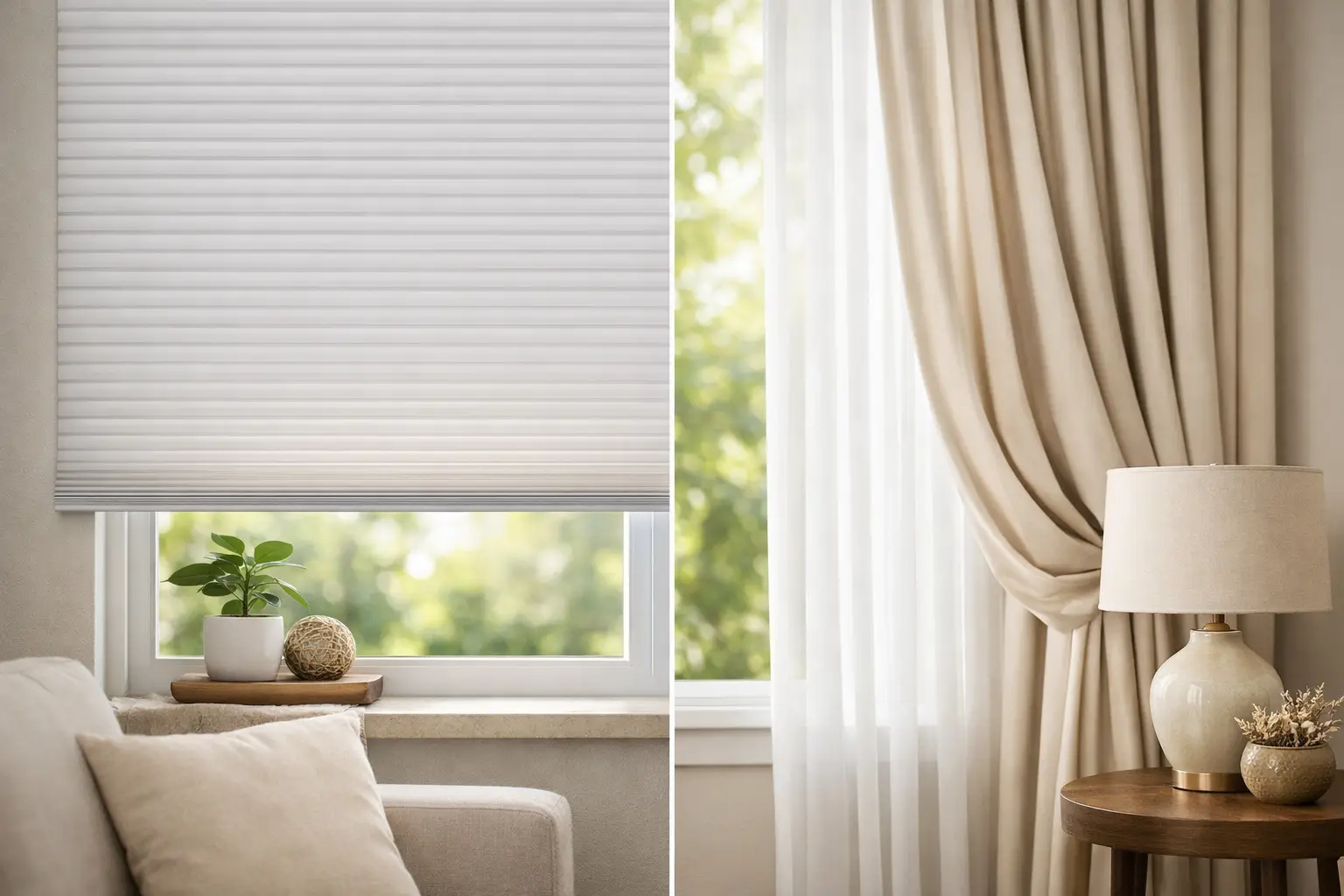
Cellular Shades vs Drapery for Your Home
A south-facing family room can look beautiful at noon and feel uncomfortably warm by 2 p.m. A bedroom may need complete privacy at night but a soft, welcoming look during the day. That is why the choice between cellular shades vs drapery is not simply a matter of fabric versus shade. Each solution manages light, temperature, privacy, and visual scale in a very different way.
For many homes, the best answer is not an either-or decision. Cellular shades can handle daily performance at the glass, while custom drapery adds softness, coverage, and a finished design statement. The right specification depends on how the room is used, the window shape, the desired level of insulation, and whether automation is part of the plan.
Cellular Shades vs Drapery: The Core Difference
Cellular shades, often called honeycomb shades, are engineered fabric shades with crisp horizontal pleats that form air pockets. Those pockets help slow heat transfer at the window, making cellular shades a strong option for bedrooms, offices, condos, and rooms with large areas of glass. They stack neatly when raised and maintain a relatively minimal profile when lowered.
Drapery is a broader decorative category that includes panels made from fabrics such as linen, velvet, cotton blends, sheers, and performance textiles. It can be lined, interlined, room-darkening, or blackout, then installed on a rod, decorative track, or motorized traverse system. Unlike a fitted shade, drapery brings softness, movement, and a substantial architectural presence to a room.
The practical distinction is simple: cellular shades are designed primarily as a close-to-the-window performance treatment, while drapery can be both a functional covering and a major design layer. A clean-lined kitchen may benefit from the restraint of cellular shades alone. A living room with tall windows, detailed millwork, or a formal furniture plan may need drapery to feel complete.
Energy Efficiency and Insulation
If energy management is the top priority, cellular shades generally have the advantage. Their honeycomb construction creates insulating air cells that can reduce the feeling of cold glass in winter and help limit solar heat gain in summer. Double-cell designs offer more insulation than single-cell options, although they also tend to have a slightly fuller profile.
This is particularly valuable on bedroom windows, north-facing exposures, and expansive condo glazing. Light-filtering cellular fabrics can soften glare while still preserving daylight, while room-darkening and blackout fabrics are better suited to sleep spaces and media rooms.
Drapery can also improve comfort, especially when panels are lined and extend beyond the window opening. A well-designed drapery treatment with generous fullness, side returns, and a proper overlap can create a useful thermal barrier. However, its performance depends heavily on fabric weight, lining, track placement, and how consistently the panels are kept closed. Unlined decorative panels deliver far less insulation than cellular shades fitted closely inside or outside the frame.
For rooms where heating and cooling costs are a concern, consider cellular shades as the functional foundation. Add drapery if the design calls for it or if you want another layer of nighttime coverage.
Light Control, Privacy, and View
Cellular shades offer precise everyday light management. Top-down/bottom-up operation is especially useful in urban homes where privacy is needed at street level but daylight is welcome higher on the wall. A homeowner can lower the top portion of the shade to bring in light while keeping the lower window covered.
For a more flexible approach, day-night cellular shades combine a sheer or light-filtering fabric with a room-darkening fabric in one system. This allows a space to shift from softly illuminated to private with a simple adjustment. Cordless and motorized operating systems also keep the look clean and make hard-to-reach windows easier to manage.
Drapery handles light in a more atmospheric way. Sheer panels diffuse daylight beautifully and soften an exterior view without fully blocking it. Lined drapery can reduce glare, and blackout-lined panels can darken a room effectively when they are designed with enough width, height, and edge coverage. Still, side gaps are more common with drapery than with fitted shades, particularly on standard decorative rods.
If preserving a view is essential, cellular shades will disappear more efficiently when fully raised. Drapery panels remain visible at the sides of the window, which can be an advantage when they frame the view well but a drawback when wall space is limited. In a room with panoramic glazing, a low-profile cellular shade may be the better primary treatment, with stationary drapery panels used only where they improve the composition.
Style and Scale in the Room
This is where drapery often becomes the stronger design choice. The fabric, pleat style, hardware, and installation height can change the perceived proportions of a room. Floor-to-ceiling panels can make standard-height ceilings appear taller. A ripplefold heading on a ceiling-mounted track creates a tailored contemporary look, while pinch pleats, goblet pleats, and decorative rods suit more traditional or transitional interiors.
Cellular shades support a different aesthetic. Their appeal is quiet, tailored, and architectural. They work particularly well in modern interiors, compact spaces, home offices, and rooms where ornate window treatments would compete with cabinetry, art, or a view. Available fabrics range from white and neutral woven textures to deeper colors, but the visual effect remains more streamlined than drapery.
The decision often comes down to whether the window should recede or contribute to the room’s visual identity. Choose cellular shades when you want the covering to be discreet and highly functional. Choose drapery when the window needs to become part of the decor.
Where Each Option Works Best
Cellular shades are especially effective in bedrooms, nurseries, offices, kitchens, and spaces with challenging window conditions. They are a practical choice for narrow windows, windows behind furniture, angled or specialty-shaped openings, and locations where a clean stack is important. For families, cordless operation improves safety and reduces visual clutter.
Drapery is often the natural fit for living rooms, dining rooms, primary bedrooms, and large feature windows. It also helps soften hard finishes such as stone, tile, glass, and polished flooring. In open-concept homes, drapery can bring needed texture and warmth to spaces that otherwise feel acoustically and visually sparse.
That said, room type alone should not make the decision. A primary bedroom may need the insulation and tight light control of cellular blackout shades, but it can still benefit from decorative drapery. A formal dining room may look best with drapery, yet a cellular shade behind it can provide privacy without requiring the panels to stay closed all day.
The Layered Solution: Shades Behind Drapery
Layering cellular shades with drapery is one of the most versatile custom window treatment strategies. The shade handles privacy, insulation, and daily light control. The drapery provides color, texture, sound absorption, and a more finished presentation.
This approach is especially effective for wide windows and patio doors. A cellular shade can be selected in a neutral fabric that coordinates with the wall color, while drapery introduces a more expressive textile. During the day, the drapery can remain open and the shade can be adjusted as needed. At night, both layers can be closed for greater comfort and privacy.
Layering also makes automation more compelling. Motorized cellular shades can follow scheduled routines to manage morning sun or evening privacy, while motorized drapery can close for movie time or nighttime comfort. Systems from leading manufacturers can be integrated with wall controls, remotes, and selected smart-home platforms, depending on the product and project requirements.
Installation Details That Affect Performance
Custom specification matters with both options. For cellular shades, the inside mount versus outside mount affects light gaps, coverage, and the look of the finished window. An inside-mounted shade offers a refined built-in appearance but requires enough frame depth and careful measuring. An outside mount can improve coverage and is useful when windows are shallow, irregular, or trimmed with limited recess space.
For drapery, installation height and width are just as important as the fabric. Mounting the hardware near the ceiling rather than directly above the frame often creates a more elevated result. Extending the track or rod beyond the window allows panels to stack off the glass, which preserves more daylight and view. Fabric fullness, lining, hem length, and the weight of the chosen textile all influence how the panels hang over time.
A consultation is valuable when windows are unusually wide, tall, angled, close to furniture, or paired with doors. It is also the best time to review fabric samples in the actual room, where natural light can change the color and transparency dramatically.
Making the Right Choice
Choose cellular shades when insulation, privacy, compactness, and straightforward light control lead the project. Choose drapery when fabric, scale, softness, and decorative impact are the priority. Choose both when the room needs high performance without sacrificing a layered, custom-designed appearance.
Window Fashions Depot can help homeowners and design professionals compare fabrics, opacity levels, operating systems, and mounting options before a final quote is prepared. Bring photos, measurements, finish samples, and a clear sense of how you use the room. The most successful window treatment is the one that looks intentional at first glance and works effortlessly every day.
0 comments