
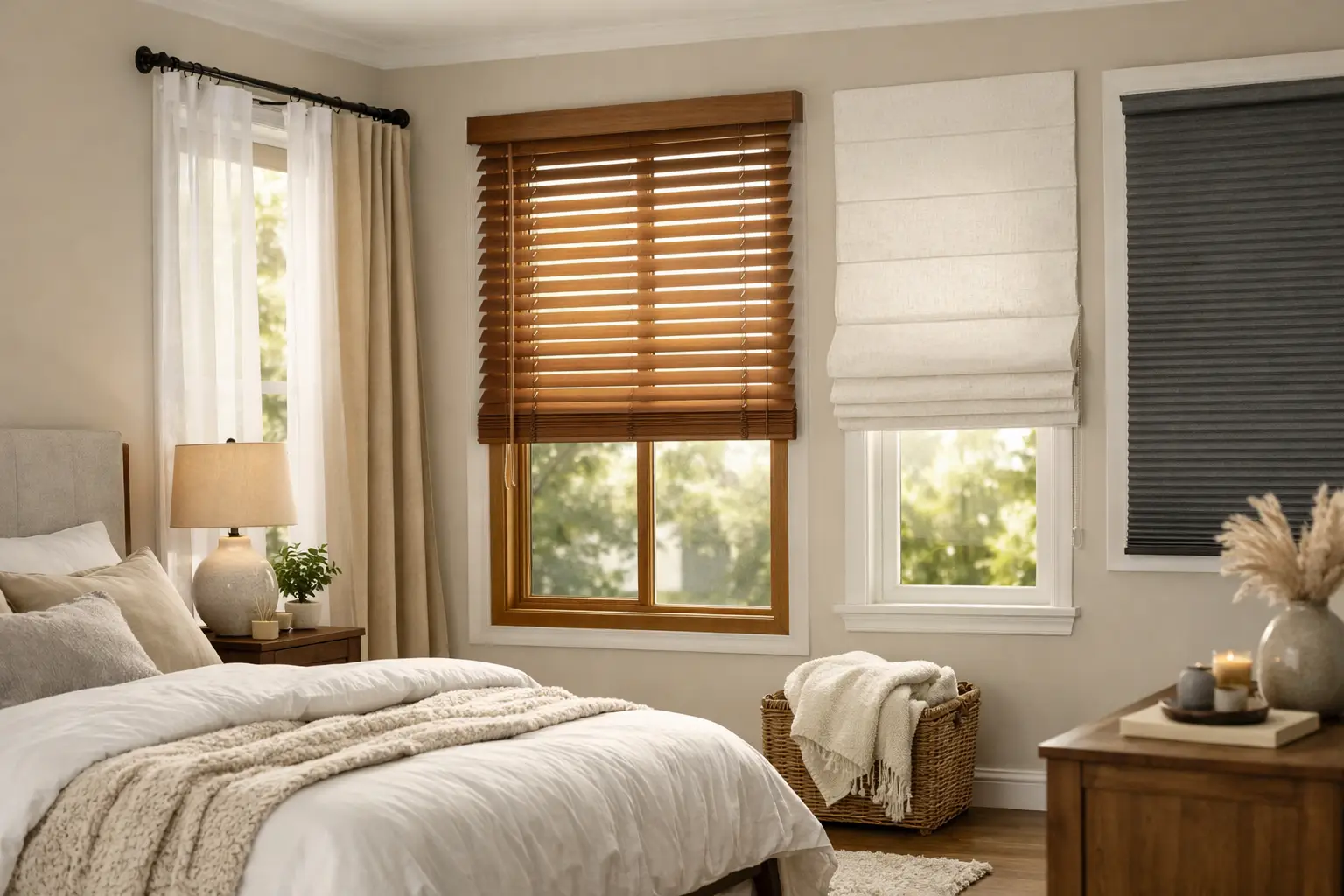
Best Window Treatments for Bedrooms: 7 Smart Picks
A bedroom window can be beautiful at noon and frustrating at 6 a.m. when the sun lands directly on the pillow. The best window treatments for bedrooms do more than finish the room visually. They control early light, protect privacy after dark, reduce glare, soften sound, and help create a space that feels genuinely restful.
The right choice depends on the window, sleep habits, architecture, and the look you want to build around. A street-facing primary bedroom needs a different solution than a nursery, a downtown condo, or a guest room with oversized corner windows. Custom sizing, fabric selection, opacity, and operating system all matter.
What Bedroom Window Coverings Need to Do
Start with performance before color. For most bedrooms, privacy and light control are the first requirements. If you sleep during daylight hours, have bright exterior lighting nearby, or want to keep a child’s room darker for naps, a room-darkening or blackout treatment is usually the right starting point.
That does not always mean the room should have one heavy blackout shade. Many of the most successful bedroom designs use layers: a functional shade close to the glass and softer drapery at the sides. This approach gives you flexible control throughout the day while adding texture and visual scale to the room.
Insulation is another consideration, particularly for large windows, older homes, and rooms that run hot or cold. Cellular shades, lined drapery, and well-fitted shutters can help moderate comfort near the window. Motorization can also be useful when tall windows, furniture placement, or daily routines make manual operation inconvenient.
The 7 Best Window Treatments for Bedrooms
1. Blackout Roller Shades for Clean, Reliable Darkness
Blackout roller shades are a strong choice for contemporary bedrooms, condos, children’s rooms, and any space where simplicity is the goal. Their low-profile design keeps the window area clean, and blackout fabrics block light through the material itself.
The trade-off is that some light can still appear around the sides unless the shade is specified with side channels or installed carefully within a suitable frame. For bedrooms where maximum darkness matters, ask about cassette systems, light-gap reduction, and fabric opacity rather than assuming every “blackout” roller shade performs the same way.
2. Cellular Shades for Comfort and Privacy
Honeycomb, or cellular, shades combine a soft appearance with practical insulation. Their cellular construction creates air pockets that can help reduce heat gain in summer and heat loss in winter. This makes them particularly appealing for bedrooms with chilly windows or strong afternoon sun.
They are available in light-filtering and blackout options, as well as top-down/bottom-up configurations. That feature is valuable for a bedroom facing neighboring homes: lower the top portion to bring in daylight while keeping the lower part covered for privacy. A blackout cellular shade may still have small edge gaps, so it is best for darkening rather than total black-out conditions unless paired with drapery.
3. Roman Shades for a Softer, Tailored Look
Roman shades bring fabric, pattern, and softness to a bedroom without the fullness of traditional drapery. They work especially well in primary suites, guest rooms, and design-forward interiors where the window treatment should feel integrated with bedding, upholstery, or an accent wall.
A lined Roman shade can provide strong privacy and room-darkening performance. For a more decorative result, choose a fabric that relates to the room’s palette, then select the lining based on function. A delicate linen-look fabric can still be practical when it is backed with the proper lining. The main consideration is stack height: when raised, a Roman shade occupies more space at the top of the window than a roller shade.
4. Drapery Panels for Layering and Light Control
Custom drapery is one of the most versatile bedroom treatments because it can be specified for nearly any style, from quiet minimalism to a more traditional, layered interior. Fullness, pleat style, hardware finish, fabric weight, and lining all influence the final result.
For sleep spaces, lined or blackout-lined drapery is often worth the investment. Panels should extend beyond the window width and be mounted high enough to make the room feel taller while reducing side light leaks. Drapery alone can work beautifully, but it is often most functional when paired with a shade that offers daytime privacy and a clean secondary layer.
5. Plantation Shutters for Structure and Lasting Style
Shutters offer a crisp, architectural look that suits traditional homes, transitional bedrooms, and rooms where durable privacy control is a priority. Adjustable louvers let you redirect sunlight without fully closing the window, which is useful when you want ventilation and daylight but do not want a direct view into the room.
They are not typically the best choice for total darkness because light can filter between louvers and around panel edges. However, shutters are exceptionally strong for privacy, durability, and a finished built-in appearance. They are also practical for windows that are frequently opened, provided the panel configuration is planned correctly.
6. Dual Shades for Flexible Day-to-Night Control
Dual shades, sometimes called zebra shades, alternate sheer and opaque fabric bands to create adjustable light control. Align the sheer bands for filtered daylight or align the opaque bands for more privacy and shade. Their streamlined look makes them a natural fit for modern bedrooms and urban spaces.
They are excellent for managing daylight and preserving a view, but they may not provide the same darkness as a dedicated blackout roller shade or blackout-lined drapery. For a bedroom where sleep quality comes first, choose a dual shade only if filtered light and a clean contemporary appearance matter more than complete room darkening.
7. Woven Wood Shades for Warmth and Texture
Woven wood shades add natural texture that works well in relaxed, organic, coastal, and modern-rustic bedrooms. Materials such as bamboo, reeds, and grasses introduce warmth that painted walls and smooth bedding alone may not provide.
Because woven materials naturally have small variations and openings, privacy and light control depend heavily on the liner. Add a privacy liner for a softer filtered effect or a blackout liner for better sleep conditions. This is a treatment where custom fabric and liner selection make a significant difference in both appearance and performance.
Build a Layered Bedroom Window Treatment
For many homeowners, the best answer is not one product but two. A blackout roller shade behind decorative drapery gives the room darkness when needed and softness when it is not. A cellular shade with side panels offers insulation plus visual warmth. A Roman shade can be paired with stationary drapery panels to frame a large window without adding operational complexity.
Layering also lets each product do its own job. The shade manages privacy and light close to the glass. The drapery contributes scale, acoustical softness, and a finished designer look. This approach is particularly effective for primary bedrooms with wide windows, patio doors, or a combination of windows that need a consistent visual language.
Details That Affect the Final Result
The fabric label is only one part of the specification. Mounting location, window depth, hardware, liner, and control type can change how the treatment looks and performs. Inside-mounted shades are clean and compact but can allow more perimeter light. Outside-mounted shades cover more of the opening and can improve darkness, though they require enough wall space.
For motorized shades and drapery, consider how the room is used. Automated schedules can raise shades gradually in the morning, lower them before bedtime, or close them during hot afternoon hours. Systems from Lutron, Somfy, Hunter Douglas, Graber, and other premium manufacturers can be selected based on control preference, power availability, and smart-home compatibility.
Do not overlook safety and access. Cordless operation is a smart choice for children’s rooms, while motorization is especially helpful behind beds, dressers, or freestanding tubs in a primary suite. For unusually shaped windows, bay windows, or doors, a professional measure can prevent common issues with clearance, stacking, and alignment.
Choosing the Right Direction for Your Room
If darkness is the priority, begin with blackout roller shades, blackout cellular shades, or lined drapery. If insulation matters most, look first at cellular shades or layered fabric treatments. If the room needs a decorative focal point, Roman shades and custom drapery provide the widest range of fabric expression. For privacy with an architectural finish, shutters remain a dependable option.
A showroom consultation can make these choices much easier because fabrics, opacity levels, lift systems, and finish details are easier to judge in person than from a small screen. Window Fashions Depot can help homeowners and design professionals compare custom options, coordinate treatments across a full home, and specify a solution that suits the window as well as the room around it.
Your bedroom should not force a choice between a beautiful window and a better night’s sleep. Choose the treatment that supports both, then refine it with the lining, mounting, and controls that make it work every day.
0 comments