
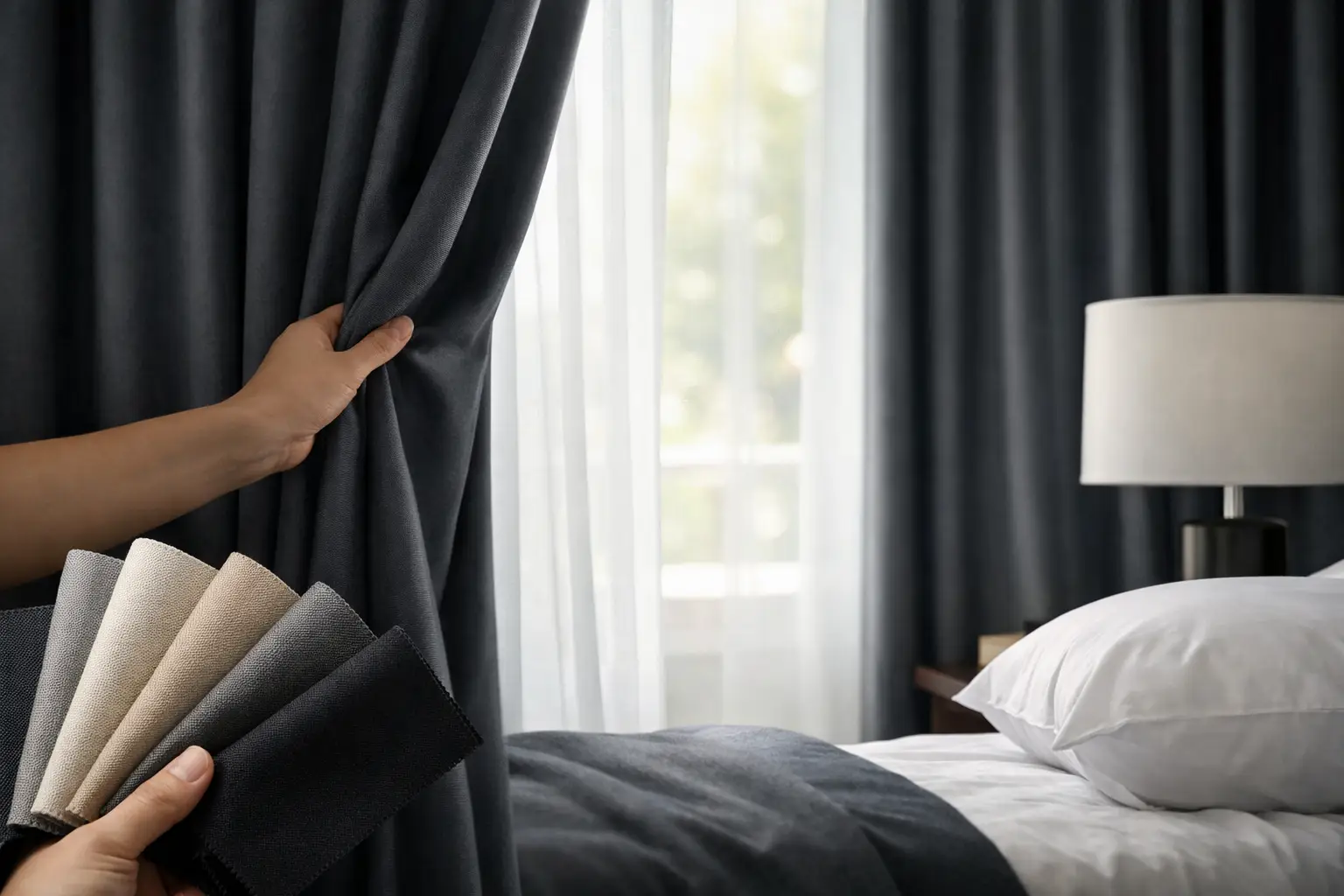
How to Choose Blackout Drapery
A beautiful drapery panel can soften a room, frame the view, and add texture. But if the real goal is sleep, glare control, privacy, or temperature management, appearance alone is not enough. Knowing how to choose blackout drapery means looking at fabric, lining, fullness, hardware, and installation as one system rather than one decorative layer.
That distinction matters. Many homeowners assume any dark fabric will block light, while many designers know the opposite is often true – a pale fabric with the right blackout lining can outperform a heavier dark panel with poor construction. If you want blackout drapery that works as well as it looks, the details make the difference.
How to choose blackout drapery based on the room
The first step is to match performance to the space. A primary bedroom usually needs a higher level of light blockage than a dining room. A media room may need near-total darkness during the day, while a nursery may need blackout performance plus softer operation and easy maintenance.
In bedrooms, the priority is typically sleep quality, privacy, and a calmer environment. That usually calls for lined or interlined drapery with enough width and return to reduce side light. In media rooms, the emphasis shifts toward glare reduction and more complete window coverage. In living rooms, some homeowners want blackout only for occasional afternoon sun, which can open the door to more decorative fabric choices and layered treatments.
This is also where trade-offs come in. A drapery that blocks more light is often fuller, heavier, and more architectural in appearance. That can be ideal in a formal bedroom or a well-scaled condo living room, but it may feel too substantial in a smaller casual space. The right choice depends on whether your top priority is design softness, maximum darkening, or a balance of both.
Fabric does not determine blackout performance by itself
One of the most common mistakes is shopping by face fabric alone. The visible fabric affects drape, texture, and style, but the blackout result usually comes from the lining and construction.
A linen-look drapery can still deliver excellent room darkening when paired with a proper blackout lining. On the other hand, a richly woven fabric without the right backing may let in more light than expected, especially where the fabric meets the stack, hem, and leading edge. That is why blackout drapery should be specified as a complete product, not just a fabric selection.
Heavier fabrics tend to hang with more authority and can help reduce light leakage by staying closer to the wall. Lighter fabrics can look cleaner and more contemporary, but they may need careful fabrication to avoid a flat or under-scaled result. If the room has a refined, tailored look, structured fabrics often suit it well. If the goal is softness and movement, textured neutrals or matte woven fabrics can still work beautifully with blackout lining behind them.
Lining is where performance really happens
If you are learning how to choose blackout drapery, lining deserves more attention than the face fabric. This is the layer that gives the treatment its ability to reduce incoming light, protect the fabric, and often improve the body of the panel.
There is a difference between room-darkening and true blackout. Room-darkening lining reduces a substantial amount of light but does not eliminate it. Blackout lining is designed for stronger light control, though even then, a drapery panel rarely creates total darkness on its own if gaps remain around the edges.
Interlining can also be worth considering. This extra layer between the face fabric and lining adds body, insulation, and a more luxurious hand. In larger rooms or premium design projects, it often gives blackout drapery a richer, more custom appearance. The trade-off is cost and added weight, which may affect hardware selection and stack space.
Size and coverage matter more than most people expect
Even the best blackout fabric will disappoint if the drapery is undersized. Light usually enters from the top, sides, and between narrow panels. That is why width, height, and projection from the wall are critical.
Panels should generally extend beyond the window opening so they can overlap the wall and reduce side light. Mounting the rod higher than the window can also help block top light while making the room feel taller. If the rod is placed too low or the panels are too narrow, you may get the blackout label without blackout results.
Fullness matters too. Drapery that looks skimpy when closed not only appears less custom, it often performs worse. A fuller panel creates better coverage and a more finished visual line. In rooms where darkness is especially important, adding return panels or using a wraparound rod can help minimize edge gaps.
This is one reason custom specification has an advantage over off-the-shelf options. Standard panels may be fine for decorative use, but blackout performance improves when the width, length, and mounting are tailored to the exact opening.
Pleat style and header choice affect both look and function
The top of the drapery is not just a style decision. It changes how the panels stack, how they close, and how much light may escape.
Pinch pleat and ripple fold styles are popular for good reason. They provide a clean, intentional appearance and predictable fullness. Ripple fold can feel especially modern in condos and contemporary homes, while pinch pleat offers a more classic tailored profile. Grommet panels are easy to recognize in retail settings, but they often leave more light gaps at the top and can look less refined in higher-end interiors.
If blackout is the goal, think carefully before choosing a casual header simply because it is familiar. A more structured heading often gives you better control over the final fit and appearance.
Hardware should support the drapery, not fight it
Blackout drapery is often heavier than standard decorative panels, especially when using premium lining or interlining. That makes hardware selection more than a finishing touch.
The rod should be strong enough for the panel weight and long enough to allow the drapery to stack clear of the glass when open. Bracket placement matters because poorly spaced supports can interrupt operation. If you are covering wide windows or sliding doors, traversing hardware may be the better solution for smoother daily use.
Motorization can also make sense, especially in primary bedrooms, tall windows, or full-home projects where convenience matters. For clients integrating shading with smart-home controls, motorized drapery can complement roller shades or other systems while preserving a polished decorative look.
Layering often gives the best result
Some of the best blackout solutions are layered, not standalone. Pairing blackout drapery with a shade behind it can improve privacy, insulation, and light control while giving the room more design depth.
This is especially useful when the window needs different settings throughout the day. A blackout roller shade or lined Roman shade can handle direct light control, while the drapery adds softness, acoustic comfort, and visual scale. In bedrooms, layering can reduce the halo of light that sometimes slips around drapery panels alone.
For design-conscious homeowners and trade professionals, layering also opens up more aesthetic flexibility. You do not have to force one treatment to do everything.
Color, maintenance, and daily use should stay in the conversation
It is easy to focus so much on blackout performance that practical living gets ignored. The right drapery should still work with the room’s palette, furniture scale, and maintenance expectations.
Neutral tones remain popular because they are flexible and architectural, but blackout drapery does not need to look heavy or dark. Soft whites, warm taupes, charcoals, and textured grays can all work depending on the lining and fabric choice. In high-use homes, fabrics that resist wrinkling and hold their shape may be a better long-term fit than delicate materials that need more upkeep.
Also think about operation. If the panels will be opened and closed every day, the hardware and fabric should support that routine. A dramatic fabric that is difficult to move may look good on installation day and become frustrating after a month.
When expert measuring and specification are worth it
Blackout drapery is one of those categories where a few inches can change the result. Accurate measuring affects not just fit, but function, stack-back, clearance, and how much light escapes around the perimeter.
That is why many homeowners and professionals prefer to work through a consultative process rather than order by guesswork. A well-specified treatment considers the window size, mounting conditions, surrounding trim, ceiling height, hardware strength, lining type, and how the room is actually used. For larger projects or premium interiors, that level of planning usually shows in both performance and finish.
If you are selecting blackout drapery for a bedroom, condo, or full-home renovation, focus on the complete system rather than the fabric sample in your hand. The best choice is the one that suits the room, supports the design, and performs the way you need it to every day.