
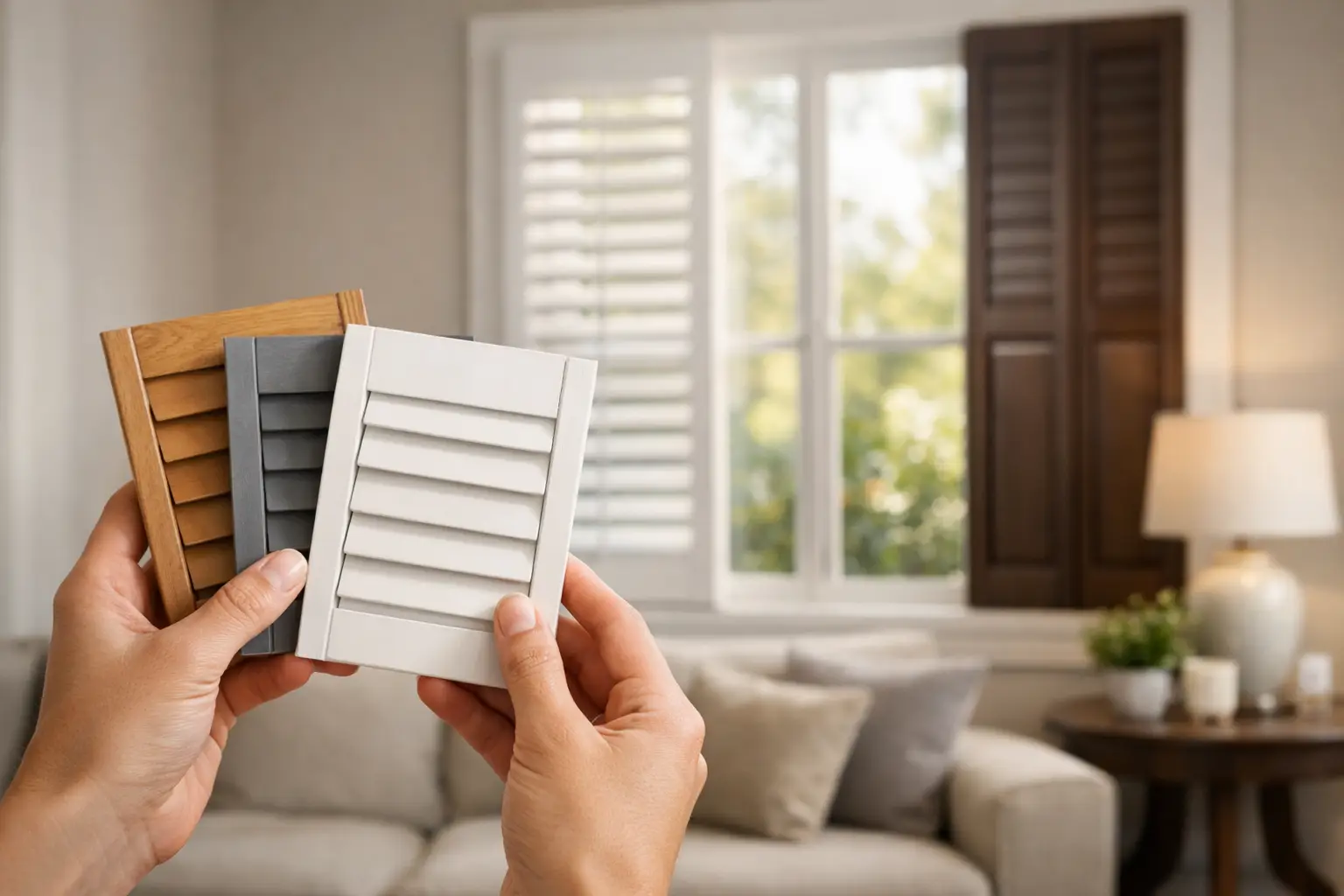
How to Select Window Shutters for Your Home
A shutter can make a room feel tailored and architectural, but it also becomes a permanent part of how the window works every day. Knowing how to select window shutters means looking beyond finish color and deciding how much light, privacy, insulation, and access you need in each room. The right choice should suit the window itself, the demands of the space, and the design direction of the home.
Start With the Room and Its Daily Use
Window shutters are not a one-size-fits-all treatment. A bright living room, a humid bathroom, and a bedroom that needs darkness each place different demands on the product.
In living rooms and dining areas, interior shutters are often chosen for their clean lines, adjustable light control, and ability to complement both traditional and contemporary furnishings. Tilt the louvers upward to soften direct sunlight while maintaining daylight and a degree of privacy. For street-facing rooms, shutters can give the window a finished appearance without relying on a second treatment.
Bedrooms usually call for more privacy and stronger light management. Shutters can reduce incoming light significantly when closed, although small gaps around louvers and panel edges mean they do not create the same near-blackout effect as a dedicated blackout shade. If sleep quality is the priority, consider pairing shutters with room-darkening drapery or a blackout roller shade where the design allows.
Bathrooms, kitchens, laundry rooms, and pool-adjacent spaces require special attention. Moisture-resistant composite or vinyl shutters are generally a more practical choice than natural wood in these areas. They resist warping and are easy to wipe clean, while still delivering the structured look homeowners expect from shutters.
Choose the Right Shutter Material
Material affects appearance, durability, panel weight, and budget. It is one of the most important decisions when selecting custom shutters.
Wood shutters
Wood shutters offer a warm, furniture-like finish and can be stained or painted in a broad range of colors. Because wood is relatively light for its strength, it is well suited to large panels and wide openings where excessive weight can become a concern. It is also an excellent option when the goal is to match millwork, cabinetry, or existing wood finishes.
The trade-off is environmental sensitivity. Wood is best reserved for climate-controlled interior spaces, away from frequent humidity and direct water exposure. It also tends to sit at a higher price point than composite alternatives.
Composite shutters
Composite shutters are engineered to provide the appearance of painted wood with added resistance to moisture and temperature changes. They are a popular fit for bathrooms, kitchens, condominiums, and family homes where easy care matters. Many premium composite options have a refined finish that works well in polished, design-forward interiors.
Composite panels are heavier than wood, so panel configuration and hardware become especially important on large windows. A professional consultation can help determine whether the opening should use more panels, divider rails, or a different configuration to keep operation smooth.
Vinyl or polymer shutters
Vinyl and polymer shutters are practical in high-humidity areas and can be a value-conscious option. Their performance varies by construction quality, so it is worth comparing the frame, reinforcement, louver design, and warranty rather than choosing by price alone. For a primary living space, a higher-grade composite or wood shutter may offer a more elevated finish. For a laundry room, basement, or bathroom, polymer can be an efficient solution.
Select a Louver Size That Fits the Window
Louver size changes both the appearance of the shutter and the amount of view available when louvers are open. Wider louvers create a more contemporary, open look. Narrower louvers feel more traditional and create a denser visual pattern.
A 2 1/2-inch louver is often a balanced choice for standard-size windows and classic interiors. A 3 1/2-inch or 4 1/2-inch louver can make larger windows feel less busy and provides a clearer sightline when opened. Larger louvers also allow more daylight into the room, though they can look out of scale on very small windows.
Think about the view before choosing. If the window overlooks a garden, skyline, or backyard, wider louvers may be worth the investment. If privacy is the greater concern, a smaller louver can provide more control and a more enclosed appearance when angled.
Decide on Panels, Mounting, and Operation
The layout of the shutter should follow the architecture of the opening. A narrow single window may use one or two hinged panels, while a wide bay, patio door, or bank of windows may need multiple panels designed to fold or swing in a specific direction.
Interior shutters are commonly mounted inside the window opening for a built-in look. This works best when the opening is square, deep enough to accommodate the frame, and free of obstructions. An outside mount may be the better choice for shallow windows, uneven openings, or windows with trim that benefits from visual coverage.
Also consider how the window opens. Casement cranks, tilt-in sashes, handles, and security sensors can all affect shutter placement. A beautiful shutter installation should not make it difficult to open the window, clean the glass, or use an existing screen.
For light control, you can choose traditional tilt rods or hidden tilt systems. A visible center tilt rod offers a classic plantation-shutter appearance. Hidden tilt mechanisms create a cleaner, more modern face with uninterrupted louvers. Both can perform well, so the choice is primarily aesthetic.
Use divider rails where they add function
A divider rail separates the upper and lower louvers into independently controlled sections. It is particularly useful for bedrooms and street-level rooms. You can close the lower section for privacy while leaving the top louvers open to bring in daylight.
Divider rails can also align with window mullions or sash divisions for a more intentional look. They should not be added automatically, however. On a simple contemporary window, too many horizontal breaks can make the shutter feel busy.
Coordinate the Finish With the Interior
White shutters remain a popular choice because they work with a wide range of wall colors, trim styles, and furnishings. The best white is not always a bright white. Matching or closely coordinating the shutter finish with the existing trim often makes the installation appear original to the home.
Painted wood and composite shutters suit crisp, tailored spaces, while stained wood can bring warmth to studies, dining rooms, and homes with natural millwork. Before finalizing the finish, view samples in the room at different times of day. North-facing light, warm flooring, and nearby paint colors can shift how a white or stain reads.
Shutters also layer well with drapery. This combination can soften a room with fabric, add acoustic comfort, and improve room darkening while keeping the shutters available for daily privacy and light control. The key is allowing enough wall space and projection so the drapery clears the shutter panels when opened.
Consider Special Windows Before You Specify
Arched, angled, circular, French door, bay, and sliding-door openings often need custom shutter solutions. These are situations where precise measurement and product expertise matter most.
Arched shutters can preserve the shape of the window, but they typically have fixed louvers in the curved portion and may cost more because of the custom fabrication. For French doors, shutters must be configured around handles and often use a cutout or specialized frame. Bay windows need careful panel spacing so the shutters can open without colliding at the corners.
Exterior shutters, security shutters, and storm-rated systems are a different category from interior plantation shutters. If the project involves patio shading, privacy from neighboring properties, solar protection, or security, the correct solution may be an exterior rolling shutter, screen, awning, or façade shading system instead. Start with the performance problem, then select the product category.
How to Select Window Shutters With Confidence
Before ordering, confirm the material, louver size, frame style, panel layout, finish, and control method. Ask how the shutters will interact with window hardware, trim, screens, and any planned drapery or automation. Custom shutters are made to the opening, so a careful measure is not a final detail – it is the foundation of proper fit and long-term operation.
At Window Fashions Depot, a showroom consultation can help compare premium shutter materials and configurations against the actual needs of your space. Bring photos, approximate window dimensions, finish samples, and a clear sense of what the room needs to do. The best shutter is the one that looks considered when open, performs well when closed, and still feels right years after installation.