
Best Drapery Styles for Condos That Feel Custom
A condo window can be spectacular and still be difficult to dress. Floor-to-ceiling glass brings in a view, but it can also bring afternoon glare, nighttime exposure, and heat that makes a room uncomfortable. The best drapery styles for condos handle those realities without making a compact living area feel crowded or cutting off the architecture that made the space appealing in the first place.
The right choice is rarely about fabric alone. Header style, track placement, panel fullness, lining, and whether the drapery works alongside shades all affect the finished result. A custom approach also matters in condos, where concrete ceilings, window walls, balcony doors, and limited wall space can make standard ready-made solutions look undersized or function poorly.
Start With How the Condo Is Used
Before choosing a pleat or fabric, consider what happens at the window throughout the day. A living room facing west may need glare reduction while preserving the skyline. A bedroom may need true room darkening and privacy from nearby towers. A dining area may need a polished, decorative treatment that stacks out of the way of a balcony door.
This is why one drapery style is not automatically right for an entire condo. A sheer ripple-fold drapery may be ideal in an open-concept living space, while lined pinch-pleat panels or a layered shade-and-drapery system are better suited to a bedroom. Matching the overall fabric palette can create continuity even when the construction changes from room to room.
For many high-rise residences, it also helps to confirm building guidelines before specification. Some properties have requirements for window-facing colors, installation methods, or exterior uniformity. A professional consultation can identify those constraints early, before fabric and hardware are ordered.
Best Drapery Styles for Condos
Ripple Fold Drapery for Clean, Contemporary Windows
Ripple fold, sometimes called wave drapery, is one of the strongest choices for modern condo interiors. The fabric moves in smooth, even waves along a low-profile track, producing a tailored look without the visual weight of formal pleats. It is particularly effective across wide window walls and sliding balcony doors.
Because ripple fold panels stack neatly, they are a practical way to soften large expanses of glass while keeping the view open when the drapery is drawn back. Ceiling-mounted tracks make the window appear taller and can visually extend a room’s vertical lines. In condos with concrete ceilings, the mounting plan should be assessed carefully so the track is secure and properly aligned.
The trade-off is that ripple fold needs adequate stack-back space. If furniture, a return wall, or a balcony-door handle limits the area beside the glass, the track and fullness must be designed around it. Choosing a narrower stack or a split draw may solve the problem without compromising the look.
Pinch Pleat Drapery for Tailored Bedrooms and Dining Areas
Pinch pleat drapery has a more structured, classic profile. Its stitched pleats create a deliberate, architectural finish that suits transitional, traditional, and upscale contemporary interiors. It works beautifully in bedrooms, dining rooms, and spaces where a more formal presentation is welcome.
For a condo bedroom, lined pinch pleat panels can add softness and acoustic comfort while supporting better light control. A blackout lining is valuable when the room faces bright city lights, early morning sun, or an adjacent building. For a lighter effect, use a privacy lining rather than blackout, especially if the room benefits from daytime light.
Pinch pleat drapery generally has a fuller, more substantial appearance than ripple fold. That is an advantage when the goal is warmth and luxury, but it can feel too heavy in a small room if paired with dark fabric or oversized decorative rods. Selecting a slim metal rod, a light neutral textile, and panels mounted high above the glass keeps the treatment refined rather than bulky.
Tailored Flat Panels for Minimalist Interiors
Flat-panel drapery is an excellent option when the design calls for quiet texture instead of visible pleating. The fabric hangs in a clean plane, making it well suited to linen-look materials, softly textured solids, and modern organic interiors. It can bring warmth to an otherwise sleek condo without competing with statement furniture, stone, or city views.
This style is most successful when made to the correct width and length. Panels that are too narrow look decorative rather than functional, while panels that barely reach the floor can make even a high-end fabric look unfinished. In most condo settings, a tailored floor finish is the practical choice. It avoids fabric collecting dust around baseboards or interfering with heat registers while still delivering a custom appearance.
Sheer Drapery for Daytime Privacy and Soft Light
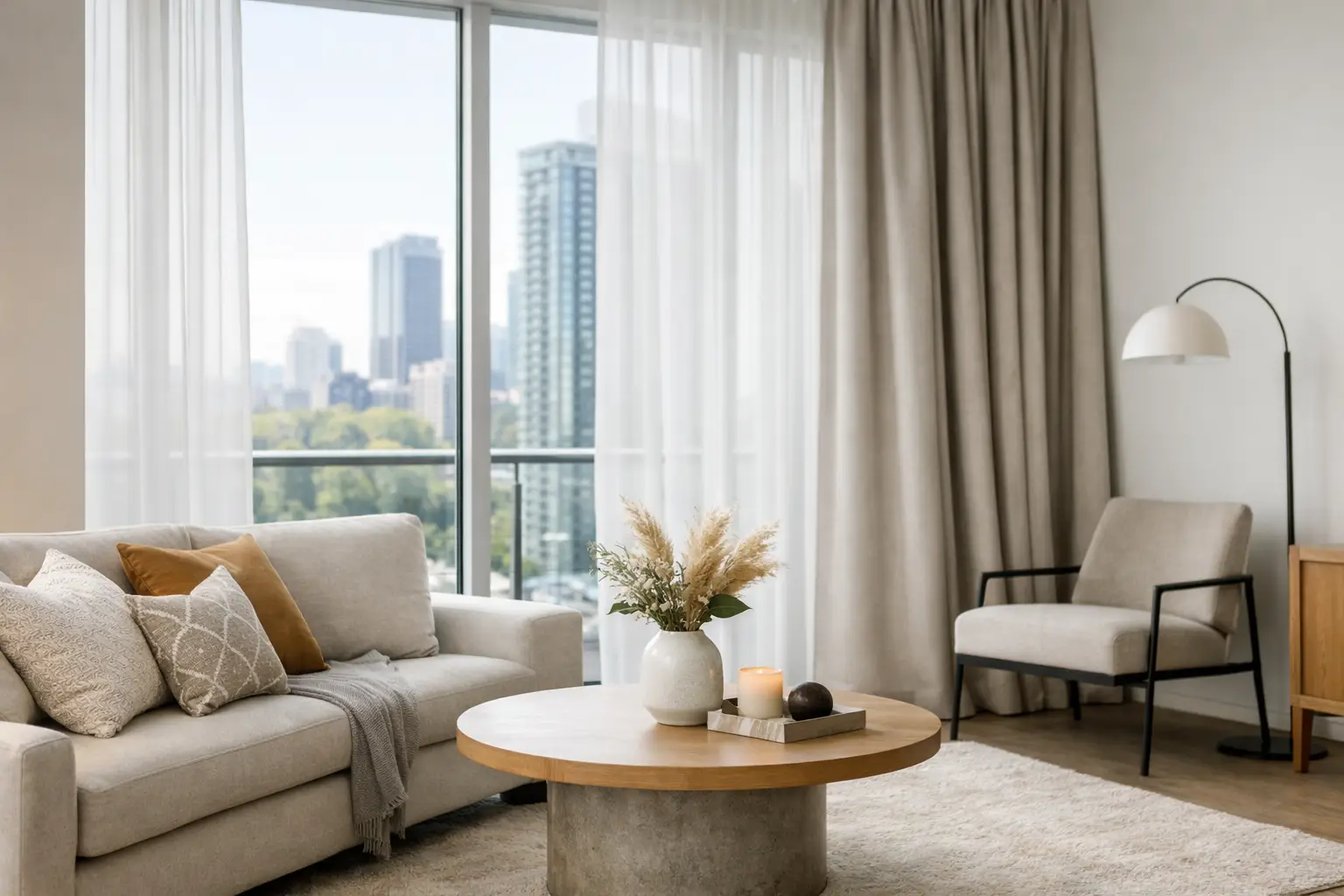
Sheer drapery remains a favorite for glass-heavy condos because it filters hard daylight and diffuses a direct view into the room. A white, ivory, pale gray, or soft taupe sheer can make the space feel calmer without hiding the architecture. In an open-concept room, ceiling-mounted sheers are often enough to make large windows feel intentional and finished.
Sheers alone, however, do not provide reliable nighttime privacy. After dark, interior lighting can make a condo visible from neighboring units. Where privacy is a concern, pair sheer drapery with roller shades, honeycomb shades, or a second layer of lined drapery. This layered approach gives the room a soft daytime look and a more protective solution at night.
Layered Drapery and Shades for Maximum Control
For homeowners who want the broadest range of performance, layering is often the best answer. A roller shade or cellular shade handles glare, privacy, and insulation close to the glass. Decorative drapery adds scale, fabric texture, and a finished designer look around the window.
This combination is especially useful in bedrooms and media areas. A room-darkening shade can reduce incoming light, while side drapery panels soften the window wall and help limit light gaps. In living rooms, a solar shade can preserve a view during the day while sheer or stationary decorative panels add dimension.
Layering requires careful clearance planning. The shade, track, fascia, or rod must sit at the right depth so treatments operate independently and do not crowd door handles or window cranks. It is a detail that is easy to miss with off-the-shelf products and one of the main reasons custom measurement is worthwhile.
Fabric and Color Choices That Work in Smaller Spaces
Condo drapery does not need to be white or beige, but lighter colors usually reflect more light and make a room feel more open. Warm neutrals, soft mineral tones, and understated woven textures are versatile choices because they work with changing furnishings and do not compete with the view.
For more drama, use a deeper color on a single focal window or in a bedroom where a cocooning effect is welcome. Velvet, wool blends, and richly textured fabrics can look exceptional, but they have more visual weight and may require more substantial hardware. Their benefits are strongest when privacy, light blocking, or sound absorption are priorities.
Linen and linen-look fabrics are popular for their relaxed texture, though natural linen may vary in weave and can require more consideration around direct sunlight. Performance textiles and high-quality synthetic blends can offer a similar appearance with better consistency, durability, and fading resistance. The best material depends on sun exposure, maintenance expectations, and the room’s intended mood.
Use Motorization Where It Solves a Real Problem
Motorized drapery is particularly practical for tall condo windows, wide tracks, and hard-to-reach window walls. Rather than pulling fabric across several feet of glass, residents can adjust panels by remote, wall control, app, or smart-home schedule. A timed routine can close bedroom treatments at night or manage harsh afternoon sun before a room overheats.
Motorization also protects the drapery itself. Smooth, controlled movement reduces repeated tugging on the leading edge and helps keep panels hanging evenly. Systems from established providers such as Lutron and Somfy can be specified with compatible shades for a coordinated whole-home solution.
It is not necessary to motorize every window. A manually operated sheer on an easily reached living-room window may be entirely appropriate. Reserve automation for oversized spans, daily-use bedroom treatments, or windows where convenience and access genuinely justify the investment.
Details That Make Custom Drapery Look Right
Even an excellent fabric can disappoint if the proportions are wrong. Mounting drapery close to the ceiling and extending the track beyond the window opening generally makes the glass appear larger and allows more light in when panels are open. The exact extension depends on available wall space and the amount of stack-back required.
Fullness is equally important. Too little fabric produces a flat, skimpy result, especially with sheers. Too much fabric can overwhelm a compact room or make panels difficult to stack. A professional specification accounts for fabric type, heading style, track configuration, and whether the panels are intended to operate or remain decorative.
For condo owners, the most successful drapery is not simply the trendiest style. It is the treatment that respects the view, solves the room’s privacy and light-control needs, and fits the window precisely. Window Fashions Depot can help translate those priorities into fabrics, tracks, shades, and automation that feel considered from the first measurement to the final installation.
0 comments