
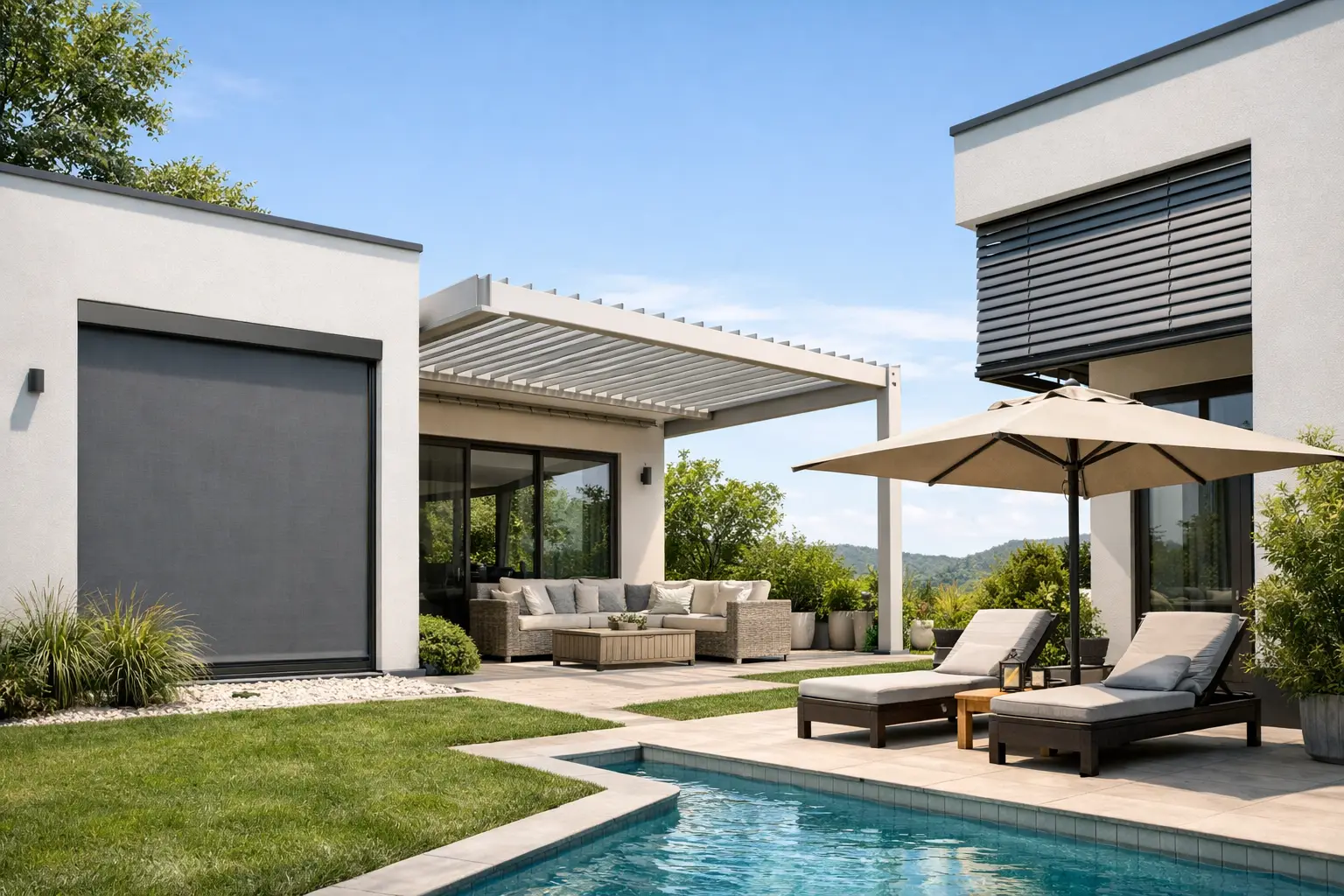
Best Exterior Shading Solutions for Homes
A west-facing patio can become unusable long before dinner, while large windows can send glare and unwanted heat deep into an otherwise beautiful room. The best exterior shading solutions address both problems before sunlight reaches the glass or outdoor living area. They also do more than block the sun: the right system can improve privacy, protect furnishings, define an outdoor room, and make a home’s exterior look intentionally designed.
Exterior shading is not a one-product decision. A retractable awning may be ideal over a low-rise patio door, while motorized zip screens can make more sense for a covered porch exposed to insects and late-day sun. For a contemporary backyard structure, a louvered pergola can offer architectural impact and adjustable overhead coverage. The right choice depends on sun exposure, wind conditions, the size of the opening, desired visibility, and how permanent the installation should feel.
Why Exterior Shading Performs Differently
Interior shades are valuable for privacy and light control, but exterior systems stop solar heat before it passes through the window. That distinction matters on expansive south- and west-facing glass, in sunrooms, and around outdoor seating areas where direct light is the primary comfort issue.
Exterior fabrics and louvers also give homeowners more control over the experience of a space. A screen fabric can preserve a view while softening glare. An awning can create a cool zone over a dining table. Adjustable pergola louvers can shift from open sky to full overhead shade as weather changes. There is no universal “best” product, only the best specification for the opening and lifestyle.
The Best Exterior Shading Solutions by Application
Retractable awnings for patios and decks
Retractable awnings remain one of the most practical choices for patios, decks, and rear elevations. They extend when shade is needed and retract to restore open sky, daylight, and views. This flexibility makes them especially appealing where a fixed roof would make the exterior feel too dark or too enclosed.
Custom awnings are available in a wide range of widths, projections, frame finishes, and performance fabrics. Solution-dyed acrylic fabrics are a popular premium choice because they offer strong color retention and are designed for outdoor exposure. Stripe patterns can give a traditional façade character, while solid neutrals and textured weaves suit cleaner, more contemporary architecture.
The trade-off is weather management. Most retractable awnings should be retracted during strong winds, heavy rain, or snow unless the specific system is engineered and rated for those conditions. Wind sensors and motorized controls help protect the investment by retracting the awning automatically when conditions change.
Exterior zip screens for windows, porches, and covered patios
Exterior screens, often called zip screens or guided screens, are among the most versatile options for large openings. The fabric is held within side tracks, creating a taut, tailored appearance and providing better edge control than a free-hanging outdoor shade. They work well on covered patios, pergolas, balconies, large windows, and openings where privacy or insect protection is part of the brief.
Fabric selection determines the result. More open solar screen fabrics preserve outward visibility and daylight while reducing glare and heat. Tighter weaves increase privacy and shade but can make the space feel more enclosed. Insect screen options are particularly useful for dining areas and outdoor lounges, while clear vinyl panels may be considered where wind protection and seasonal use are priorities.
Motorization is often worth considering for wider or frequently used screens. A wall switch, remote, app control, or smart-home integration makes it easy to lower every screen before a sunny afternoon or raise them when the weather is pleasant. For projects that require a clean exterior, recessed housings and coordinated frame colors can help the system disappear into the architecture.
Fixed exterior solar shades for large glass
For windows that receive consistent harsh sun, fixed or guided exterior solar shades offer a disciplined, minimal look. They are especially effective on modern homes with broad glass walls, upper-floor windows, and rooms where overheating or screen glare is a recurring issue.
Unlike an awning, a vertical solar shade can control low-angle morning and afternoon sun. It can also preserve the home’s connection to the outdoors better than an opaque shutter or solid panel. Openness factor, fabric color, and orientation all affect performance. Darker screen fabrics often provide clearer outward views, while lighter colors can reflect more visible light and create a brighter appearance from indoors.
A professional specification should account for the height and width of the opening, mounting surface, wind exposure, and whether the screen must coordinate with interior window treatments. Exterior solar shades are highly functional, but the details matter. An undersized system or the wrong fabric openness can leave glare problems unresolved.
Louvered pergolas for flexible overhead shade
A louvered pergola is a larger architectural investment, but it offers a level of control that fabric systems cannot match. Rotating louvers can be opened for sun and airflow, angled to block direct light, or closed for overhead shelter. Some systems include integrated drainage, lighting, heaters, side screens, and automated rain or wind sensors.
This option is well suited to homeowners creating a true outdoor room rather than simply adding a shaded patch to the backyard. It can frame a kitchen, lounge, poolside seating area, or dining terrace, and it gives designers a strong structural element to work with.
The main consideration is permanence. A pergola has greater visual weight, may require site preparation and permits, and needs to be designed in proportion to the home and landscape. It is not the most economical answer for every patio, but it can add substantial daily use and visual value when planned as part of a larger exterior project.
Fixed awnings and canopy systems for dependable coverage
Fixed awnings and canopy systems are a strong choice when reliable, season-long shade matters more than flexibility. They are commonly used over doors, windows, outdoor kitchens, and commercial-style residential gathering spaces. Because the structure remains in place, it can provide a more defined sense of shelter than a retractable system.
Their appearance can range from traditional fabric awnings to sleek aluminum-framed canopies. The best fit comes down to architecture, maintenance expectations, and local weather. A fixed system should be designed for appropriate snow and wind loads, particularly in climates that experience demanding winters.
Exterior shutters for privacy, security, and light control
Exterior shutters occupy a different category because they can provide meaningful privacy, security, and storm protection alongside shading. Rolling security shutters are often selected for ground-floor openings, vacation properties, garages, or homes where closing up the exterior is a priority. Operable louvered shutters can bring a more decorative, architectural look while filtering sun and preserving ventilation.
The compromise is visual density. Shutters can significantly alter the façade and reduce the open, transparent quality of large windows when closed. They are best chosen when privacy, protection, or a specific architectural style is as important as shade itself.
How to Choose the Right Exterior Shading System
Start with the sun, not the product. Identify when direct sunlight creates discomfort and where it enters the space. South-facing areas usually need broad overhead control, while west-facing patios and windows often need vertical protection from intense late-afternoon sun. A combination can be appropriate: an awning or pergola overhead, paired with exterior screens on the sides.
Next, consider wind and mounting conditions. An exposed rooftop terrace, a lakefront property, and a sheltered urban backyard should not be specified the same way. The structure receiving the system must also be evaluated. Masonry, wood framing, soffits, steel, and pergola beams each require the correct mounting approach.
Then decide what should remain visible. If preserving a garden view is essential, a solar screen may be better than an opaque fabric or solid roof. If the goal is complete privacy from neighboring properties, tighter screen fabrics, side panels, or shutters may be the better direction. For outdoor dining, insect protection can be as valuable as shade.
Finally, think through operation. Manual systems work well for smaller, occasional-use applications. Motorization becomes increasingly valuable as dimensions grow or when multiple shades are installed. Integrated automation can coordinate awnings, screens, and interior shades around time of day, temperature, or weather conditions.
Design Details That Make the Installation Look Custom
The most successful exterior shading projects look like part of the home, not an accessory added after the fact. Frame color should relate to window trim, cladding, or architectural metalwork. Fabric should complement exterior materials and the sightlines from inside. A dark screen housing against a dark fascia may nearly disappear, while a contrasting awning can become a deliberate design statement.
Placement matters just as much. A system should cover the area where people actually sit, not merely the door opening. For patios, account for the sun’s changing angle and the location of furniture, grills, and circulation paths. For window screens, plan for handles, drainage, exterior lighting, and access for service.
Window Fashions Depot can help homeowners, designers, and builders compare custom exterior screens, awnings, pergolas, shutters, fabrics, and motorized controls in the context of a complete project. A proper consultation turns broad ideas such as “more shade” into a system sized, finished, and engineered for the way the space will be used.
The most useful exterior shading does not make a home feel closed off from daylight. It gives you the choice to enjoy the sun, soften it, or step out of it entirely when the day calls for comfort.
0 comments