
Inside Mount Blinds for a Clean Custom Fit
A window recess can do more than hold glass. It can frame a tailored window treatment, preserve decorative trim, and make the entire wall feel more intentional. Inside mount blinds sit within that recess rather than over it, creating a compact, built-in appearance that works especially well in contemporary homes, condos, kitchens, and spaces where clean lines matter.
That polished result depends on more than choosing a color. Window depth, mounting surface, operating controls, privacy needs, and measuring accuracy all affect whether an inside mount is the right specification. The most successful projects begin with the window itself, then match the blind or shade to the way the room is used.
What Inside Mount Blinds Do Best
Inside mount blinds are installed within the window opening, typically against the top of the frame or jamb. Unlike an outside mount, they do not cover surrounding molding or extend beyond the opening. The result is a more architectural look that lets the window’s trim, shape, and proportions remain visible.
This approach is an excellent fit when attractive casing is part of the design, when windows sit close together, or when a room benefits from a less layered appearance. It can also leave more wall space clear around the window, which is useful near cabinetry, built-ins, artwork, or tight furniture layouts.
The trade-off is that an inside mount does not overlap the opening. Small light gaps at the sides are normal with most blind and shade styles because the product needs clearance to operate. For a living room, kitchen, or office, those gaps may be barely noticeable. In a bedroom, media room, or any space where darkness is a priority, they deserve more attention during selection.
Start With Window Depth, Not Fabric or Finish
Depth is often the deciding factor for an inside mount. Every product has a minimum depth needed to install the brackets, plus a greater depth needed for a fully recessed appearance. A slim roller shade may fit a shallow opening where a wood blind, cellular shade with a larger headrail, or layered dual shade will project farther into the room.
A professional consultation looks at more than the depth measurement. Window cranks, handles, tilt-in mechanisms, alarm sensors, and protruding trim can all interfere with operation. The mounting surface also needs to be sound and reasonably level. Older homes sometimes have openings that appear square at first glance but vary enough from top to bottom to affect fit.
For condos and newer construction, recessed windows often favor roller shades, solar shades, cellular shades, and aluminum mini blinds because their headrails are compact. Wider slats, woven wood shades, and some Roman shade systems can still work beautifully, but they require more room and should be specified with their stack and projection in mind.
Full Recessed Fit vs. Functional Inside Mount
A product can be inside mounted without sitting completely flush with the front edge of the window opening. This distinction matters. A functional inside mount means the hardware fits and operates within the recess. A fully recessed fit means the headrail and shade body sit far enough back that they are visually contained by the opening.
If the recess is shallow, choosing a functional inside mount may still be the best design decision. The headrail might project slightly, but the treatment will retain the tidy footprint and trim visibility that make this mounting style appealing. Trying to force a deep product into a shallow opening usually produces a less refined result.
Measure for Reality, Not Just the Largest Number
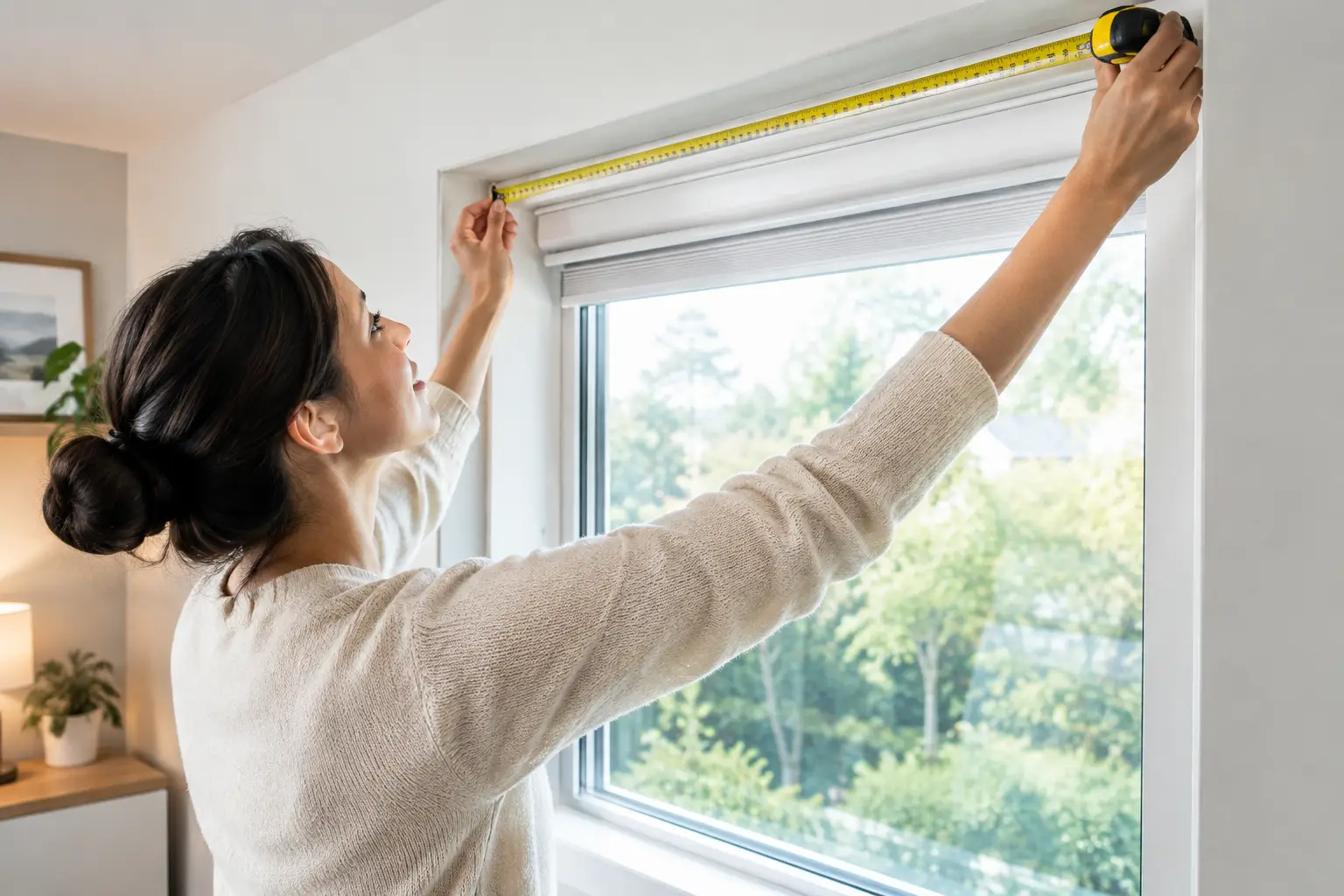
Custom window treatments are made to the dimensions provided, so accurate measurement is essential. For an inside mount, measure the width at the top, center, and bottom of the opening, then record the narrowest width. Measure the height on the left, center, and right, and use the longest height unless the product manufacturer provides different instructions.
Depth should be measured from the front edge of the opening to the nearest obstruction. Do not assume that a deep-looking recess is clear all the way back. Window handles, mullions, security sensors, and uneven drywall returns may reduce usable depth.
It is equally important not to make your own width deductions unless the product instructions specifically request them. Custom blind and shade manufacturers account for operating clearance in their factory deductions. Subtracting extra space can create side gaps that are wider than intended.
For a single standard window, careful homeowner measurements can be sufficient when following the selected product’s guide. For a room with multiple windows, specialty shapes, motorized shades, or challenging construction conditions, professional measuring protects both the product fit and the installation schedule. It also helps ensure consistent alignment across a wall of windows, where even small variations are easy to see.
Choose the Product Around the Room’s Job
The right inside mount blind is rarely just a style decision. It should answer the room’s practical needs first, then support the interior palette and architecture.
In kitchens and bathrooms, moisture-resistant faux wood blinds, aluminum blinds, and easy-clean roller shades are practical choices. They offer adjustable light control without introducing delicate materials near humidity, splashes, or frequent cleaning.
For bedrooms, cellular shades can add insulation while softening the window opening. Room-darkening fabrics improve sleep conditions, though side light gaps remain possible with an inside mount. A blackout roller shade offers a sleeker profile, while a shade paired with drapery can provide stronger perimeter coverage and a more layered decorative effect.
In living rooms and open-plan spaces, sheer shades, solar shades, woven woods, Roman shades, and wood blinds each create a different visual temperature. Solar shades manage glare while maintaining an outward view during the day. Woven woods introduce texture and warmth. Roman shades bring softness, while horizontal blinds offer familiar, precise control over light direction.
For home offices, the goal is often screen comfort rather than complete privacy. Solar shades with an appropriate openness factor can reduce glare and diffuse harsh daylight while preserving connection to the view. The best fabric depends on the direction the window faces, the intensity of sun exposure, and how much daytime privacy is needed.
Light Gaps, Privacy, and the Right Expectations
An inside mount is not automatically a privacy compromise, but it must be planned honestly. Standard blinds and shades have clearance at each side so they can raise, lower, tilt, or roll without rubbing the frame. At night, interior lights may be visible through those gaps from certain angles.
Where privacy is the priority, a product with effective fabric opacity and a close-fitting headrail is a strong starting point. Top-down/bottom-up cellular shades can be particularly useful for street-facing rooms because they admit daylight from above while covering the lower portion of the window. For bathrooms, bedrooms, and close neighboring homes, discuss sightlines from outside rather than relying only on the fabric sample held in a showroom.
If near-blackout performance is the goal, an outside mount or a layered treatment may be the better answer. Side channels, specialty blackout systems, or drapery panels can further reduce light leakage. There is no universal winner: the clean appearance of an inside mount may be worth a small amount of light at the edges, while a nursery or media room may call for coverage beyond the recess.
Motorization Works Especially Well in Recessed Windows
Motorized inside mount blinds can make a clean window wall even cleaner. Battery-powered systems avoid visible cords and are well suited to many existing homes. Hardwired solutions are often ideal for new builds and major renovations, where power can be planned before drywall is complete.
Automation is especially valuable for high windows, hard-to-reach openings behind furniture, and rooms with several shades that should move together. Systems from leading motorization providers can be scheduled around daily routines, controlled by a remote, or integrated with a broader smart-home setup. The right control method depends on the number of shades, access to power, and how much automation the homeowner actually wants to use.
Cordless operation is also worth considering for any home with children or pets. It reduces visual clutter and supports a more streamlined presentation, even when full motorization is not part of the project.
Coordinate the Details Across the Room
Inside mount blinds look most intentional when their details are coordinated. Consider the headrail color, bottom rail, valance style, control placement, and fabric opacity alongside the window frame and surrounding finishes. White hardware may disappear against white trim, while a dark headrail can create a deliberate contrast with black-framed windows.
For a whole-home project, consistency does not require identical products in every room. A bedroom may need insulating cellular shades, while the adjacent living area uses solar rollers and the kitchen uses faux wood blinds. Repeating a color family, hardware finish, or overall level of visual simplicity can make those functional differences feel cohesive.
Window Fashions Depot can help homeowners, designers, and builders compare these options against the actual window conditions, not just a product display. A measured, custom approach is particularly valuable when a project combines specialty windows, motorization, and different privacy needs from room to room.
The best inside mount begins with a clear view of the opening and an equally clear view of how the room needs to perform. Once those two pieces are in place, the window treatment can look quiet, precise, and completely at home in the space.