
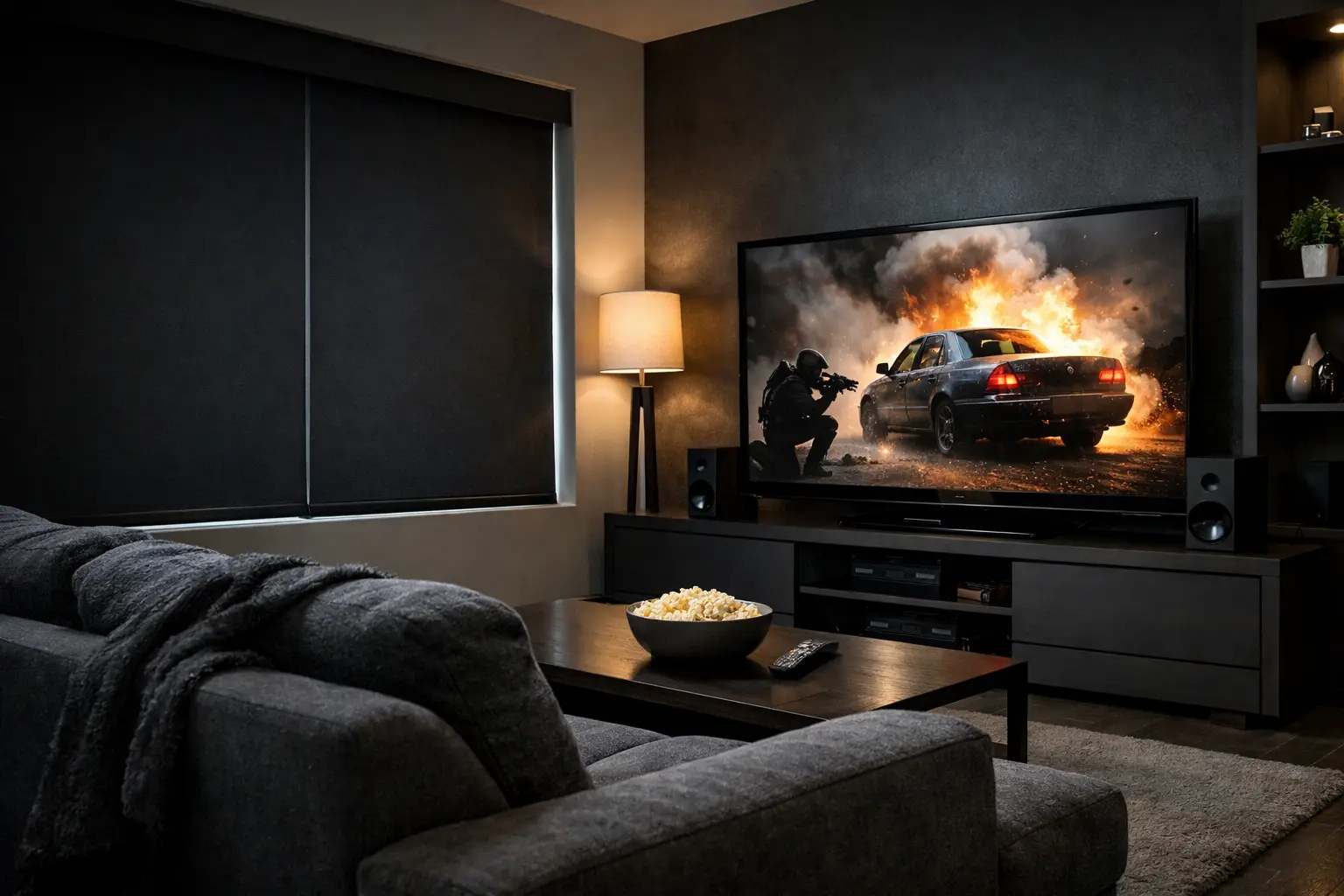
Blackout Shades for Media Room Comfort
Movie night gets frustrating fast when sunlight cuts across the screen at exactly the wrong moment. A media room can have premium speakers, a calibrated projector, and carefully selected seating, but if the windows are not controlled properly, the room never performs the way it should. That is why blackout shades for media room spaces are often one of the first upgrades worth planning, not one of the last.
The right shade does more than darken a room. It helps preserve contrast on screen, reduces distracting reflections, improves privacy, and supports the overall look of the space. In a room built for watching, gaming, or listening, window treatments need to work as hard as the equipment inside it.
Why blackout shades for media room design matter
A media room is different from a standard living room. The goal is not just privacy or basic sun control. It is controlled light. That distinction matters because many products advertised as room-darkening are good enough for casual TV viewing but not strong enough for serious screen performance.
Projectors are the clearest example. Even a small amount of side light can wash out darker scenes and flatten image depth. Televisions are more forgiving, but glare still affects visibility, especially during daytime use. If the room faces west or gets strong afternoon sun, that problem tends to show up every day at the same time.
Blackout shades address that by limiting incoming light as much as possible, but the level of darkness depends on more than fabric alone. The shade style, mounting method, side gaps, and window size all influence the result. In other words, not every blackout solution performs the same way, even if the fabric is labeled blackout.
What actually makes a blackout shade effective
There is a common assumption that blackout fabric automatically means a perfectly dark room. In practice, the fabric blocks light through the material, but light can still enter around the edges. That is where product selection becomes more technical.
Fabric opacity is only part of the equation
A true blackout fabric prevents light from passing through the body of the shade. That is essential, but it does not solve edge leakage. In many media rooms, the brighter issue is the halo of light around the perimeter, especially with inside-mounted roller shades.
For some homeowners, that small amount of edge light is acceptable. For others, particularly projector users, it is not. If the room is intended to function more like a home theater, a tighter light-control strategy is usually the better choice.
Mount type affects light gaps
Inside-mounted shades look clean and architectural, but they usually leave slight gaps at the sides because the hardware must clear the window frame. Outside-mounted shades can improve coverage by extending beyond the opening. That added overlap often makes a noticeable difference in a media room.
The trade-off is visual. Inside mounts feel more tailored and minimal. Outside mounts are more performance-driven. A design-conscious room can go either way, but the choice should be intentional.
Side channels and cassette systems can improve results
If maximum darkness is the goal, side channels or fully enclosed systems are worth considering. These help guide the fabric and reduce light seepage at the edges. They are especially useful for dedicated media rooms, bonus rooms with large windows, or spaces where daytime projector use is expected.
This is one area where custom specification matters. A broad opening, uneven trim, or a bank of adjacent windows may require a more refined solution than a standard off-the-shelf shade can provide.
The best styles to consider
Several shade types can work in a media room, but they do not all serve the same purpose. The best option depends on how dark the room needs to be, how formal the space feels, and whether automation is part of the plan.
Roller shades
Blackout roller shades are often the leading choice for media rooms because they deliver a clean profile, broad fabric selection, and reliable operation. They fit well in modern interiors and pair easily with minimalist trim, wall-mounted screens, and contemporary seating layouts.
They also work well with motorization, which is a major advantage in media spaces. With one touch, the room can shift from open and social to dark and theater-ready. If there are multiple windows, motorized roller shades also keep the look consistent and save time.
Cellular shades
Blackout cellular shades add insulation along with light control. In a media room above a garage, in a basement with temperature swings, or in a large open-plan area, that extra thermal performance can be valuable. They tend to have a softer look than roller shades, so they fit spaces that lean transitional rather than strictly modern.
The trade-off is that they may not deliver the same crisp sightlines as a roller shade. For some interiors, that softer profile is a benefit. For others, especially sleek media walls, a roller system feels more aligned.
Layered solutions
In higher-end media rooms, one shade is not always the whole answer. Layering a blackout shade with drapery can improve light blocking, soften acoustics, and create a more finished design. Side panels or full drapery can help catch residual edge light while giving the room a richer, more cinematic feel.
This approach is especially useful in spaces that need to function in multiple ways. During the day, the room can still feel polished and furnished. At night, it can shift into a stronger light-controlled environment.
Motorization is more than a luxury here
In a bedroom, motorization is convenient. In a media room, it is often part of the user experience. When shades are motorized, they can be integrated into scenes that coordinate with lighting, audio-visual controls, or smart-home routines. Press one button and the lights dim, the shades lower, and the room is ready.
That convenience matters more in rooms with large windows, tall windows, or hard-to-reach placements. It also matters when there are multiple openings to manage. Manually lowering several shades every time you watch a movie gets old quickly.
Brands and systems vary, and so do control preferences. Some homeowners want remote operation only. Others want app control, voice integration, or scheduling. The right specification depends on the room and the broader home technology plan. A showroom-guided approach usually helps narrow those choices quickly.
Design details that keep the room looking intentional
A media room still needs to look good in daylight. That is where many blackout products fall short if they are chosen only for function. The better strategy is to balance performance with finish.
Fabric color matters, but not always in the obvious way. Darker fabrics can visually recede and support the theater feel, yet lighter neutrals may suit a multi-use family room better. The key is to coordinate the shade with wall color, flooring, and trim so it feels integrated rather than added on.
Hardware also affects the final look. Fascias, cassettes, and bottom bars can make a shade feel more custom and architectural. In a modern media room, clean hardware lines often matter as much as the fabric itself. If the room includes premium finishes, the window treatment should not read as an afterthought.
Where homeowners make the wrong choice
The most common mistake is buying based on the word blackout without asking how the product handles edge light. The second is underestimating the impact of window orientation. A north-facing room may need less aggressive light management than a south- or west-facing room with intense daytime exposure.
Another mistake is choosing a product that performs well but fights the room visually. Media rooms are often among the most curated spaces in a home. Seating, wall finish, millwork, and electronics are selected carefully. The window treatment should fit that same standard.
Then there is sizing. Large windows, corner windows, and sliding doors call for different planning than a simple single opening. This is where custom measurements and product guidance tend to save time and prevent expensive rework.
How to choose the right blackout shades for media room use
Start with the screen type. If the room uses a projector, prioritize maximum light control and ask about outside mounts, side channels, and layered treatments. If it is primarily a TV room, you may have more flexibility and can focus more on style and convenience.
Next, consider how the room functions when it is not in use for entertainment. If it doubles as a family room or lounge, the window treatment needs to look refined during the day and operate easily. If it is a dedicated theater, performance can take the lead.
Then evaluate whether automation should be part of the plan from the beginning. Retrofitting is possible in many cases, but it is easier to specify controls, power needs, and integration up front. For homeowners and trade professionals working on a larger renovation, this is one of those early decisions that pays off later.
For clients in Toronto and across the GTA planning a custom media room, product selection often comes down to a mix of light control, window size, and the desired finish level. That is where a consultative process helps sort through fabrics, operating systems, and mounting details without guesswork.
A good media room should feel effortless once it is finished. The shades lower smoothly, the glare disappears, and the room responds the way it was meant to. When blackout shades are selected with both performance and design in mind, the windows stop competing with the experience and start supporting it.