
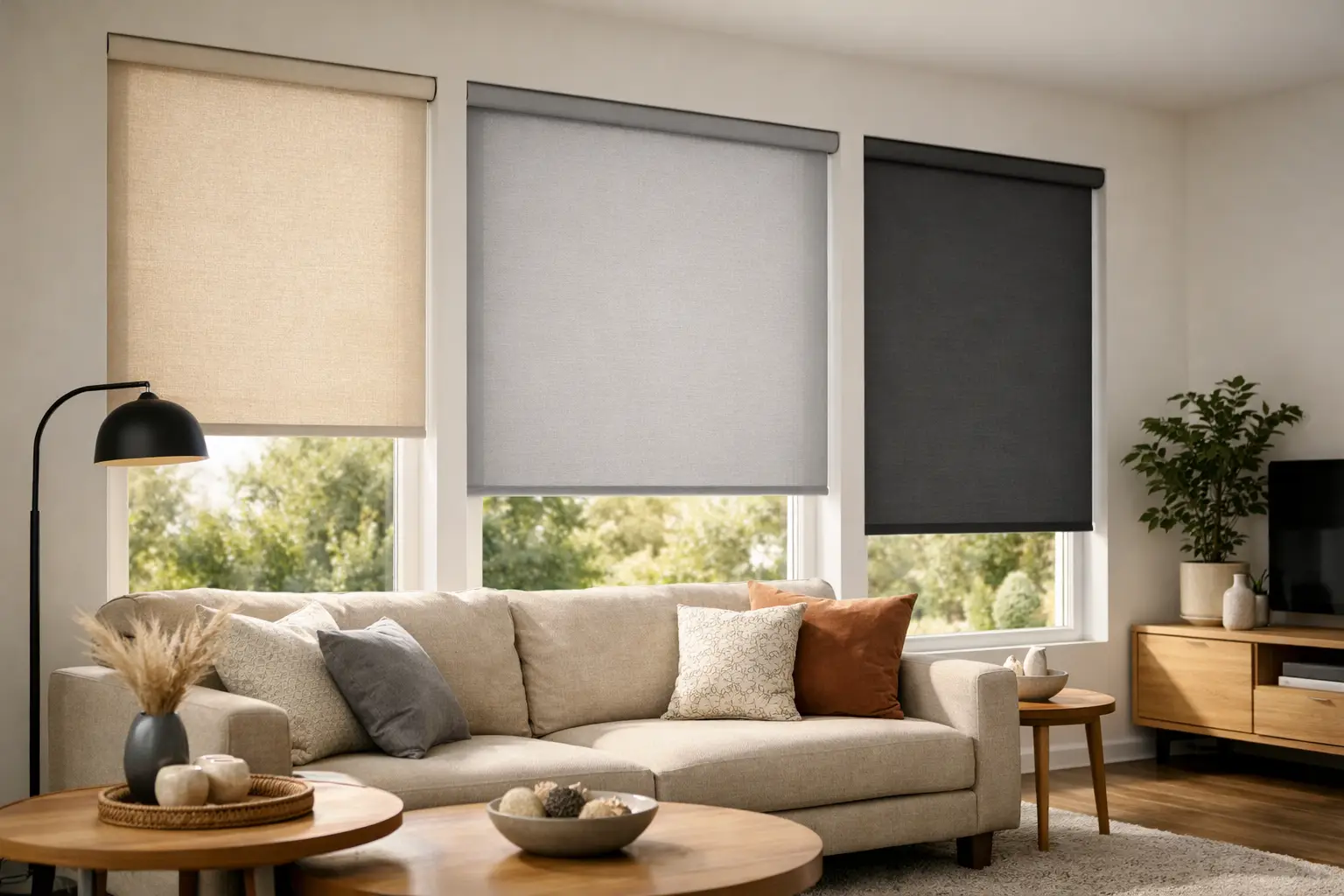
Best Roller Shades for Living Room Style
A living room can look polished on paper and still feel wrong at certain hours of the day. The sofa gets blasted with afternoon glare, the TV reflects every window, and privacy disappears the moment interior lights turn on. That is exactly why many homeowners start looking for the best roller shades for living room spaces – not just to finish the window, but to make the room work better every day.
Roller shades remain one of the smartest choices for living rooms because they offer a clean profile, a wide range of fabrics, and excellent flexibility in light control. They fit modern interiors especially well, but they are not limited to minimalist spaces. With the right material, opacity, and hardware, they can feel soft, tailored, and fully integrated into traditional, transitional, and contemporary designs.
What makes the best roller shades for living room use?
The short answer is balance. In a bedroom, full blackout may be the priority. In a kitchen, wipeable practicality often comes first. In a living room, the best solution usually has to do several things at once: manage daylight, protect privacy, support the design scheme, and still keep the room open and welcoming.
That is why there is no single fabric or style that wins for every home. A downtown condo with floor-to-ceiling glass has different needs than a suburban family room with west-facing windows. If you entertain often, you may want a more refined woven texture. If the room doubles as a media space, glare control matters more. If the view is a major selling point, preserving it during the day becomes part of the decision.
The best roller shades are custom-specified, not picked by color alone. Width, drop, mounting style, openness, and control type all affect how the shade performs once installed.
Choosing roller shade fabric by how you live
Fabric selection is where most living room projects are won or lost. The right material changes the entire feel of the space.
Light-filtering fabrics
For many homes, light-filtering roller shades are the best starting point. They soften incoming daylight instead of blocking it completely, which helps a living room feel bright without harsh glare. This is often the sweet spot for front living rooms, open-concept spaces, and rooms where daytime comfort matters more than darkness.
These fabrics work well when you want privacy during the day but still prefer an airy look. They also tend to complement layered interiors, especially when paired with side panels or drapery for added softness.
Solar screen fabrics
If your living room gets strong sun exposure, solar shades deserve serious consideration. These are often included in the broader roller shade category and are particularly effective for reducing glare while preserving outward views. That makes them a smart choice for large windows, urban condos, and homes with a landscaped yard or skyline view.
The trade-off is privacy. During the day, they can perform beautifully. At night, with lights on inside, they do not provide the same level of concealment as more opaque fabrics. In many living rooms, that means they work best when privacy needs are modest or when combined with a secondary treatment.
Room-darkening and blackout fabrics
Blackout roller shades are not only for bedrooms. In a living room with a TV, projector, or intense late-day sun, a room-darkening or blackout fabric can make the space much more usable. They are also helpful in multipurpose family rooms where naps, movie nights, and playtime all happen in the same zone.
The trade-off here is mood. A blackout fabric can feel visually heavier and less open than a sheer or filtered option. For that reason, many homeowners prefer room-darkening over full blackout unless the function clearly calls for maximum light control.
Best roller shades for living room design goals
A well-chosen shade should solve practical problems without looking like an afterthought. In living rooms, design matters as much as performance.
If the room has clean-lined furniture, large expanses of glass, or a modern architectural shell, a simple roller shade with a slim cassette or exposed bracket can look intentional and precise. Neutral fabrics in white, sand, gray, and warm greige remain popular because they support the architecture without competing with furniture and art.
If the room is softer or more traditional, texture becomes important. Linen-look weaves, subtle patterns, and dimensional fabrics help roller shades feel more decorative. This is often where custom specification matters most. Two shades may look similar online, but once installed, the weave density, hem bar design, and scale of the fabric can make one look builder-grade and the other look fully tailored.
For larger living rooms, consistency across multiple windows is also worth thinking through. Matching shades can unify the room, but exact uniformity is not always required. In some projects, the front elevation may call for one fabric while a back entertaining area benefits from a different openness factor. The key is coordinating the appearance so the room still feels resolved.
Inside mount or outside mount?
Mounting style affects both aesthetics and function. An inside mount keeps the shade within the window frame for a crisp, architectural look. It is often preferred when trim is attractive and the goal is to maintain a streamlined appearance.
An outside mount can be the better choice when you want to visually enlarge the window, cover more light gaps, or deal with shallow frames. It is also helpful when privacy and light control are more important than exposing trim details. In living rooms with challenging window conditions, outside mounts often produce the better result even if homeowners initially assume inside mount is the only polished option.
This is one of those areas where measurement and product expertise matter. A custom shade that is well specified will look noticeably better than a close-enough fit.
Motorized roller shades are no longer a luxury add-on
For living rooms, motorization often makes more sense than people expect. Large shades can be harder to operate manually, especially on wide windows or tall glass walls. Motorized systems allow you to control multiple shades at once, set schedules, and integrate daylight management into the way the room functions.
That matters in real life. Morning sun can be filtered automatically. Evening privacy can be programmed. TV glare can be reduced with a single button rather than adjusting several windows one by one.
Brands and systems vary, and the right option depends on wiring conditions, smart-home preferences, and budget. Some homeowners want battery-powered simplicity. Others want hardwired performance in a renovation or new build. For designers and builders, this is often where working with a full-service window treatment provider becomes especially valuable, since shade selection and automation planning should happen together, not as separate decisions.
When layering makes the living room look better
Roller shades do not have to work alone. In many of the best living room installations, they are paired with drapery or side panels. That combination offers a cleaner daytime appearance than heavy full-coverage drapery alone while adding warmth and depth to the room.
Layering is especially useful when you want more than one level of performance. A solar or light-filtering roller shade can manage daytime sun, while decorative drapery adds softness and improves evening privacy. It is also a strong approach in formal living rooms where the windows need to contribute to the overall design statement.
This combination helps roller shades feel custom rather than purely utilitarian. It also gives you more freedom with the shade fabric, since the drapery can carry more of the decorative weight.
What to avoid when shopping for living room roller shades
The most common mistake is choosing by sample color only. A fabric that looks perfect in a small swatch can behave very differently across a full window wall, especially in strong sun. Opacity, backing, and weave openness all matter just as much as color.
Another issue is underestimating hardware and scale. A wide living room window may require a different system than a small side window, and that can affect how refined the final installation looks. Cheap-looking hem bars, inconsistent bracket spacing, or poorly planned multiple-shade layouts can weaken the entire room.
It is also worth being realistic about privacy. Many people assume all shades provide it equally, but that is simply not true. If your living room faces the street or sits close to neighboring homes, privacy should be addressed early rather than treated as a secondary concern.
How to choose with more confidence
Start with the room itself, not the product category. Consider when the room gets the strongest sun, whether you watch TV there during the day, how visible the space is from outside, and whether you want the window treatment to disappear or contribute to the decor.
Then think in layers of priority. If glare is the biggest issue, solar fabrics may lead. If softness and everyday comfort matter most, light-filtering fabrics often perform better. If the room is highly exposed at night, move privacy higher up the list. If the windows are oversized, add motorization early rather than later.
For homeowners and trade professionals who want more tailored guidance, a consultation can save time and avoid specification mistakes. At Window Fashions Depot, that process typically means reviewing fabric options, control types, and installation details based on the actual room rather than relying on a one-size-fits-all pick.
The right living room shade should make the space easier to enjoy at every hour – brighter when you want daylight, calmer when the sun is too strong, and more private when the day winds down.