
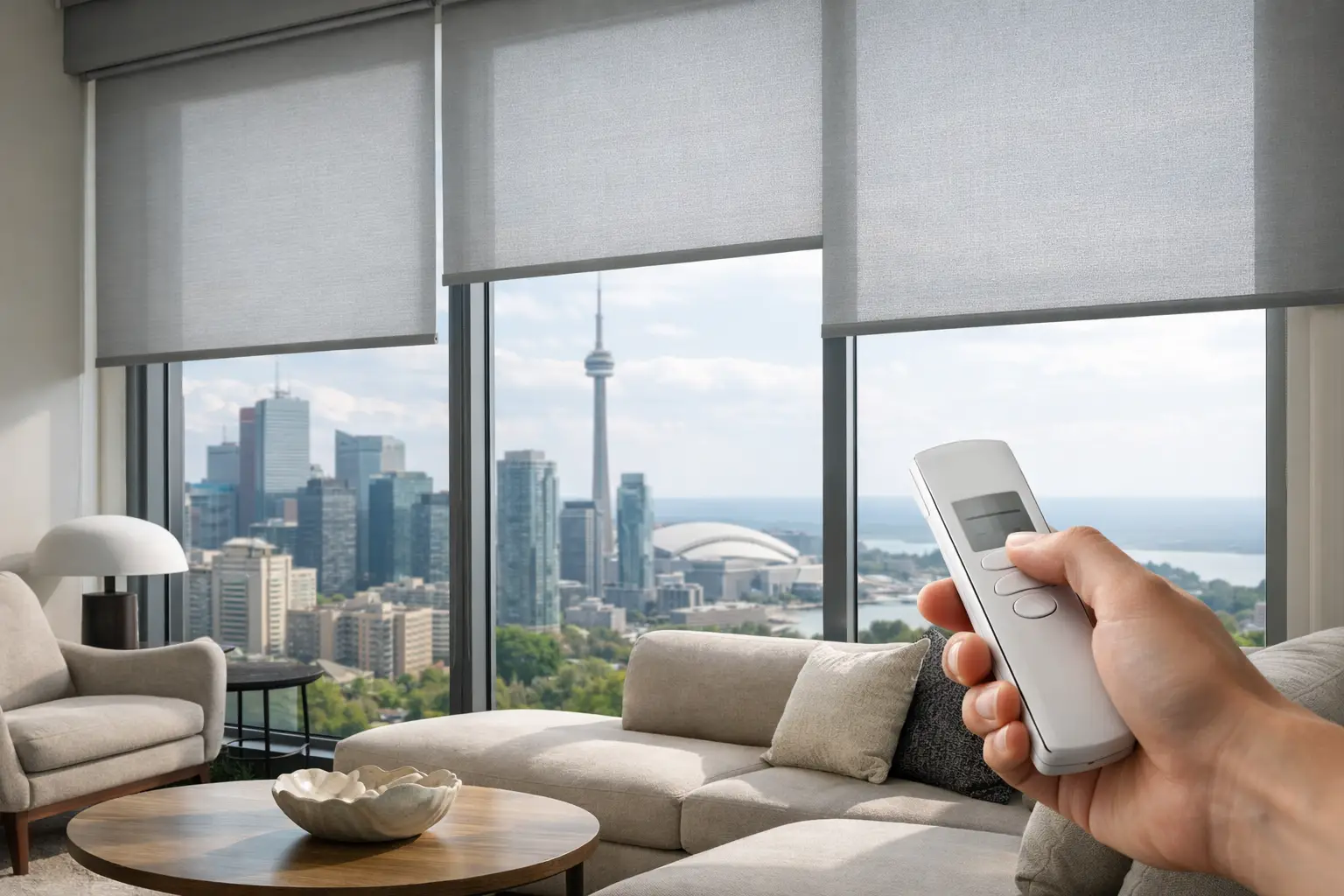
Motorized Shades Toronto Homeowners Want
Floor-to-ceiling condo glass looks stunning at 7 p.m. when the skyline is glowing. At 7 a.m., that same wall of windows can turn a bedroom into a light box and a living room into a fishbowl. That is exactly why demand for motorized shades Toronto homeowners can customize has grown well beyond luxury projects. People want better light control, cleaner design, and daily convenience without cords, clutter, or compromise.
Why motorized shades make sense in Toronto homes
Motorization solves a very practical problem. Large windows, hard-to-reach openings, and multi-shade rooms are difficult to manage manually, especially when privacy and glare change throughout the day. With motorized shades, a single remote, wall switch, or app can raise and lower shades on schedule or on demand.
In Toronto, that convenience often overlaps with architecture. Downtown condos commonly feature expansive glazing, narrow mullions, and modern interiors that benefit from a minimal window treatment profile. Detached homes and townhomes may have two-story foyers, patio doors, skylights, or layered window treatments where manual operation is less appealing. In both cases, automation adds control without distracting from the room.
There is also the comfort factor. South- and west-facing rooms can heat up quickly in summer afternoons, while bedrooms may need blackout performance in the morning. A motorized shade system lets you fine-tune how much light enters the room and when. That matters for media rooms, nurseries, home offices, and open-concept spaces where one window treatment often has to do several jobs.
Choosing the right motorized shades in Toronto
The best product is rarely just about the motor. It starts with the shade style, the fabric, the size of the window, and how the room is used. Motorization improves operation, but the foundation is still good specification.
Roller shades for clean lines and broad coverage
Roller shades are often the first choice for contemporary interiors because they look crisp, take up relatively little visual space, and work well across large windows. They are available in sheer, light-filtering, room-darkening, and blackout fabrics, which makes them suitable for nearly any room. In condos, they are especially popular because they align with modern architecture and can be grouped across multiple windows for a tidy, consistent look.
For homeowners who want daytime privacy without fully blocking natural light, screen and light-filtering roller fabrics can be a strong option. For bedrooms, blackout roller shades are usually the better fit, though side light gaps should still be discussed during planning. If the room is very light-sensitive, details such as installation type and cassette design matter just as much as fabric opacity.
Honeycomb shades for comfort and efficiency
Honeycomb shades bring a softer look and an added insulation benefit. Their cellular construction helps reduce heat gain and heat loss, which can be useful in rooms with broad glass exposure. They are a practical choice for bedrooms, family rooms, and homes where energy performance matters as much as appearance.
Motorization makes honeycomb shades more appealing on larger windows or grouped openings where frequent adjustment would otherwise be cumbersome. They can also suit homeowners who want a quieter, more understated look than a sleek roller shade.
Roman and woven shades for a more decorative feel
If the priority is softness, texture, or a more furnished appearance, motorized Roman shades and woven shade options can deliver that design layer. These are often selected for living rooms, dining rooms, and bedrooms where window treatments play a bigger visual role in the space.
The trade-off is that decorative shades can stack differently, require more fabric consideration, and may not always be the best answer for extra-wide openings. Motorization still adds convenience, but product selection needs to balance style with proportion, fold behavior, and daily use.
Power options matter more than most buyers expect
One of the first questions in any shade automation project is how the system will be powered. The answer depends on the window location, project stage, and how integrated you want the final setup to be.
Battery-powered motors are popular because they reduce wiring demands and work well in finished homes and condos. They are often the simplest retrofit option and can provide a clean result without opening walls. The obvious consideration is battery maintenance. Depending on shade size, frequency of use, and fabric weight, batteries will eventually need replacement or recharging.
Hardwired motorization is often the preferred choice for new construction, major renovations, or larger whole-home systems. It avoids battery changes and can be ideal for projects where shades will be used heavily or integrated into broader home automation. The drawback is planning. Wiring needs to be addressed early, before walls are closed, and coordination with electricians and other trades becomes part of the process.
Rechargeable systems sit somewhere in the middle. They offer the flexibility of a wireless installation with a more convenient power routine than disposable batteries. For many homeowners, that balance is appealing, especially in spaces where wiring is not practical.
Smart controls are useful when they match real life
Smart-home compatibility gets plenty of attention, but good automation is not about novelty. It is about making everyday routines easier. Scheduling shades to lower during intense afternoon sun, rise gradually in the morning, or close automatically after dark is where the value becomes obvious.
Remote controls remain popular because they are simple and reliable. Wall switches offer a more permanent, intuitive experience for rooms where multiple users need easy access. App control adds flexibility when you are away from home or managing several rooms at once.
For some clients, full integration with systems from brands such as Somfy or Lutron makes sense, especially in larger homes or professionally designed projects. For others, a straightforward motorized setup with scene control is more than enough. It depends on the scope of the project and how much technology the household actually wants to use.
Design details that change the final result
Motorized shades should look intentional, not just automated. That means paying attention to fascia choices, cassette styles, fabric openness, hem bars, and whether the shades are mounted inside or outside the frame. These details affect both appearance and performance.
Inside mounts can create a tailored architectural look, but they depend on sufficient window depth and reasonably square openings. Outside mounts may provide better light control and broader visual coverage, particularly when minimizing gaps is important. In many bedrooms and media rooms, outside mounting can produce a better functional outcome.
Fabric selection deserves extra care. A solar screen fabric that works beautifully in a bright living room may feel too exposed at night if interior lights are on. A blackout fabric may solve light issues but create a heavier visual effect than desired in a daytime entertaining space. The right answer often involves room-by-room variation rather than using the exact same fabric everywhere.
What to expect from a custom consultation
A successful motorized shade project usually starts with measurements, but it should not end there. Window size, recess depth, power access, fabric behavior, control preferences, and surrounding trim all influence the recommendation. That is why custom specification matters.
Homeowners often come in thinking only about color and opacity. Designers and builders may focus on dimensions, wiring, and brand standards. Both perspectives are valid, and both need to be addressed. A good consultation narrows the field from hundreds of possibilities into a solution that fits the room, the style of the home, and the installation conditions.
This is also where branded systems can make a difference. Product lines from manufacturers such as Hunter Douglas, Graber, Maxxmar, Alta, Somfy, and Lutron each bring different fabric programs, control options, and technical strengths. There is no single best brand for every project. The better approach is matching the product line to the application.
Who benefits most from motorized shades
The short answer is almost anyone with challenging windows or a preference for convenience. But some applications benefit more than others. Condo owners with wide expanses of glass often see immediate improvements in comfort and privacy. Families appreciate cordless operation and simpler daily routines. Designers value the cleaner look and programmable consistency across multiple rooms. Builders and renovation professionals often specify motorization because clients increasingly expect smart-ready features in finished spaces.
Motorized shades are also a strong choice for aging-in-place design. When shade operation becomes easier, rooms stay more usable and comfortable without adding visual clutter or complicated hardware.
Price is part of the conversation, of course. Motorization costs more than manual operation, and custom solutions vary widely depending on size, fabric, power type, and controls. But when the windows are prominent, the shades are used every day, or the room has multiple large openings, that added investment tends to feel justified quickly.
For anyone planning custom motorized window treatments, the smartest next step is not guessing online. It is seeing the fabrics, reviewing control options, and getting guidance on what will actually work in your space. Window Fashions Depot helps homeowners, designers, and trade professionals compare solutions that fit both the design plan and the way the room is lived in. The right shades should do more than move at the touch of a button – they should make the whole space feel better every day.