
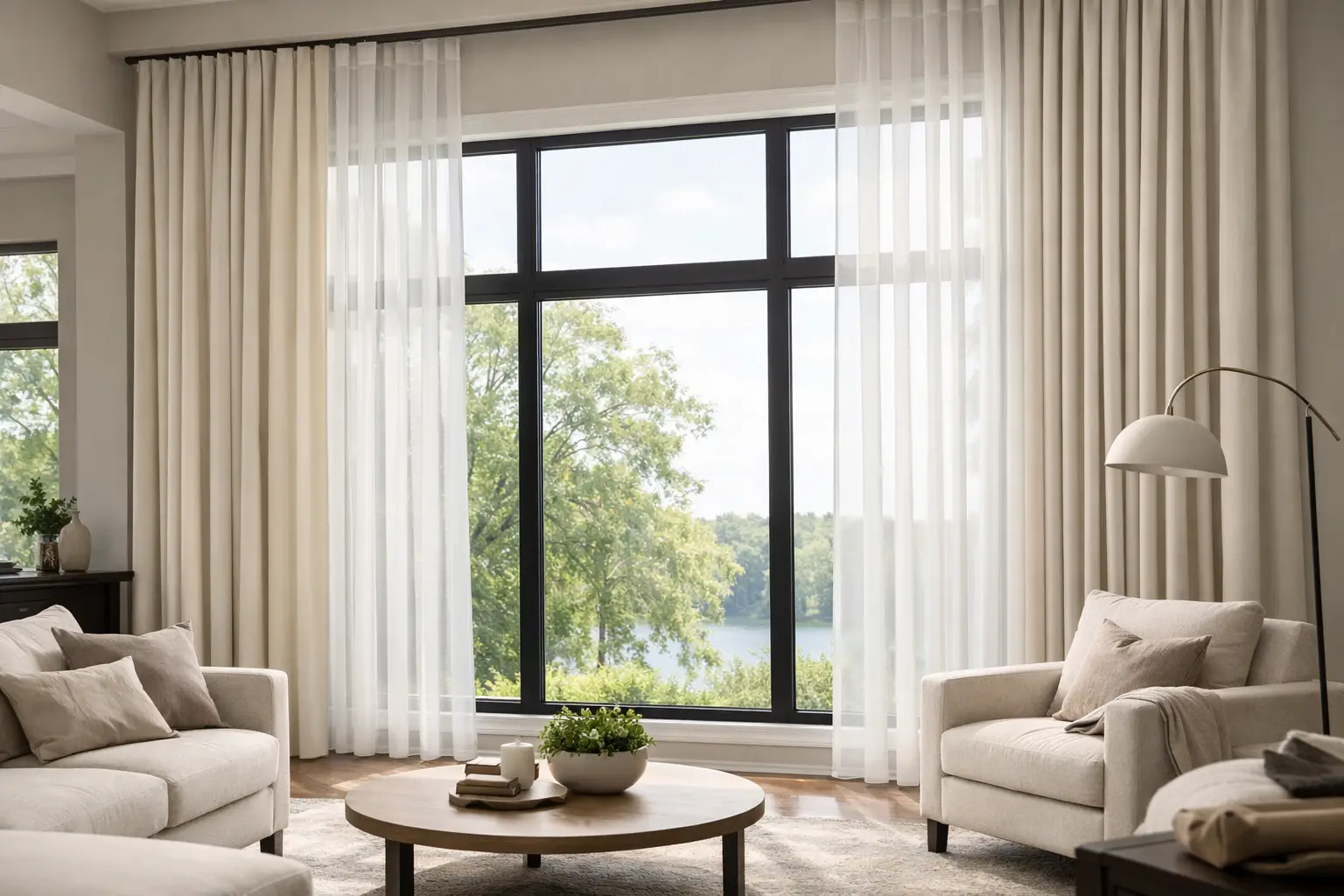
Custom Drapery for Large Windows That Works
Large windows can be the best feature in a room right up until they feel too bare, too bright, or too difficult to dress well. That is where custom drapery for large windows earns its place. When the scale is right, the fabric is properly specified, and the hardware is matched to the opening, drapery does more than soften a view. It gives the room proportion, comfort, privacy, and a finished architectural look.
Off-the-shelf panels rarely solve that full set of problems. Standard lengths may fall awkwardly, widths often leave glass exposed, and lightweight hardware can look undersized against a large opening. In rooms with tall ceilings, wide patio doors, or dramatic picture windows, those details matter. The right custom approach helps the treatment look intentional instead of like an afterthought.
Why custom drapery for large windows makes a difference
The first issue is scale. Large windows need more than extra fabric. They need a treatment plan that considers stacking space, rod span, panel weight, and how the drapery relates to the rest of the room. A wide wall of glass in a living room asks for a different solution than a tall stairwell window or a bedroom corner window.
The second issue is performance. Big windows bring in generous natural light, but they can also create glare, heat gain, fading, and nighttime exposure. Drapery can help control each of those, but only if the fabric, lining, and placement are chosen for the room’s actual needs. Sheer linen panels may look beautiful, yet they will not provide the same privacy or insulation as lined drapery with proper fullness.
There is also the visual effect. Large expanses of glass can make a room feel open and impressive, but they can also feel cold or unfinished. Drapery introduces texture, softness, and movement. It can visually widen a wall, emphasize ceiling height, or frame a view without covering it completely. That balance is often what homeowners and designers are after.
Start with how the window needs to function
Before choosing fabric or pleat style, it helps to answer a practical question: what should the drapery do every day? In a formal dining room, the answer may be mostly decorative with occasional privacy. In a family room, it may need to reduce afternoon glare on screens. In a primary bedroom, light blocking is usually the priority.
This is where many large-window projects go off track. People shop by fabric first, then discover later that the chosen material is too sheer, too heavy, or too limited in width for the application. A better process starts with the function, then works toward the finished look.
If the drapery will open and close often, the hardware and fabric must support daily movement. If the panels are mostly stationary, the design can be more tailored around appearance. If the opening is exceptionally wide, traversing systems or motorized tracks may make more sense than decorative rods alone. The larger the window, the more that mechanics matter.
Fabric choices for custom drapery for large windows
Fabric is where design and performance meet. On large windows, texture and weight become more noticeable because there is simply more material in view. A crisp fabric with structure creates a cleaner architectural line. A softer fabric produces a more relaxed, flowing look.
Linen blends remain popular because they offer a natural hand and a refined casual finish. They work especially well in living rooms, dining rooms, and transitional interiors. The trade-off is that some linen-rich fabrics can wrinkle more easily and may require a lining or interlining to hang properly across a broad span.
Velvet, heavier wovens, and richly textured materials create drama and insulation, which can work well in bedrooms or formal spaces. They also add weight quickly. On a very wide opening, that means the hardware and track system need to be specified accordingly. What looks luxurious in a sample book can become cumbersome if the system is not designed to carry it.
Sheers are another strong option for large windows, especially where preserving daylight is part of the goal. They diffuse harsh light and soften the room without fully closing off the view. In many projects, sheers are paired with shades or layered under lined drapery so the room can shift between filtered light and full privacy.
Fullness, length, and placement matter more than most people expect
Custom drapery succeeds on large windows because the dimensions are calculated, not guessed. Width is a major part of that. Panels that are too narrow look skimpy, even in good fabric. Proper fullness gives the treatment body when closed and a more luxurious appearance when open.
Length matters just as much. For many interiors, panels that lightly break on the floor or just kiss the floor create the most polished look. Floating too high can make a large installation feel under-scaled. Puddling can be elegant in the right room, but it is less practical in high-traffic spaces or homes that prefer a cleaner finish.
Mounting height also changes the effect of the room. Hanging drapery higher than the top of the window can emphasize ceiling height and make the entire wall feel taller. Extending the rod or track beyond the window frame allows panels to stack back more fully, preserving the view and maximizing incoming light when the drapery is open.
These are the details that separate a decorative panel from a true architectural window treatment.
Hardware and motorization for oversized openings
On large windows, hardware is not a minor accessory. It is structural. Long spans may require center supports, specialized tracks, or systems engineered for heavier fabrics. Decorative rods can work beautifully, but they are not always the best solution for every opening.
Ripplefold and traversing drapery systems are often excellent choices for wide expanses of glass, sliding doors, and contemporary interiors. They provide a clean line, smooth operation, and a controlled stack. Pleated drapery can deliver a more traditional or tailored look, but again, the hardware needs to match the fabric weight and daily use.
Motorization becomes especially valuable once windows are tall, hard to reach, or part of a whole-home lighting plan. In those cases, automated drapery is not just a luxury feature. It improves convenience, protects fabrics and furnishings from direct sun, and makes large treatments easy to use consistently. Systems from brands like Lutron and Somfy are often considered when clients want integrated control, quiet operation, and smart-home compatibility.
Layering for better light control and privacy
One of the most effective strategies for large windows is layering. Drapery alone can work, but pairing it with another treatment often gives the best range of control. Shades under drapery let you manage privacy and daylight throughout the day without fully closing the room off.
For example, solar shades behind decorative drapery can cut glare while preserving an exterior view. Blackout shades paired with side panels or full drapery can give a bedroom a softer, more finished look than blackout fabric alone. Woven wood shades under drapery add texture while still giving the room stronger light management when needed.
Layering also helps when the room has changing needs. A bright open-concept space may need filtered light in the morning, glare control by afternoon, and privacy at night. A single product can struggle to do all three well. A layered solution usually performs better and looks more complete.
Style should follow the architecture
Large windows are visually dominant, so the drapery should feel connected to the architecture and furnishings around it. In a modern space with minimal trim and expansive glass, a simple ripplefold in a textured neutral may be the strongest choice. In a traditional room with millwork, pleated panels, richer fabrics, and more decorative hardware can feel appropriate.
This does not mean everything has to match exactly. It means the treatment should support the room’s language. A dramatic window wall can handle generous fabric and height, but the style still needs discipline. Too many details can compete with the view. Too little can make the room feel unfinished.
That is why consultation matters. The right design depends on ceiling height, wall space, furniture layout, light exposure, and how the room is actually used. In many cases, clients benefit from seeing fabric scale, pleat styles, and hardware samples together before making a final decision.
When professional measuring is worth it
Large-window drapery is less forgiving than a small single window. Small measuring errors become obvious quickly, especially with custom fabrication. Uneven floors, deep moldings, off-center windows, and extra-wide spans all affect the final specification.
For homeowners, that usually means professional measuring is worth the investment. For designers and builders, it helps keep the finish aligned with the rest of the project. A consultative supplier can also identify whether the opening needs a ceiling mount, wall mount, split draw, one-way draw, or a motorized track long before fabrication begins.
If you are planning custom drapery for large windows and want the treatment to look scaled, function smoothly, and coordinate with shades or automation, a showroom-based consultation can save a great deal of trial and error. Window Fashions Depot helps homeowners and trade professionals compare fabrics, drapery styles, tracks, and motorized options based on the exact room, not just the window size.
The best large-window treatment is the one that makes the room easier to live in while making the architecture look even better. When those two things come together, the drapery stops feeling like an accessory and starts feeling like part of the home.