
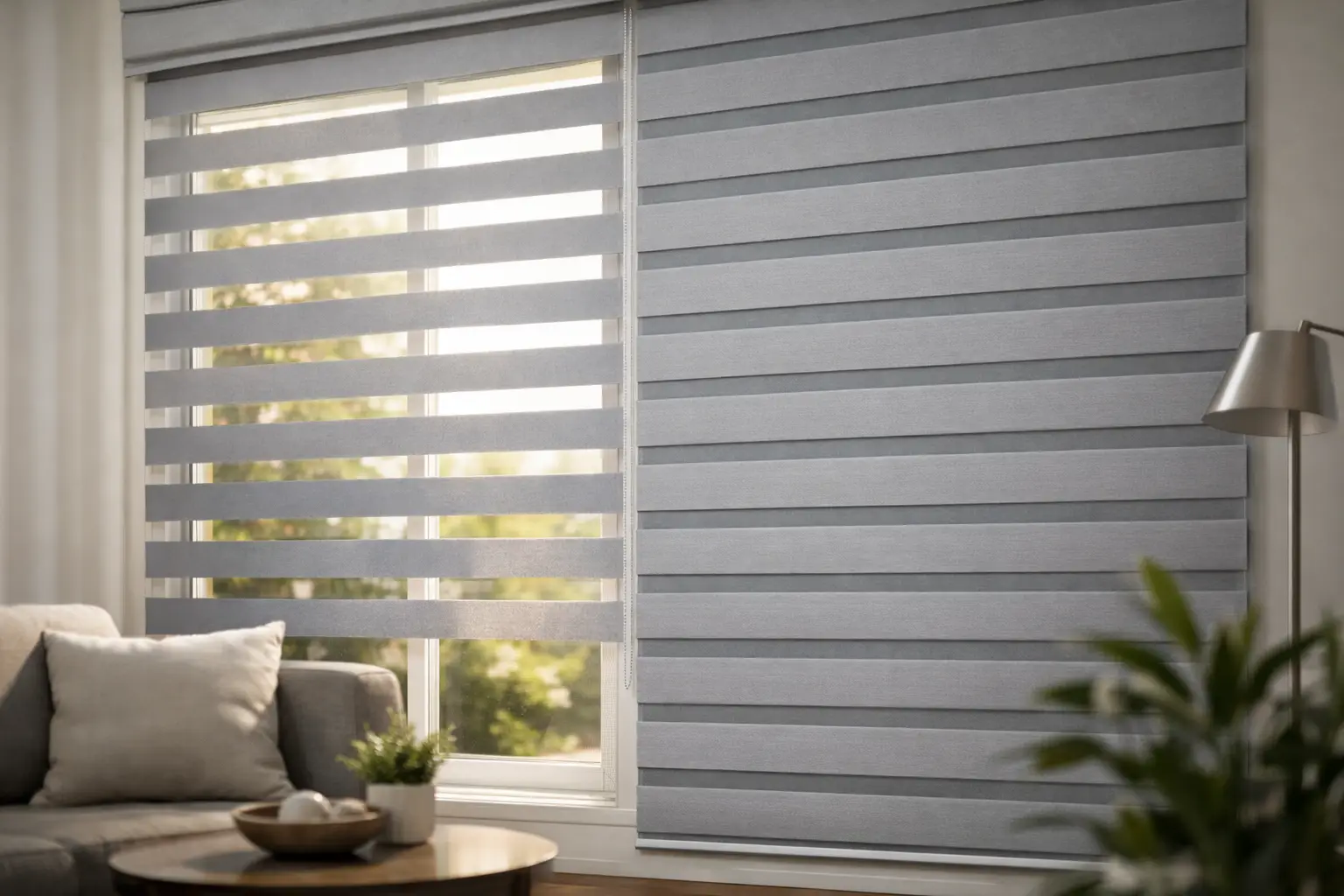
Zebra Shades for Privacy and Light Control
A room can look finished on paper and still feel wrong at noon. The sofa is in place, the paint works, the flooring is right – but the light is too harsh, the street-facing windows feel exposed, or the glare on the TV makes the space harder to use. That is exactly where zebra shades for privacy and light control tend to stand out. They are one of the few window treatments that let you fine-tune brightness and visibility without committing to fully open or fully closed.
Why zebra shades work so well
Zebra shades use alternating bands of sheer and solid fabric in a continuous loop. When the bands align one way, filtered light comes through. When they shift, the solid sections overlap for more privacy and stronger light control. That simple construction is what makes them so useful in real homes. You are not choosing between daylight and coverage as two separate modes. You are adjusting between them.
For homeowners and designers, that flexibility matters because most rooms are not used the same way all day. A breakfast area may need soft morning light but less exposure in the afternoon. A living room may need daytime brightness while still protecting furnishings and reducing screen glare. In a condo, the issue is often less about blackout and more about managing close sightlines from neighboring buildings. Zebra shades answer those in-between needs better than many traditional blinds or single-fabric roller shades.
Zebra shades for privacy and light control in everyday rooms
The strongest case for zebra shades is not that they do everything. It is that they handle common daily problems with less compromise.
Living rooms and family rooms
In shared spaces, people usually want natural light without making the room feel exposed. Zebra shades are a strong fit here because they soften incoming light rather than simply blocking it. If your windows face a street, backyard, or neighboring property, you can shift the bands to gain more privacy while keeping the room bright enough to feel open.
That said, privacy is not absolute in every position. In the light-filtering setting, visibility is reduced, but at night with interior lights on, you may still want a more closed alignment. For homes that require complete evening privacy, fabric selection and exact positioning matter.
Bedrooms
Bedrooms often raise the biggest question: are zebra shades enough? The answer depends on how you sleep and what the room faces. Zebra shades can provide strong privacy and good light reduction, but they are not always true blackout on their own. If you are sensitive to light, work night shifts, or have east-facing windows that flood the room early, a room-darkening or blackout solution may be more appropriate.
In many bedrooms, though, zebra shades are chosen because they look lighter and cleaner than heavier treatments. They suit modern interiors and work especially well when you want a tailored appearance with controlled daylight during the day and privacy at night.
Kitchens, breakfast areas, and home offices
These are rooms where glare control often matters more than full coverage. Direct sun on countertops, laptops, or dining tables can make the space uncomfortable even when the room itself looks bright. Zebra shades help diffuse that harshness without making the area feel shut in.
For home offices, the ability to shift from filtered light to more privacy during video calls is a practical benefit. For kitchens, the clean profile and contemporary appearance make them appealing, although fabric performance and placement should always be considered near moisture and heavy cooking zones.
What kind of privacy should you expect?
This is where a showroom-level conversation matters. Many shoppers hear “privacy shade” and assume one setting will solve every visibility issue day and night. In reality, privacy depends on several factors: fabric opacity, window orientation, interior lighting, and how close neighboring homes or buildings are.
During the day, zebra shades usually perform very well for soft privacy while preserving natural light. At night, especially in brightly lit rooms, sheer sections can allow more visibility than some people expect unless the bands are moved into a more closed position. If total privacy is a non-negotiable requirement, especially for ground-floor bedrooms or bathrooms, zebra shades may need to be specified carefully or paired with another treatment.
That is not a weakness so much as a design decision. Zebra shades are built for adjustable light management with a sleek look. They excel when clients want more control than a roller shade and a softer visual effect than horizontal blinds.
Light control is where zebra shades shine
When clients compare shade styles, they often focus first on appearance. The more meaningful difference shows up in how a room feels across the day. Zebra shades can reduce glare, soften brightness, and preserve a connection to daylight. That makes them especially useful in large-window living spaces, condos with expansive glass, and open-concept layouts where too much sun can make one side of the home harder to use.
Unlike treatments that move only up or down, zebra shades let you modulate light without exposing the full window. That is valuable in spaces where you want a polished interior and practical comfort. It also helps protect flooring, furniture, and finishes from some direct sun exposure, though no fabric should be viewed as complete UV protection unless specified that way.
Design advantages beyond function
A clean, contemporary profile
Zebra shades have a streamlined look that works well in transitional and modern interiors. They read as more architectural than many soft fabric shades but warmer and less rigid than aluminum or faux wood blinds. For design-conscious homeowners, that balance is often the reason they make the shortlist.
The fabric selection also matters. Lighter neutrals can keep a room airy, while deeper tones create more contrast and a stronger visual statement. Texture, band scale, and openness all influence how finished the shade looks from both inside and outside.
Better fit for large windows and condos
In urban homes and condo settings, zebra shades are often chosen because they manage privacy without visually crowding the space. Heavy drapery can feel too formal or bulky in some layouts. Standard blinds can interrupt views and create harder lines across expansive glass. Zebra shades maintain a cleaner elevation while still giving the user more control.
For larger windows, custom sizing is important. The proportions of the fabric bands and the overall scale of the treatment affect how balanced the final installation looks.
Manual or motorized?
Motorization is a natural upgrade for zebra shades, especially on wide windows, hard-to-reach openings, or whole-home projects where consistency matters. A motorized shade allows precise positioning, which is useful when the product is designed around nuanced light adjustment. It also supports scheduled movement throughout the day, helping rooms respond to changing sun exposure without constant manual correction.
For homeowners integrating smart-home systems, this can be more than a convenience feature. It becomes part of how the house manages comfort and privacy. For designers and builders, motorization also helps maintain a cleaner finish by reducing visible cords and supporting a more premium specification.
Manual operation still makes sense in many projects, particularly for smaller windows or budget-sensitive rooms. The right choice depends on window count, accessibility, and how often the shades will be adjusted.
What to consider before ordering
The best zebra shade installation starts with honest priorities. If your main concern is daytime glare with moderate privacy, zebra shades are often an excellent answer. If your top priority is full blackout or maximum nighttime privacy in every condition, another product category may be stronger.
Mounting style matters too. Inside mounts offer a crisp, built-in look, but they can allow small light gaps at the edges depending on the window frame. Outside mounts can improve coverage and make windows appear larger, but they change the visual effect. Fabric choice, cassette style, and hardware finish should all support the room rather than compete with it.
This is also why custom specification tends to outperform off-the-shelf buying. Window proportions, surrounding trim, ceiling height, and the room’s actual use all shape whether a zebra shade will feel like the right solution or just a stylish one.
Choosing zebra shades with confidence
For homeowners, decorators, and trade professionals, zebra shades are worth considering when the goal is balanced performance: privacy when needed, daylight when wanted, and a cleaner design language than many conventional blinds. The product is especially effective in rooms that need flexibility more than extremes.
At Window Fashions Depot, that selection process is typically less about picking a trend and more about matching fabric, control type, and installation approach to the way the space is actually lived in. If a room needs softness, glare reduction, and a modern profile, zebra shades often earn their place quickly. The right specification is what turns them from a good-looking option into one you appreciate every day.