
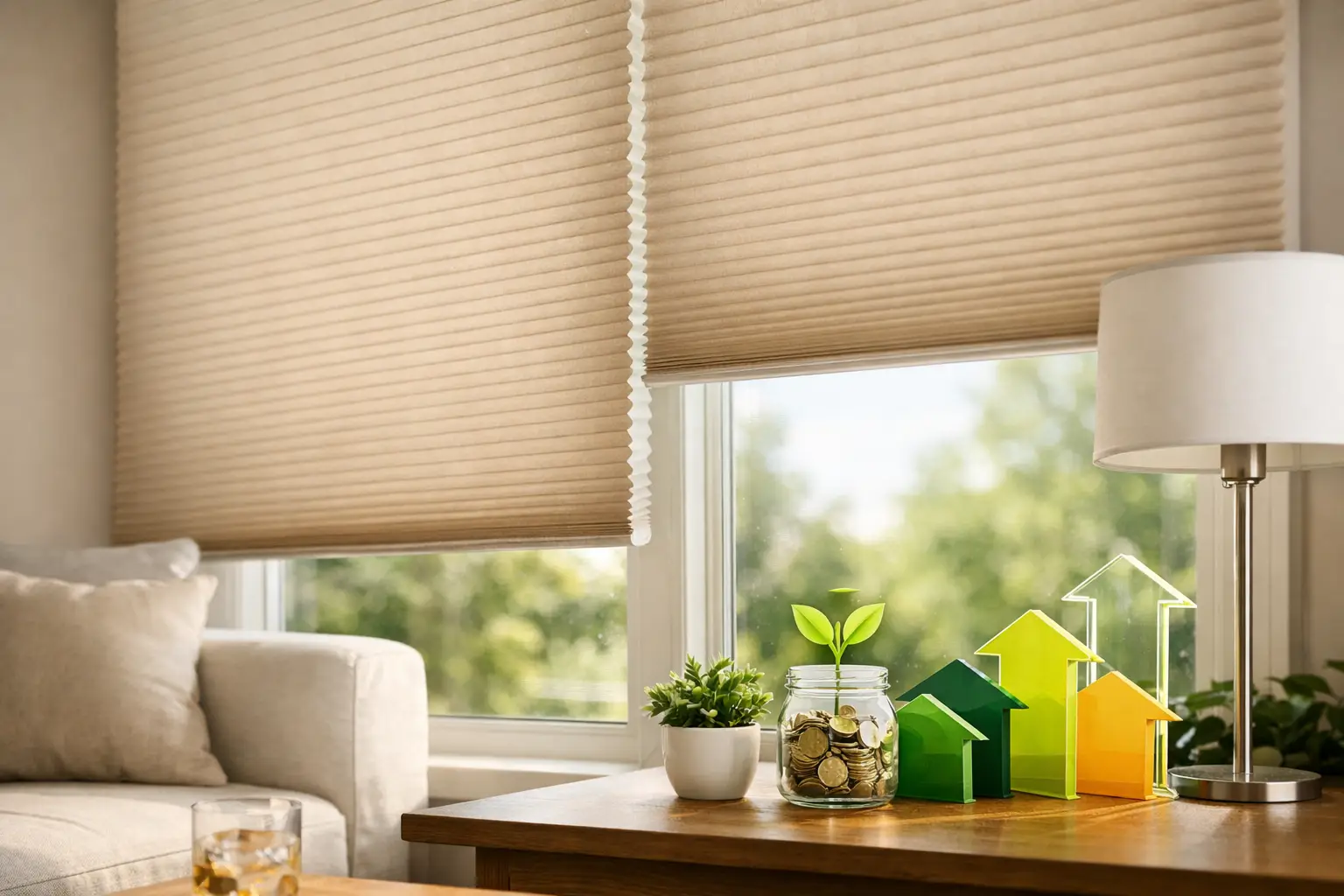
Honeycomb Shades for Energy Efficiency
A room can look finished and still feel uncomfortable. If the window area runs hot in the afternoon, chilly at night, or drafty in winter, the issue is often less about decor and more about how the window is managed. That is where honeycomb shades for energy efficiency stand out. They are one of the few window treatments that address appearance, privacy, and light control while also helping reduce heat transfer at the glass.
For homeowners, designers, and builders, that matters because windows are typically the weakest thermal point in the room. Even well-designed interiors can feel uneven when direct sun, cold glass, or drafts disrupt comfort. A custom honeycomb shade can help moderate those conditions without adding visual bulk, which is why it remains a leading specification for bedrooms, living areas, condos, and whole-home projects.
Why honeycomb shades help with energy efficiency
The basic concept is simple. Honeycomb shades, also called cellular shades, are built with pockets of air formed by pleated fabric cells. Those cells create an insulating layer between the room and the window, slowing the movement of heat.
In warm weather, that means less solar heat entering the space through the glass. In cooler months, it means less interior heat escaping through the window. The result is a room that feels more stable throughout the day, with less dependence on constant HVAC adjustment.
That does not mean every honeycomb shade performs the same way. Cell size, fabric type, opacity, mounting style, and whether the shade is single-cell or double-cell all affect the outcome. The biggest mistake is treating honeycomb shades as a generic category when performance can vary meaningfully from one specification to the next.
What affects the performance of honeycomb shades for energy efficiency
The first factor is cell construction. Single-cell shades provide insulation and are often a strong fit for many rooms, especially where clean lines and budget balance are priorities. Double-cell designs add another layer of air pockets, which can improve insulation further. If the project is focused on stronger thermal performance, especially at large or exposed windows, double-cell is often worth considering.
Fabric opacity also plays a role. Light-filtering fabrics soften daylight and can help reduce glare while preserving a bright interior feel. Blackout or room-darkening options often provide stronger privacy and can support improved thermal control, especially in bedrooms and media spaces. The trade-off is that darker, more opaque materials change the daylight experience. The right choice depends on whether comfort, privacy, view-through, or daylighting is the higher priority.
Mounting details matter more than many buyers expect. An inside-mounted shade can look tailored and architectural, but if there are larger gaps at the sides, top, or bottom, insulation performance can be reduced. An outside mount can cover more of the window opening and help minimize light gaps, which may improve both room darkening and thermal performance. The better option depends on the window depth, trim condition, and the visual effect you want.
Fit is another major factor. Off-the-shelf sizing often leaves unnecessary gaps, especially in older homes, condos, and renovations where windows are rarely perfectly uniform. Custom fabrication gives you tighter sizing and a better chance of getting the performance you are paying for.
Best rooms to use honeycomb shades
Bedrooms are one of the strongest applications. People notice temperature swings more at night and early morning, and they also tend to want privacy and better light control. A room-darkening or blackout honeycomb shade can address all three needs in one product.
Living rooms and family rooms are another good fit, especially when large windows create glare or afternoon heat buildup. In these spaces, light-filtering fabrics are often preferred because they preserve a softer daytime ambiance while still helping with solar control.
Home offices benefit as well. If direct sun creates screen glare or inconsistent room temperature, a honeycomb shade can improve usability without making the room feel heavy or closed off. This is especially useful in urban condos where one side of the unit may receive intense sun exposure for several hours each day.
Sunrooms and highly glazed spaces can also benefit, though expectations should be realistic. Honeycomb shades can help reduce heat gain and improve comfort, but they are not a replacement for high-performance glazing or exterior shading when the room has extensive glass exposure. In those cases, the best result often comes from combining products and looking at the whole envelope, not just the treatment.
Design advantages beyond energy savings
One reason honeycomb shades continue to perform well in design-driven projects is that they look clean without competing with the room. Their profile is compact, the lines are crisp, and the fabric selection ranges from subtle neutrals to richer contemporary tones.
That makes them easy to integrate into modern, transitional, and even more traditional interiors when specified carefully. They work well as a standalone treatment in simple spaces, but they can also be layered with drapery for a more finished look. Layering adds softness and scale while allowing the shade to do the functional work of insulation and light control.
For designers and homeowners who want a minimal visual footprint, this matters. You get a treatment that supports energy management without shifting the room into a purely utilitarian look.
Manual or motorized operation
Operation affects performance more than people realize. A shade only helps when it is used consistently. If the west-facing windows should be covered every afternoon but the routine is inconvenient, the product may not deliver its full value.
Motorization solves part of that problem. Automated scheduling makes it easier to lower shades during peak sun hours and raise them when daylight is wanted. In larger homes, hard-to-reach windows, and connected smart-home environments, this is often the difference between having an energy-conscious product and actually using it that way.
Manual options still make sense in many rooms, especially for smaller windows or more budget-sensitive projects. The decision usually comes down to scale, convenience, and how integrated the home already is. For many clients, a mixed approach works well, with motorization reserved for key exposures or difficult-to-access openings.
What to ask before you order
The right specification starts with the window, not the catalog. Consider how much direct sun the room gets, what time of day the discomfort happens, and whether privacy, blackout control, or design minimalism is the main goal.
It also helps to think about who will use the shades every day. A family room may need easy operation and durable fabric behavior. A primary bedroom may prioritize room darkening and insulation. A designer working on a whole-home project may want consistency in sightlines while adjusting fabric opacity room by room.
This is why consultation matters. Product selection should account for exposure, glass size, mounting depth, automation goals, and the overall interior scheme. A premium showroom experience is valuable because you can compare fabrics, operating systems, and brand differences in a practical way instead of guessing from small swatches or online photos.
If you are comparing options for a renovation or new build, it is also worth reviewing adjacent products. In some spaces, roller shades, Roman shades, drapery, or exterior shading may be part of the broader solution. Honeycomb shades are highly effective, but the best answer is sometimes a coordinated treatment plan rather than a single product decision.
When honeycomb shades are the right choice
Honeycomb shades are especially strong when the goal is to improve comfort at the window without sacrificing a polished interior look. They are a smart fit for bedrooms, living spaces, condos, and whole-home upgrades where insulation, privacy, and clean design all matter.
They may be less ideal if your top priority is preserving an unobstructed view with the shade lowered, or if the project calls for a more decorative, fabric-forward statement. In those cases, another category may suit the space better, or layering may provide the balance you want.
For clients who want expert guidance on custom fit, fabric selection, and motorization, working with a consultative source such as Window Fashions Depot can help narrow the options quickly and align performance with the look of the room.
A well-chosen shade should do more than cover glass. It should make the room feel better to live in, morning through night, season after season.