
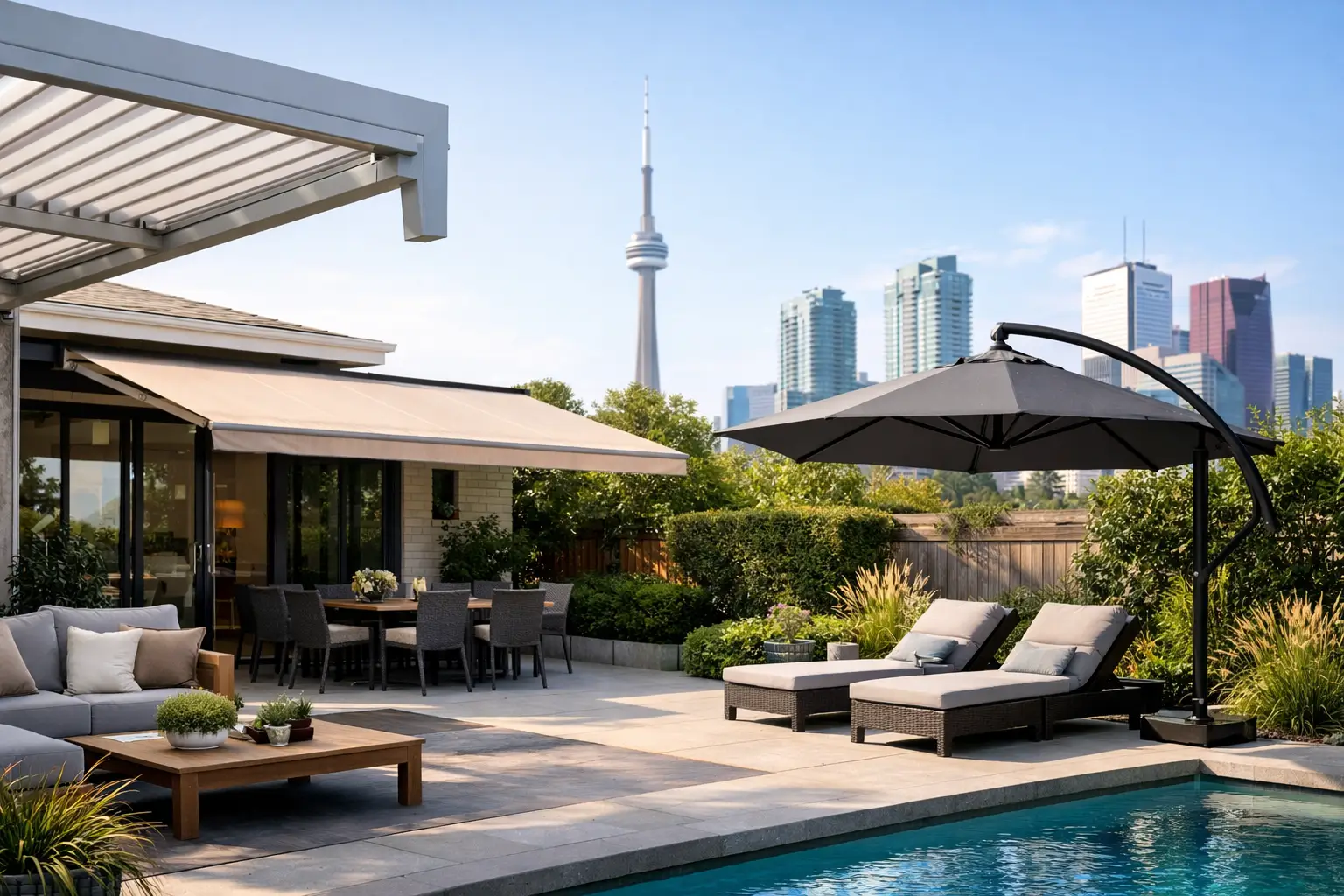
Outdoor Shade Systems Toronto Homeowners Choose
A west-facing patio can look perfect at 10 a.m. and feel unusable by 3 p.m. That gap between how an outdoor space looks and how it performs is exactly why outdoor shade systems Toronto homeowners ask about are no longer treated as an afterthought. They are part of the design plan, part of the comfort plan, and often part of the home’s value.
For many properties, the right system does more than block sun. It reduces heat gain indoors, improves privacy, protects furniture and finishes, and makes a deck, terrace, or backyard seating area feel intentionally designed rather than exposed. The challenge is that there is no single best product for every home. The right answer depends on orientation, wind exposure, architecture, control preferences, and how you actually use the space.
What outdoor shade systems in Toronto need to do well
In a market with strong summer sun, variable weather, and a mix of detached homes, townhomes, condos, and custom builds, exterior shading has to perform on several levels. It needs to manage glare and heat without making the space feel closed in. It should complement the home’s lines rather than look added on later. And for many clients, it also needs to work with motorization, smart controls, and custom sizing.
That is why specification matters. A compact balcony may benefit from a vertical screen system that preserves usable floor space. A large backyard entertaining area may call for a retractable awning or a pergola with adjustable coverage. A modern home with strong architectural lines may need a cleaner cassette housing and concealed hardware, while a traditional facade may suit a softer profile and fabric-forward look.
The main types of outdoor shade systems Toronto buyers consider
Retractable awnings
Retractable awnings remain one of the most practical ways to shade a patio, deck, or rear elevation. They provide broad overhead coverage, can be extended when needed and closed when not, and often suit homeowners who want sun control without building a permanent roof structure.
Their strength is flexibility. You get shade during the hottest hours and open sky when the weather is mild. They also help protect nearby interiors from direct sun, which can make adjacent rooms more comfortable. The trade-off is that awnings are not the right solution for every wind condition or every architectural layout. Projection, pitch, mounting surface, and exposure all need to be considered before sizing the system.
Exterior solar screens and drop shades
Exterior screens are often the best fit when the goal is low-profile shading, privacy, and glare reduction. These systems are especially effective for covered patios, pergolas, balconies, porches, and openings where side protection matters as much as overhead shade.
They can preserve outward visibility while cutting harsh light and daytime heat. Depending on fabric openness, they can also increase privacy without making the area feel dark. For urban properties and homes with close neighboring sightlines, that balance is a major advantage. The key decision is fabric density. A tighter weave provides more privacy and solar control, but it also changes visibility and light quality.
Pergola shade systems
Pergolas offer a more architectural approach. They are often selected when homeowners want an outdoor room feel rather than a simple shading accessory. Depending on the system, coverage may come from retractable canopy panels, louvered roofs, or integrated screen enclosures.
This category appeals to clients planning a larger outdoor upgrade or coordinating shading with landscaping, outdoor kitchens, or full-yard renovation work. Pergolas can deliver strong visual impact and create a more finished entertaining zone. They also require a higher level of planning, and usually a higher investment, than a straightforward awning installation. If long-term outdoor living is the priority, that added structure can be worth it.
Fixed canopies and specialty systems
Some projects call for permanent coverage, especially over entry areas, commercial-style terraces, or spaces where constant protection is preferred over flexibility. Fixed canopies and specialty exterior systems can be tailored for both style and durability, but they work best when the need is clear. If you want changing sun access throughout the season, a retractable product may still be the better fit.
How to choose the right system for your space
The first question is not which product looks best in a catalog. It is how the sun moves across your property. South- and west-facing exposures usually demand the most aggressive solar control, especially in late afternoon when patios become uncomfortable and indoor glare spikes. East-facing areas may need lighter intervention, while covered spaces might only need side screens rather than full overhead coverage.
The second question is how you use the area. If the space is primarily for weekend dining, broad overhead shade may be the priority. If it functions as a daily extension of the living room, privacy, insect control, and motorized convenience may carry more weight. Households with children, frequent entertaining, or work-from-home routines often use outdoor areas more consistently, which can justify a more advanced system.
Architecture matters too. Clean modern elevations often benefit from minimalist hardware, integrated housings, and neutral fabrics. Traditional homes may support striped or textured fabrics, softer valances, or visible framework that feels intentional. Good exterior shading should look specified, not improvised.
Why motorization often makes sense
Manual operation still has a place, particularly for smaller or budget-sensitive applications. But for larger systems, hard-to-reach placements, and clients who want everyday ease, motorization changes the ownership experience. A system that is simple to extend and retract gets used more often. That sounds obvious, but it matters.
Motorized outdoor shade systems can also support wind sensors, remote control, wall switches, and smart-home integration depending on the product line and control platform. For homeowners already investing in connected lighting, audio, security, or interior shading, exterior motorization is a natural extension. For designers and builders, it also creates a cleaner finished result by reducing visible cranks and manual hardware.
Materials, fabrics, and performance details
Fabric selection is not just a style decision. It affects heat control, view-through, privacy, maintenance, and how the shade looks against the home’s exterior. Lighter colors can reflect more sun and keep a space brighter, while darker screens may preserve outward visibility better during the day. Pattern and texture influence the visual weight of the system and should be considered alongside siding, masonry, trim, and window color.
Frame finishes matter as well. A poorly matched frame can distract from an otherwise beautiful installation. Powder-coated aluminum components are common because they combine durability with a clean appearance. For premium projects, hardware quality and fit are just as important as fabric quality. The details determine whether the system looks sharp in year one and still looks right years later.
Common mistakes to avoid with outdoor shade systems in Toronto
One of the most common mistakes is buying based on dimensions alone. Width and projection are important, but they do not tell you how the sun behaves on your lot, how wind affects the opening, or whether the mounting surface is appropriate. Another mistake is underestimating the value of professional measurement and product matching. Outdoor systems are less forgiving than many interior treatments because they interact with weather, structure, and sightlines.
It is also easy to overbuy. Not every patio needs a pergola, and not every facade suits a large retractable awning. On the other hand, some homeowners try to solve a major exposure problem with a lightweight or undersized option and end up disappointed. The best results usually come from matching the product to the problem, not forcing a favorite product into every scenario.
A better buying process for shade solutions
If you are evaluating options, start with the actual conditions of the space. Take note of sun direction, the times of day the area becomes uncomfortable, and whether privacy or insect control is part of the goal. Then consider how permanent you want the solution to feel. That usually narrows the field quickly.
From there, it helps to compare systems through a design and specification lens, not just a price lens. Product quality, size limitations, control options, fabric selection, and installation requirements all affect long-term satisfaction. A consultative showroom approach is especially useful here because it lets homeowners, designers, and trade professionals compare brands, finishes, and operating systems in a more informed way. For projects that need custom sizing, premium fabrics, or automation, expert guidance saves time and usually prevents expensive course corrections.
The outdoor spaces that get used the most are rarely the ones with the biggest footprint. They are the ones that feel comfortable at the right time of day, visually connected to the home, and easy to enjoy without constant adjustment. If your patio, deck, balcony, or terrace is almost right but not quite livable, the right shade system is often what finishes the job.