
Roller Shades Versus Solar Shades: Key Differences
A bright south-facing living room can be one of a home’s best features until afternoon glare turns the television into a mirror and sends furniture fabrics fading. The choice between roller shades versus solar shades often comes down to how you want that light to behave. Both offer a clean, contemporary profile and can be tailored to the window, but they deliver very different levels of view-through, privacy, and room darkening.
The most useful distinction is simple: roller shades describe the operating style, while solar shades describe a performance-focused fabric option within that style. A solar shade is typically a type of roller shade, but not every roller shade is a solar shade. Understanding that relationship makes the selection process much more straightforward.
Roller Shades Versus Solar Shades: The Core Difference
A standard roller shade uses a single piece of fabric that rolls neatly onto a tube at the top of the window. It is one of the most adaptable window covering formats available. Depending on the material selected, it can filter light softly, provide substantial privacy, create a blackout effect, or introduce color and texture to a room.
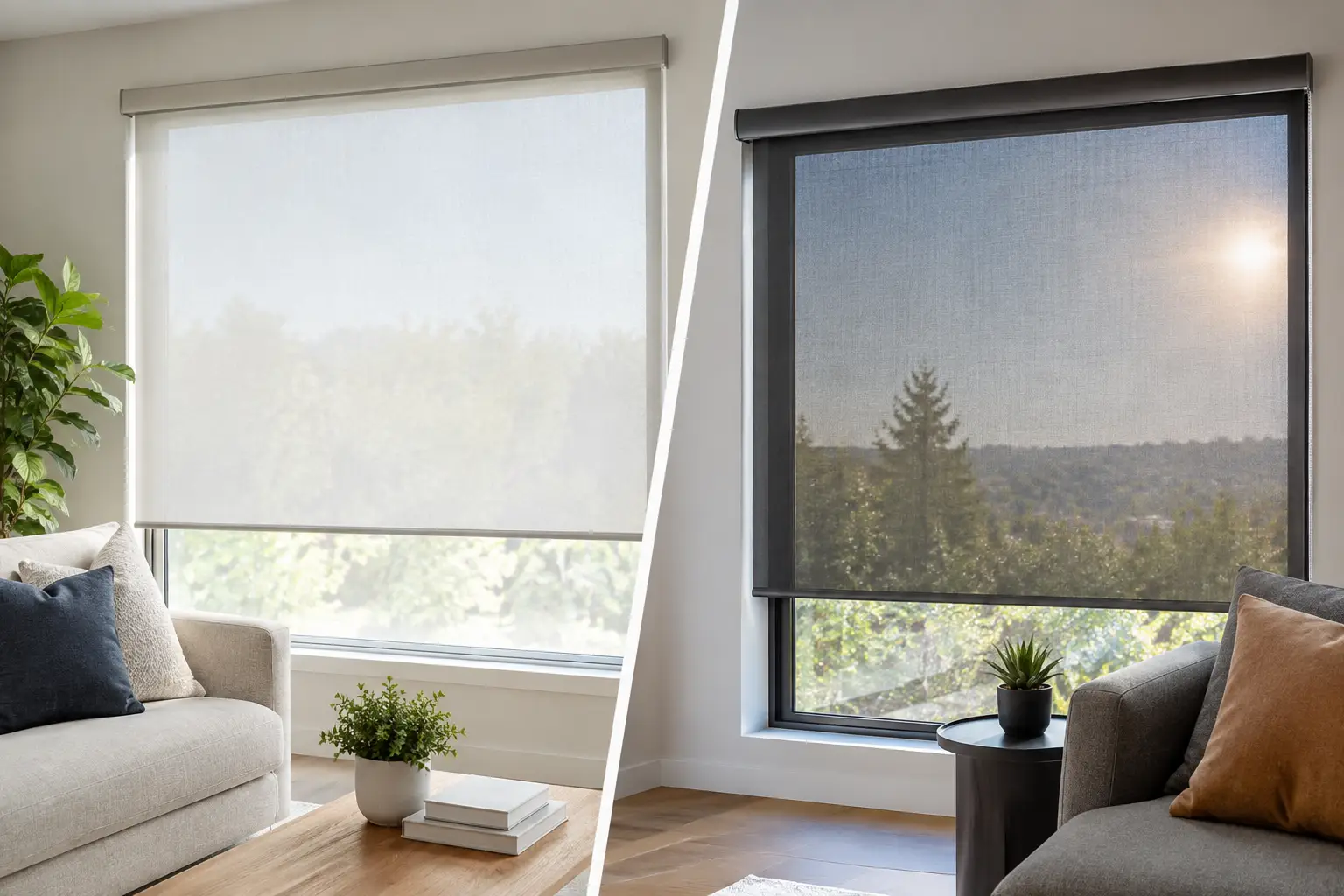
Solar shades use an open-weave technical fabric designed to manage sun while maintaining an outward view. Their mesh-like construction reduces glare and blocks a significant amount of UV exposure without making the room feel closed off. In daylight, a solar shade can soften the intensity of a skyline, garden, or patio view while still allowing occupants to see outside.
That difference in fabric construction drives nearly every practical trade-off. If your priority is a broad range of decorative looks or true room darkening, standard roller shade fabrics offer more options. If your priority is preserving a daytime view and controlling harsh sunlight, solar fabric is usually the stronger choice.
When Solar Shades Make the Most Sense
Solar shades are particularly effective in rooms with expansive glass, strong sun exposure, or a view worth keeping visible. Condos with floor-to-ceiling windows, open-concept great rooms, home offices, and dining areas are common applications. They are also a smart consideration for windows facing east or west, where low-angle sun can make a space uncomfortable at certain times of day.
The fabric’s openness factor is central to its performance. This percentage refers to the amount of open space in the weave. A 1% openness fabric has a tighter weave, offering more glare reduction and a more muted view. A 3% or 5% openness fabric generally provides a clearer view outward and allows more natural light into the room. Higher openness options may be appealing where preserving the view is the priority, but they offer less daytime shading and UV control than tighter weaves.
Solar shades can help protect hardwood floors, artwork, upholstery, and area rugs from prolonged sun exposure. They do not eliminate all UV light, and performance varies by fabric color and openness, but they can meaningfully reduce the damaging effects of direct sunlight. Darker solar fabrics often provide better view-through because they reduce reflected light, while lighter fabrics can appear softer from the interior and complement a lighter design palette.
There is one important limitation: solar shades are not a nighttime privacy solution. During the day, the brighter exterior light makes it difficult for people outside to see in. At night, when interior lights are on, the effect reverses. The open weave may allow silhouettes or more direct visibility from outside, especially in closely spaced urban homes and condominium settings.
For that reason, solar shades work best in spaces where nighttime privacy is less critical, or where they are paired with a second layer such as drapery panels. A dual-shade system can also combine a solar screen for daytime use with a more private fabric for evening.
Where Standard Roller Shades Have the Advantage
Roller shades give homeowners and designers far more latitude in opacity, color, texture, and pattern. A light-filtering roller shade can diffuse strong daylight into a calm, even glow. A privacy fabric can obscure views in both directions more effectively than an open solar weave. A room-darkening or blackout roller shade can support restful sleep, media viewing, and shift-work schedules.
Bedrooms, nurseries, bathrooms, and media rooms are often better served by roller shade fabrics that prioritize privacy or darkness. In these rooms, the ability to see out during the day may be less valuable than stopping headlights, streetlights, or early morning sun. Blackout fabric is especially useful, although homeowners should understand that a standard roller shade may still allow light around the sides unless it is designed with side channels or a carefully specified cassette system.
Decorative versatility is another reason to choose roller shades. Solar fabrics tend toward a modern, architectural look. They are available in many neutral tones, but their technical weave remains part of the visual language. Roller shades can be specified in subtle linens, smooth solids, woven textures, bold colors, and designer prints. They can disappear into a minimal interior or become a quiet finishing layer that ties upholstery, wall color, and flooring together.
Privacy, Light, and View: Choose Your Priority
The right shade is rarely the one that does everything. It is the one that solves the most important problem in a specific room.
For a living room with a desirable view, solar shades often strike the best balance between glare control and openness. For a street-facing bedroom, a privacy or blackout roller shade is usually more appropriate. For a kitchen where daylight matters but neighboring windows are nearby, a light-filtering roller fabric may be the practical middle ground.
Color also changes performance. With solar shades, darker fabrics typically improve outward visibility during daylight but can make the shade more visually pronounced from inside. Lighter fabrics reflect more light and may feel airy, though the outward view can look hazier. With opaque roller fabrics, color affects the room’s mood and the softness of incoming light, but it will not create the same view-through effect.
A showroom consultation is helpful because fabric samples behave differently on a window than they do in a hand. Hold samples against the glass at different times of day, especially if the room receives direct sun. The surrounding exterior, window orientation, interior lighting, and neighboring buildings all influence what privacy and view-through will actually feel like.
Design Details That Affect the Finished Look
Both shade types can be elevated with the right hardware and operating system. A fabric-wrapped cassette or fascia conceals the roller at the top of the window, giving the installation a more finished architectural appearance. Exposed rollers can suit industrial or minimalist interiors, while cassettes often coordinate well with more polished residential spaces.
Motorization is worth considering for tall windows, large glass walls, and hard-to-reach openings. Systems from leading manufacturers can be operated by remote control, wall keypad, app, or smart-home integration. Programming shades to lower during the strongest sun exposure can improve comfort and protect interiors without requiring daily adjustment. Battery-powered motors are often well suited to retrofit projects, while wired solutions may be preferable for new construction or full renovations.
For wide windows, proper fabrication and installation matter as much as fabric selection. Roller and solar shades have maximum size considerations, and larger openings may require multiple shades rather than one oversized unit. Splitting the treatment can improve operation and fabric alignment, but it also creates small light gaps between shades. An experienced design provider can help determine where those compromises are acceptable and where a different system may produce a better result.
How to Make the Final Selection
Start by identifying the window’s primary job. Is the concern harsh glare on a screen, fading furnishings, a lack of privacy, poor sleep, or simply an unfinished look? A solar shade is an excellent answer when glare reduction and daytime view-through lead the list. A conventional roller shade is more flexible when privacy, decorative fabric, or blackout performance comes first.
Then consider whether one treatment needs to handle both day and night. In a room with close neighbors, solar shades alone may not be enough. Layering them with stationary drapery, adding a second shade, or choosing a more opaque roller fabric can provide a more complete solution. In a view-focused room with no privacy concern, the clean simplicity of a solar shade may be exactly right.
Custom measurement, fabric selection, and control options make the difference between a shade that merely covers glass and one that improves how the room works. Window Fashions Depot can help homeowners, designers, and builders compare fabric samples, opacity levels, finishes, and motorization before a final specification is made. The best choice should feel intentional each time the sun moves across the room.