
Roller Shades vs Roman Shades: Which Fits?
Some window treatment decisions are straightforward. This one usually is not. When clients compare roller shades vs roman shades, they are often choosing between two very different design directions that can both work beautifully – but not in the same way.
Roller shades tend to appeal to anyone who wants a clean, tailored look with efficient light control and easy motorization. Roman shades bring more softness, fabric presence, and a decorative finish. The right choice depends on how you want the room to feel, how much daily use the shade will get, and how much function you need from the window beyond appearance.
Roller shades vs roman shades at a glance
If your priority is a minimal profile, simple operation, and a wide range of performance fabrics, roller shades usually make the stronger case. They fit especially well in modern homes, condos, kitchens, media rooms, and large window groupings where visual simplicity matters.
If your priority is warmth, texture, and a more furniture-like effect, Roman shades often feel more complete. They are popular in bedrooms, dining rooms, sitting rooms, and spaces where the window treatment should read as part of the decor rather than disappear into it.
That is the broad answer. The more useful one comes from looking at how each option performs in real rooms.
Style and visual impact
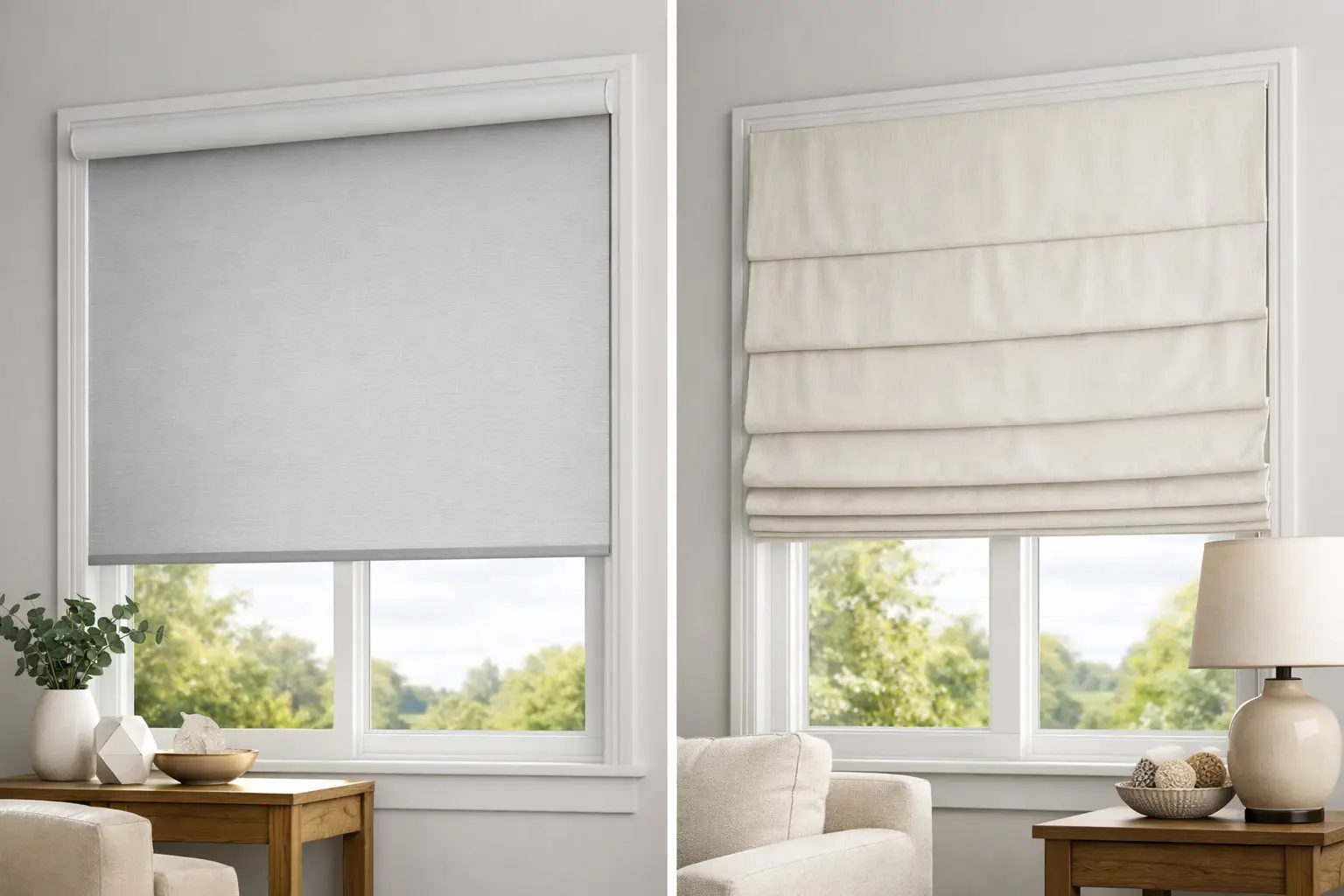
Roller shades are defined by restraint. When lowered, they present a flat panel of fabric with crisp lines. When raised, they roll neatly into a compact tube. That makes them especially effective in interiors where you want the architecture, view, millwork, or furnishings to take the lead.
Roman shades are more expressive. Their fabric folds create shape, depth, and softness. Even in a simple flat-fold style, a Roman shade has more visual presence than a roller shade. In patterned or textured fabrics, that presence becomes a major design feature.
This is where personal preference matters most. If you are aiming for quiet, contemporary, and streamlined, roller shades often feel right immediately. If the room needs softness or a layer that helps balance hard surfaces like stone, wood, or metal, Roman shades can do more heavy lifting.
Neither is inherently better. They just signal different design intentions.
Light control and privacy
Light control is one of the biggest practical differences in the roller shades vs roman shades discussion.
Roller shades are available in a broad range of fabrics, from sheer screen materials to light-filtering textiles to full blackout options. That gives them an advantage when you want to fine-tune glare reduction, daytime privacy, UV protection, or room darkening. In spaces with strong sun exposure, televisions, or large expanses of glass, roller shades are often easier to specify precisely.
Roman shades can also offer light filtering or blackout performance, especially when paired with proper linings. But because they are made from folded fabric constructions, the exact privacy and light-control result depends heavily on the fabric, lining, and installation details. They are highly customizable, but they are less of a plug-and-play performance product.
For bedrooms, either can work well. For media rooms, office spaces, or windows with intense afternoon sun, roller shades often provide a more technical and predictable solution.
Operation and everyday convenience
A shade that looks beautiful but feels cumbersome after a month is rarely the right long-term choice.
Roller shades are usually the easier option for daily use. Their operation is straightforward, their stack is compact, and they integrate especially well with motorization. If you are planning smart-home control, scheduled privacy settings, or hard-to-reach window coverage, roller shades are often the cleaner answer.
Roman shades can be motorized too, and premium systems perform very well, but they are mechanically more layered by nature. They lift into folds rather than rolling into a tube, so they need more stack space when raised. On smaller windows this may not matter much. On taller windows, it can become more noticeable.
For homes with many windows used throughout the day, convenience often pushes the decision toward roller shades. For rooms where the treatment is lowered or adjusted less frequently, Roman shades remain a strong option.
Fabric, texture, and customization
This is where Roman shades have a natural edge.
Because Roman shades are built from decorative fabrics, they offer a broader opportunity to introduce pattern, texture, trim, and softness. They can coordinate with bedding, upholstery, wall color, or drapery in a way that feels deeply integrated into the room design. If you are furnishing a primary bedroom, formal dining room, or layered living space, that flexibility can be valuable.
Roller shades also come in a wide variety of fabrics and openness levels, and many premium collections now include beautifully woven, textured, and design-forward materials. Still, the visual language is more edited. Even when the fabric is sophisticated, the construction stays minimal.
So the question is not whether both are customizable. They are. The question is whether you want customization to read as decorative softness or as refined simplicity.
Space requirements and window size
Window size can change the answer quickly.
Roller shades are excellent for large windows and wide expanses because they maintain a clean profile and do not add much visual bulk. In condos and contemporary homes with big glass areas, this can be a major advantage. They also tend to work well in tighter spaces where a compact treatment matters, such as kitchens, bathrooms, and rooms with limited trim clearance.
Roman shades are often ideal on standard-size windows where their folds can be appreciated without overwhelming the opening. On very large windows, they may require more planning for weight, stack height, and operation. That does not mean they cannot be used – only that scale matters more.
If your room includes several adjacent windows, roller shades usually create a more uniform and architectural look. Roman shades can still be beautiful there, but the effect is softer and more decorative.
Maintenance and durability
Maintenance is another point worth considering before you choose based on appearance alone.
Roller shades are generally simpler to maintain. Their flat fabric surface is easier to keep clean, and many materials are selected specifically for durability, sun control, and resistance to moisture or fading. That makes them a strong choice for kitchens, bathrooms, busy family spaces, and high-use areas.
Roman shades require a bit more care, especially in delicate or richly textured fabrics. Their folds can collect dust, and depending on the fabric selection, cleaning may require more caution. In low-moisture, style-driven rooms, this is rarely a dealbreaker. In practical spaces, it can be.
Households with children, pets, or heavy day-to-day wear often appreciate the lower-maintenance nature of roller shades.
Cost considerations
Price depends on size, fabric, brand, control type, lining, and installation method, so broad statements can be misleading.
That said, roller shades are often the more budget-efficient path when you need a polished custom look across multiple windows. Their simpler construction can make them easier to scale through a whole-home project, especially when motorization is part of the plan.
Roman shades can move higher in price because the fabrication is more involved and the decorative fabric choices often carry a premium. For feature rooms, many homeowners find that worthwhile. For an entire house, the cost difference may shape where and how they are used.
A common strategy is mixing both. Roller shades handle the functional rooms and larger windows, while Roman shades add softness in bedrooms, dining spaces, or select front-facing rooms.
Which rooms suit each option best?
Roller shades usually make the most sense in kitchens, bathrooms, offices, family rooms, and homes with a modern or transitional design language. They are also a strong fit for sun control, privacy management, and automated whole-home solutions.
Roman shades tend to shine in bedrooms, dining rooms, reading nooks, and living spaces where comfort and decoration matter as much as light control. They are especially useful when the window treatment needs to contribute warmth or tie the room together visually.
In many homes, the smartest answer is not choosing one style for every room. It is selecting the right solution window by window.
How to decide between roller shades vs roman shades
Start with function, not fabric. Ask how much privacy you need, how often the shade will be used, whether the room needs blackout performance, and whether motorization is part of the plan. Then look at the role the treatment should play visually.
If you want clean lines, efficient performance, and a shade that works hard without drawing much attention, roller shades are usually the better fit. If you want softness, texture, and a more decorative finish, Roman shades are often worth the extra presence and planning.
For homeowners and designers working through full-room or full-home selections, seeing both in person often makes the decision easier. Fabric hand, fold style, openness, lining, and hardware details all affect the final result more than product names alone suggest. That is why a consultative process matters, especially when custom sizing, branded systems, and motorized options are on the table.
The best shade is not the one that wins the category. It is the one that fits the way your room looks, works, and lives every day.