
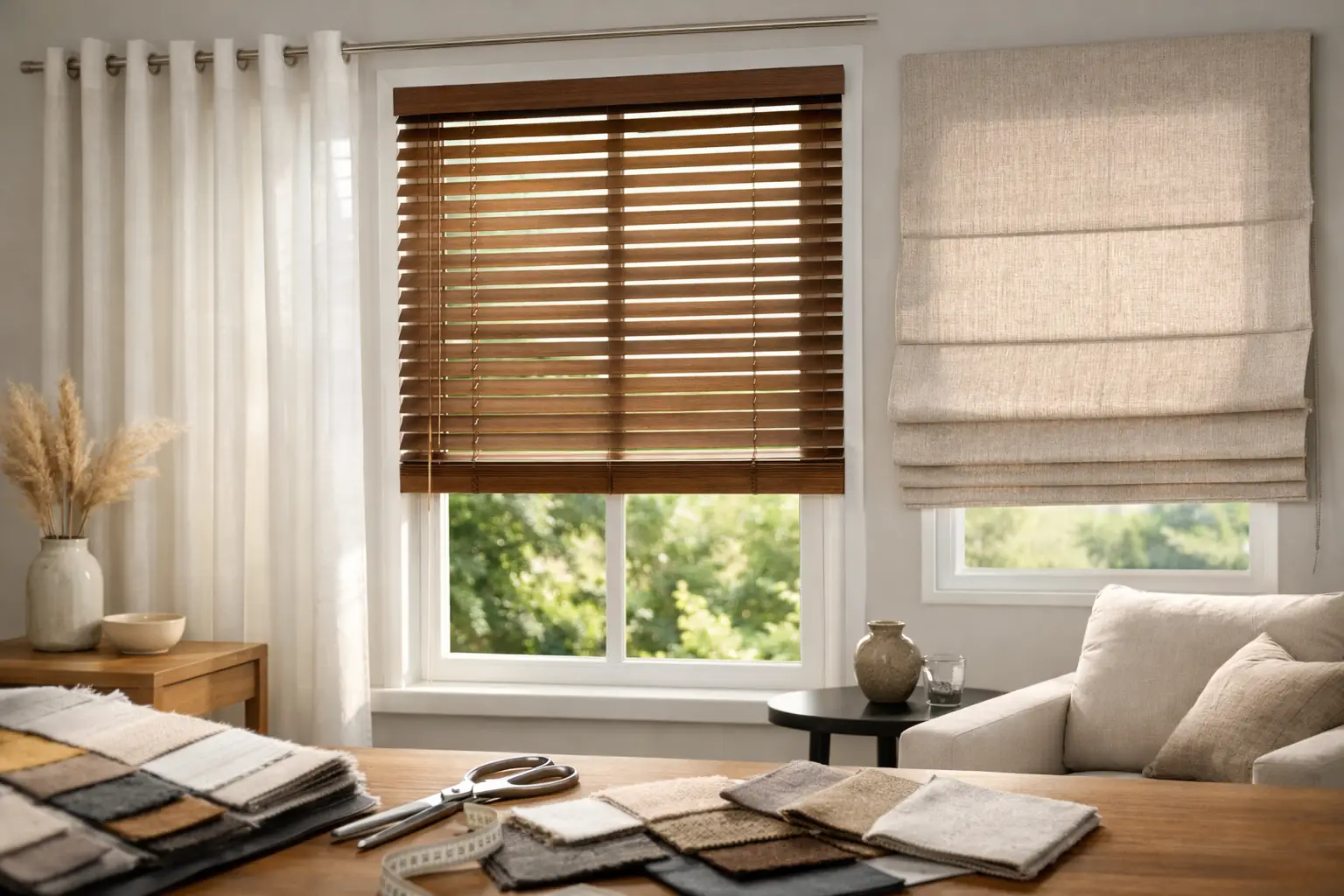
Window Treatment Options for Interior Designers
A beautiful room can still feel unresolved if the windows are treated as an afterthought. For designers, that usually shows up in the last phase of a project – when glare is wrong, privacy is lacking, proportions feel off, or the client wants smart control without sacrificing the look. That is where the right window treatment options for interior designers become more than decorative finishing pieces. They become part of the architecture, comfort, and daily use of the space.
The challenge is not finding a product. It is finding the right product for how a room lives. A clean-lined condo living room needs something different than a layered primary bedroom. A street-facing townhouse has different privacy demands than a backyard family room. And a client who wants automation from Lutron or Somfy is making a different decision than one who simply wants a softer filtered light.
How interior designers should evaluate window treatments
The best specifications usually start with four questions: What does the room need to do, how much control does the client want, what style language is already established, and how visible should the treatment be? Those questions narrow the field fast.
If the room needs precision light control, roller shades, solar shades, honeycomb shades, or shutters often make more sense than decorative drapery alone. If the room needs softness and visual depth, Roman shades, woven woods, or drapery may carry more weight. If insulation is part of the brief, cellular construction and lined drapery deserve a closer look. If child safety and convenience are a priority, motorized systems move up the list quickly.
This is also where trade-offs matter. The most minimal look is not always the most forgiving. The most luxurious fabric treatment is not always the easiest to maintain. The strongest blackout solution can sometimes feel heavy in a room that needs brightness during the day. Good design decisions come from balancing appearance with performance.
Core window treatment options for interior designers
Roller shades and solar shades
Roller shades are often the first choice when the design calls for restraint. They sit close to the window, read cleanly, and work well in modern, transitional, and many urban interiors. They also offer a wide range of openness and opacity levels, which makes them useful in living rooms, kitchens, offices, and bedrooms.
Solar shades are especially effective where preserving views matters. They cut glare and UV exposure without fully closing off the outside. That makes them a smart fit for homes with large windows, city views, or west-facing exposures. The limitation is privacy at night, which means they are often better as part of a layered plan than a standalone solution.
Roman shades
Roman shades bring more softness and a more furnished feel than rollers. For designers working on bedrooms, dining rooms, breakfast areas, or transitional living spaces, they can bridge the gap between tailored and decorative. Fabric selection matters here more than many clients expect. A flat Roman in a crisp woven fabric reads very differently from a relaxed Roman in linen.
The trade-off is stack height and maintenance. Roman shades take up more visual space when raised, and heavily textured or delicate fabrics may need more care over time. Still, when a room needs shape and fabric presence without full-length drapery, Roman shades are one of the strongest options.
Honeycomb shades
Honeycomb shades, also called cellular shades, are usually chosen for performance first, then appreciated for their simplicity. They help with insulation, soften daylight, and can be specified in light-filtering or blackout fabrics. For bedrooms, family rooms, and homes where energy efficiency is part of the conversation, they solve several problems at once.
From a design perspective, they work best when the goal is quiet function rather than statement-making detail. They are particularly useful in projects where comfort, privacy, and clean lines matter more than texture or ornament.
Woven wood shades
Woven woods bring in natural texture that painted millwork and upholstered furniture cannot replicate on their own. They are especially effective in coastal, organic modern, casual luxury, and layered transitional interiors. Used well, they add warmth and dimension without making a room feel overdesigned.
Because they are made from natural materials, light control can be less exact unless paired with a liner. That is often the right move in bedrooms or rooms with direct sun exposure. Designers who specify woven woods usually do so for their texture first, then adjust the performance details around that choice.
Shutters
Shutters bring structure. They can look crisp and architectural, and they often appeal to clients who want a permanent, built-in appearance. In bathrooms, street-facing rooms, and traditional or updated-classic homes, shutters offer strong privacy and durable light control.
They are not right for every project. In very soft or highly contemporary interiors, shutters can feel too rigid unless the architecture supports them. They also create a more defined visual grid, which can either strengthen a room or interrupt a view. When the goal is timelessness and easy upkeep, though, they remain a strong specification.
Vertical blinds and panel systems
Large expanses of glass need different thinking. Sliding doors, wide window walls, and modern openings often call for vertical solutions, whether that means updated vertical blinds or panel track systems. These products have improved significantly in style, material quality, and finish options.
For designers, the key is proportion. A system that looks practical in a catalog can feel oversized or flat if the texture and scale are wrong for the room. On large glazing, these treatments often work best when chosen in coordination with flooring, wall color, and adjacent upholstery rather than as isolated functional pieces.
Drapery
Drapery remains one of the most effective tools for changing the mood of a room. It introduces softness, height, and movement while helping with acoustics, privacy, and light management. For many projects, especially in living rooms and bedrooms, drapery is what makes the finished space feel complete.
But drapery alone is not always enough. Sheers filter beautifully during the day but do little for nighttime privacy on their own. Blackout drapery can be highly effective, though it requires the right fullness, hardware, and return details to perform properly. This is why many of the best designer-driven solutions are layered rather than singular.
Layering window treatment options for interior designers
Layering often gives designers the most control. A solar or roller shade paired with decorative drapery solves for daytime glare and nighttime softness. A woven wood shade under side panels adds texture while preserving a finished, tailored frame. In bedrooms, a blackout shade behind drapery can deliver the sleep performance clients want without making the room feel heavy during the day.
This approach also helps when a client wants flexibility. One layer handles function. The second handles atmosphere. The result usually feels more intentional than asking one product to do everything.
Motorization and smart control
Motorization is no longer a niche add-on for luxury projects. It has become a practical design decision, especially for hard-to-reach windows, large homes, media rooms, and clients who already use smart home systems. Automated shades can improve convenience, support privacy schedules, and reduce heat gain during peak sun hours.
For designers, motorization also protects the aesthetic. There are no dangling cords, operation is smoother, and clients are more likely to use the treatments as intended. The best results come from planning early, especially if power access, wiring, recessed pockets, or integration with systems like Lutron or Somfy are part of the scope.
Specifying with confidence
The strongest specifications come from matching product category to application rather than starting with a trend. A dramatic fabric may look perfect on a sample hanger but perform poorly in a kitchen. A minimalist shade may suit the architecture but disappoint a client who expected softness. A beautiful woven material may need a privacy liner the room cannot do without.
That is why consultation still matters, even for experienced professionals. Seeing full-size samples, reviewing control options, comparing branded systems, and confirming fit details can prevent expensive revisions later. For designers managing multiple rooms with different exposures and uses, a broad product source is often more valuable than a narrow specialty line. Window Fashions Depot supports that process with custom specification across shades, shutters, drapery, automation, and more.
If a project feels close but not quite finished, look at the windows again. The right treatment does not just cover glass. It sharpens the design, solves daily problems, and gives the room the level of intention clients can feel the moment they walk in.