
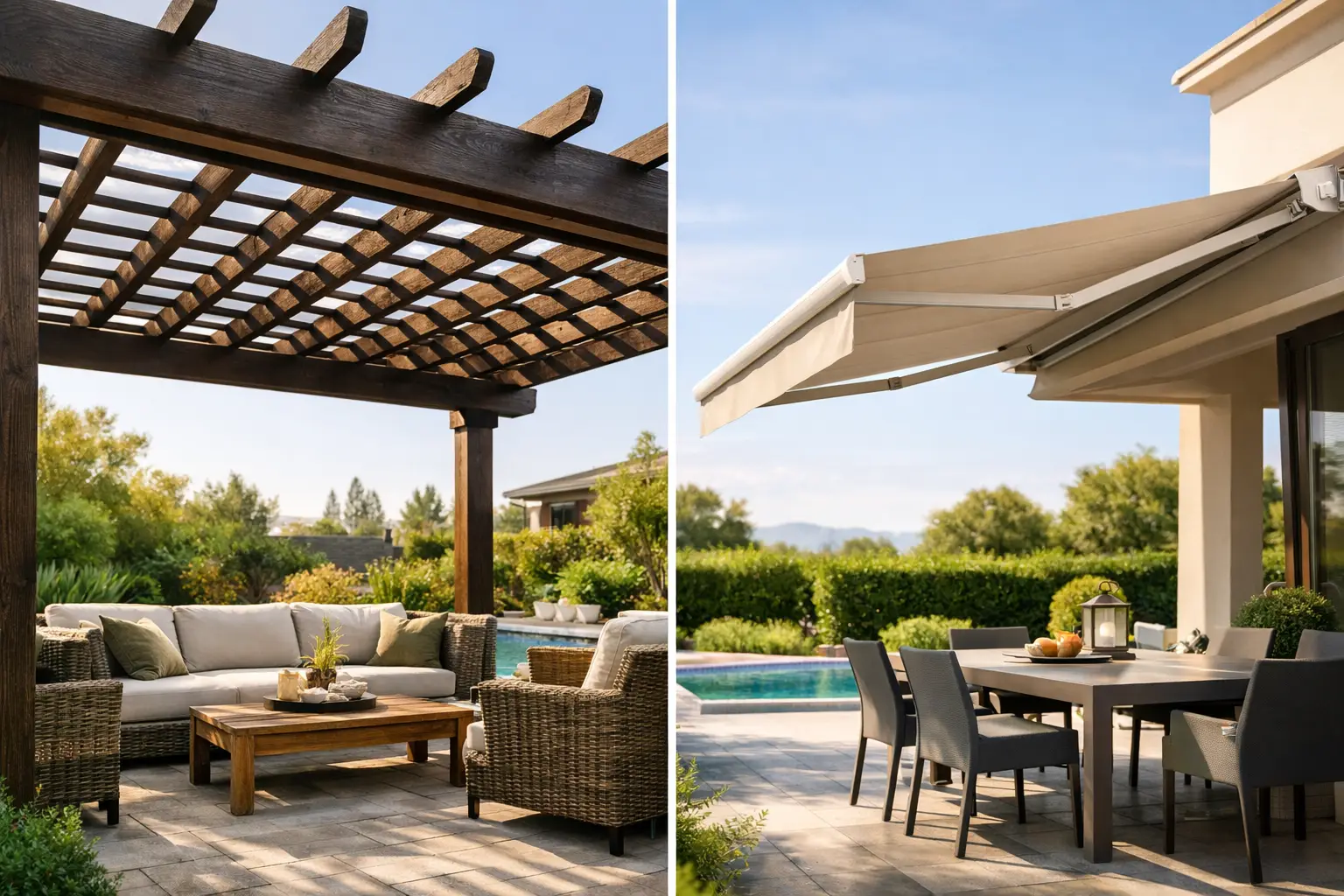
Pergolas vs Retractable Awnings
A patio that looks perfect at 10 a.m. can feel unusable by 2 p.m. Once the sun shifts, the real question is not whether you need shade, but which system will keep the space comfortable, attractive, and easy to live with. When homeowners compare pergolas vs retractable awnings, they are usually balancing three things at once: how the space should look, how often it will be used, and how much weather protection it needs.
For some projects, the answer is obvious. For many others, it is not. Both options can dramatically improve an outdoor living area, but they solve different problems and create different design effects. The right choice depends on the structure of the home, the exposure of the space, and the level of flexibility you want day to day.
Pergolas vs Retractable Awnings: The Core Difference
A pergola is a more architectural outdoor structure. It creates a defined room-like presence over a patio, terrace, pool deck, or backyard seating area. Depending on the system, it may have a fixed frame with adjustable louvers, a retractable canopy, or a more permanent overhead design. It tends to feel substantial and intentional, almost like an extension of the home.
A retractable awning is usually mounted to the exterior wall and extends outward when shade is needed. When retracted, it becomes visually minimal and preserves a cleaner facade line. This makes it especially attractive for homeowners who want strong sun control without adding a freestanding or semi-structural element to the yard or patio.
That distinction matters because these are not just two versions of the same product. One leans toward architectural outdoor living. The other leans toward flexible, on-demand shade.
When a Pergola Makes More Sense
Pergolas are often the stronger choice when the goal is to create an outdoor destination, not just a patch of shade. If you are designing a backyard lounge, dining zone, rooftop terrace, or poolside retreat, a pergola adds presence. It frames the space visually and can make an open yard feel more organized and finished.
This is also where customization becomes important. Modern pergola systems can include motorized louvers, integrated lighting, privacy screens, and rain management features. For homeowners who want a premium outdoor environment with a tailored look, that level of specification is hard to ignore.
Pergolas also perform well in larger spaces where a wall-mounted awning may not provide enough coverage or proportion. On a broad patio, the scale of a pergola often feels more balanced with the home and landscape. Designers and builders frequently prefer them when the outdoor area needs a stronger architectural anchor.
The trade-off is complexity. Pergolas usually involve a bigger investment, more planning, and more installation requirements. Depending on the model and site conditions, they may also trigger permitting considerations. If your main goal is straightforward shade over a modest patio, a pergola can be more system than you actually need.
When a Retractable Awning Is the Better Fit
Retractable awnings are ideal when flexibility is the priority. They let you enjoy shade when you want it and open sky when you do not. That simple ability to extend and retract changes how the space feels throughout the day.
For many homes, especially urban and suburban properties with attached patios or decks, an awning is a smart and efficient solution. It provides meaningful solar relief, helps reduce heat gain through adjacent windows and doors, and keeps the outdoor area more usable during bright afternoon hours. When retracted, it preserves winter light and avoids the visual weight of a permanent overhead structure.
Awnings also tend to be a practical answer when space is limited. If you have a townhouse patio, condo terrace, or smaller backyard seating area, a retractable system can deliver comfort without taking over the design. Motorization adds another layer of convenience, especially when paired with wind sensors and smart-home controls.
That said, awnings are not the right answer for every exposure or lifestyle. They generally offer less of a room-like feel than a pergola, and while premium systems are engineered for performance, they still require responsible use in changing weather conditions. If your outdoor space needs more structural definition or more advanced all-weather capability, an awning may feel too light-duty for the application.
Shade, Sun Control, and Daily Comfort
From a pure comfort standpoint, both systems can improve an outdoor area significantly, but they do it differently.
A retractable awning is excellent for blocking direct overhead and angled sun coming off the house. It is especially effective on patios where the sun exposure is predictable and the user wants quick control. Extend it during the hottest part of the day, retract it in the evening, and the space adapts easily.
A pergola can offer broader environmental control depending on the design. A louvered pergola, for example, allows you to adjust sunlight, ventilation, and in some systems even rain protection. That makes it appealing for homeowners who use their patio for dining, entertaining, and longer stays outdoors rather than occasional shade breaks.
If your outdoor area gets intense sun for only part of the day, an awning may be all you need. If the space is used heavily and you want a more complete outdoor living setup, a pergola may justify its larger footprint and price.
Style and Visual Impact
This decision is not only technical. It is also aesthetic.
Pergolas make a stronger design statement. They can complement modern homes beautifully, especially when clean lines, aluminum framing, and integrated accessories are part of the plan. They can also help bridge architecture and landscaping, giving the exterior a more curated, high-end look.
Retractable awnings are visually lighter and often more discreet. They work well when the architecture of the home should remain the star, or when the homeowner wants shade without introducing a prominent overhead structure. Fabric selection, valance style, cassette design, and frame finish all influence the final appearance, so a custom awning can still feel polished and design-forward.
The key is proportion. A large, open backyard often benefits from the visual weight of a pergola. A smaller attached patio often benefits from the cleaner profile of a retractable awning.
Weather Protection and Durability
This is one of the most common points of confusion in the pergolas vs retractable awnings conversation. People often assume both are simply shade products, but weather performance varies widely.
A retractable awning is primarily a sun-control solution. Some models can handle light weather exposure when used properly, but they are not typically meant to function as a permanent roof. Wind conditions are a serious factor, which is why motorized systems with automatic sensors are so valuable.
Pergolas can be engineered for more demanding use, particularly louvered or canopy-based systems designed with drainage and structural strength in mind. If rain management matters and the goal is to spend more time outdoors in variable conditions, pergolas usually offer more capability.
Still, no product should be selected based on assumptions. Performance depends on the specific system, span, installation, and site exposure. A design consultation matters here because the right product on the wrong property can still be the wrong choice.
Cost, Value, and Scope
Budget matters, but so does what you are actually buying.
Retractable awnings are generally the more accessible option upfront. They can deliver excellent value by improving patio comfort, reducing interior heat gain, and adding convenience without major construction. For many homeowners, that makes them the best return on investment.
Pergolas usually sit in a higher budget category because they are more architectural, more customizable, and often more feature-rich. But for clients who want to create a true outdoor room with lighting, automation, and a more finished built-in look, the added cost often aligns with the larger vision.
It helps to think in terms of project scope rather than price alone. If you want shade, an awning may be enough. If you want an outdoor living environment, a pergola may be the better fit.
Motorization and Customization
For design-conscious homeowners and trade professionals, this is where the decision becomes more interesting. Both pergolas and retractable awnings can be customized extensively, but not in the same way.
Awnings offer flexibility through fabric selection, cassette style, projection, operation type, and automation features. They are a strong option for projects where solar control and ease of use matter most.
Pergolas offer broader environmental customization. Depending on the system, you may be able to specify adjustable louvers, integrated LED lighting, side screens, heating elements, and rain sensors. That makes them attractive for clients who are designing a premium exterior space with layered functionality.
At Window Fashions Depot, this is often where a product consultation adds real value. What looks like a simple shade decision can quickly become a specification decision once layout, exposure, smart controls, and finish options enter the picture.
Which One Should You Choose?
If you want flexible shade, a cleaner facade, and a more efficient solution for an attached patio or deck, a retractable awning is often the right answer. It is practical, attractive, and easy to integrate into many residential settings.
If you want a more defined outdoor room, stronger architectural impact, and greater potential for advanced weather management and customization, a pergola is often worth the investment.
The best choice usually comes down to how you plan to use the space. A patio used occasionally for coffee and weekend lunches needs something different than a backyard built for outdoor dining, entertaining, and long summer evenings. Start with the way you want to live outside, and the right shade system becomes much easier to see.