
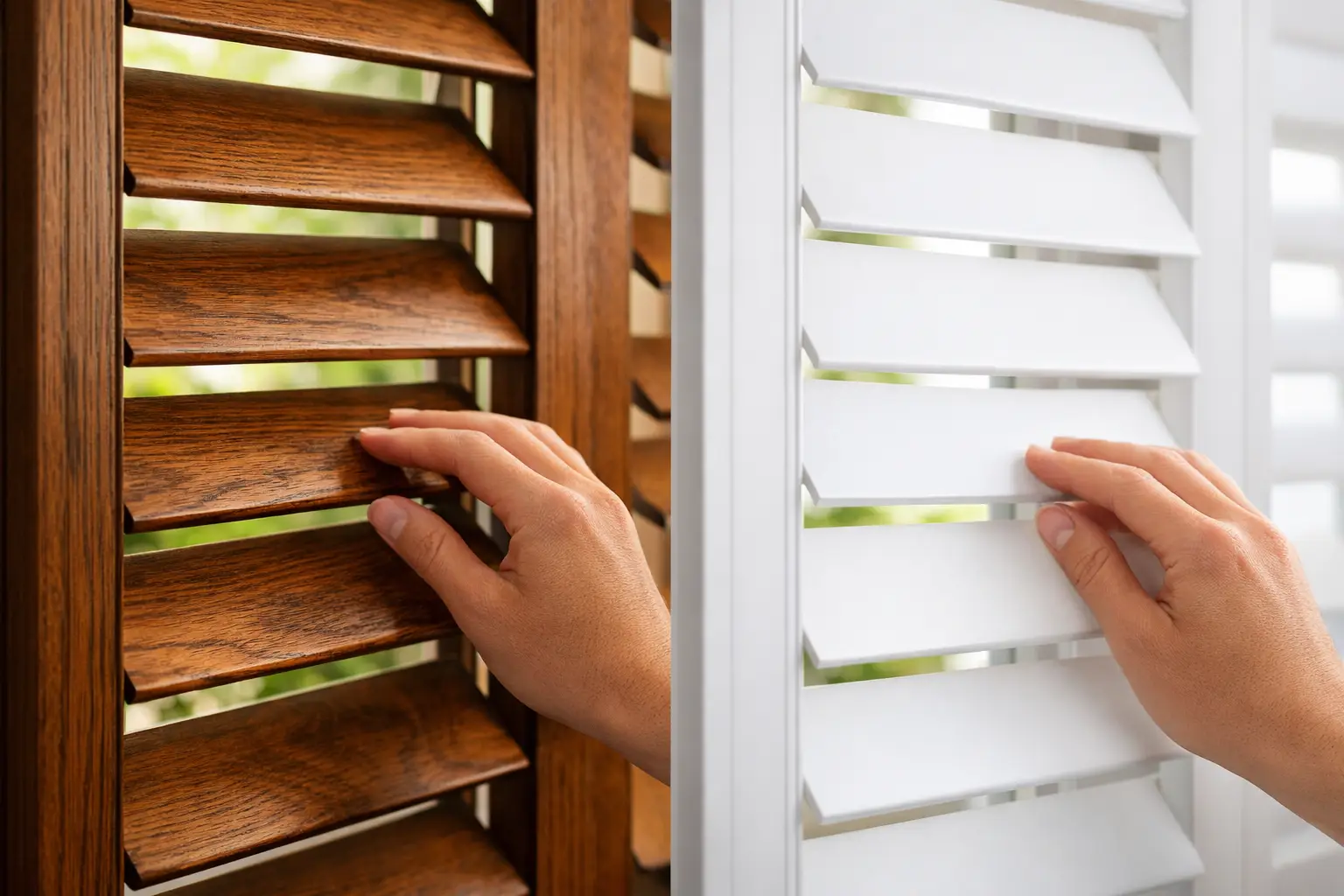
Wood Shutters vs Composite Shutters
A painted shutter can look perfect in a showroom and still be the wrong choice for your bathroom, kitchen, or south-facing family room. That is why the wood shutters vs composite shutters question matters so much in real projects. The right answer depends on where the shutter is going, how you want it to look, and how much maintenance you are comfortable with over time.
For homeowners and designers, this is less about picking a “better” material and more about matching the product to the room. Both options can deliver privacy, light control, and a tailored architectural finish. The difference is in how they handle moisture, weight, heat, budget, and long-term wear.
Wood shutters vs composite shutters: the real difference
At a glance, wood and composite shutters can appear very similar, especially in classic white finishes. Once you get into specification details, the gap becomes clearer.
Wood shutters are made from real hardwood or other natural wood materials. They are valued for their authentic grain, refined profile, and lighter weight. They tend to feel more furniture-like and are often chosen for design-driven spaces where finish quality and material authenticity matter.
Composite shutters are engineered from synthetic or mixed materials designed to mimic the look of painted wood while improving resistance to moisture and daily wear. Depending on the product line, composite shutters may use solid engineered cores, polymer-based materials, or other durable constructions intended for high-humidity environments.
If your priority is natural beauty and a premium stained or painted finish, wood usually leads. If your priority is durability in demanding rooms, composite often makes more sense.
Where wood shutters make the strongest case
Wood shutters are often the preferred option in living rooms, dining rooms, bedrooms, and front-facing spaces where design impact matters. They offer a crisp, high-end look that works especially well in traditional, transitional, and upscale contemporary interiors.
One of the biggest advantages of wood is weight. Wood shutters are generally lighter than composite shutters, which becomes important on larger windows. A lighter panel can operate more smoothly and place less stress on the frame over time. That matters when you are covering wide openings or specifying custom shapes.
Wood also gives you more design flexibility. If you want a stained finish that highlights natural grain, wood is the clear choice. Composite shutters are usually selected in painted finishes, most commonly whites and off-whites. For homeowners trying to match millwork, flooring, or cabinetry, real wood opens up more possibilities.
There is also a visual subtlety to wood that many clients notice once samples are side by side. The finish can feel warmer, the edges can look finer, and the overall appearance can read more custom. In formal rooms or homes where material quality is part of the design language, that difference can be worth the added investment.
The trade-off is that wood is less forgiving in wet or humid conditions. In a powder room with good ventilation, it may perform well. In a full bathroom, laundry room, or kitchen with repeated moisture exposure, it may not be the best fit.
Where composite shutters have the advantage
Composite shutters are built for practicality, but that does not mean they look purely utilitarian. Today’s better-made composite options are clean, attractive, and well suited to many residential interiors.
Their biggest strength is moisture resistance. Bathrooms, kitchens, laundry rooms, mudrooms, and basement windows are common places where composite shutters outperform wood. If steam, splashes, and humidity are part of daily use, composite is often the safer specification.
Composite shutters are also appealing for busy households because they tend to be easy to clean and less sensitive to environmental changes. That can make them a strong choice for family homes, rental properties, and projects where long-term reliability matters more than having a natural wood substrate.
Cost is another reason buyers lean toward composite. In many cases, composite shutters come in at a lower price point than real wood, especially for painted finishes where the visual difference may not justify the extra cost in every room. If you are outfitting an entire home and need to balance budget with performance, a mixed-material approach is often the smartest move.
The compromise is that composite shutters can be heavier, and on very large windows that may affect panel size, frame design, or operation. Some products also have a slightly bulkier appearance than premium wood shutters. That is not always a problem, but it is worth reviewing in person when aesthetics are a top concern.
Style, finish, and room-by-room design impact
When clients compare wood shutters vs composite shutters, they often start with durability and price, then end up making the final decision based on appearance. That makes sense. Shutters are one of the most visible hard window treatments in a home.
Wood shutters tend to win in rooms where detail matters. If you are designing a primary bedroom with custom millwork, a formal dining room, or a sitting room with layered finishes, wood usually provides the more elevated presentation. It feels intentional and architectural rather than simply functional.
Composite shutters fit especially well in clean, practical spaces where a painted shutter look is the goal. In many white kitchens, modern bathrooms, and secondary bedrooms, they deliver the style people want without overinvesting in a material benefit they may not need.
This is also where professional measuring and product selection make a difference. A well-designed frame, the right louver size, and a finish that complements trim color can influence the final look as much as the material itself.
Performance in sunlight, moisture, and daily use
Not every window creates the same demands. A street-facing bedroom window needs privacy and light control. A bathroom window needs privacy and moisture resistance. A large family room window may face intense afternoon sun.
Wood can perform beautifully in dry, climate-controlled spaces, but it is still a natural material. Temperature swings and humidity can affect it more than engineered alternatives. That does not mean wood shutters are fragile. It means they should be placed thoughtfully.
Composite shutters are often the safer choice where conditions are less predictable. Moisture resistance is the obvious benefit, but there is also peace of mind in choosing a material designed for tougher environments. For many households, that practicality outweighs the prestige of real wood.
Sun exposure is another factor. Both materials can work in sunny rooms, but product quality matters. A custom shutter specified for strong UV exposure and installed correctly will generally perform better than a lower-grade option regardless of material.
Cost, value, and when to mix materials
If you are comparing estimates, wood shutters generally cost more than composite, though pricing varies by brand, panel configuration, finish, and custom sizing. The question is not just which costs less upfront. It is which gives you the right value for the room.
For a formal front room, spending more on wood may be money well spent because the visual payoff is part of the goal. For a bathroom or laundry room, paying extra for wood may add little practical value and could create avoidable maintenance concerns.
That is why many full-home projects do not choose one material exclusively. A common solution is to use wood shutters in dry, highly visible living spaces and composite shutters in humid or utility-focused areas. This keeps the design cohesive while aligning performance with the demands of each room.
For builders, renovators, and designers, this approach often creates a better overall specification. It protects the budget without making the entire home feel downgraded.
How to choose between wood and composite shutters
The fastest way to narrow the decision is to ask four questions. What room is this for? How much moisture will the shutter face? Is the finish painted or stained? And is the window especially large?
If the room is damp, composite usually moves to the front. If you want a stained finish or a more premium furniture-like look, wood becomes the better fit. If the opening is oversized, the lighter weight of wood may be a meaningful advantage. If budget is driving the project and the look is painted white, composite is often the practical winner.
This is also where showroom guidance helps. Samples can tell you a lot about finish quality, panel weight, frame depth, and how close one material comes to the look you want. On a custom product, those details matter.
At Window Fashions Depot, this is typically the point where a consultation saves time. Instead of debating materials in the abstract, you can match the shutter to the actual room, window size, and design goal.
A shutter should not just look good on day one. It should still make sense after years of sunlight, cleaning, cooking, shower steam, and everyday use. Choose the material that fits the way the room really lives, and the right answer usually becomes clear.