
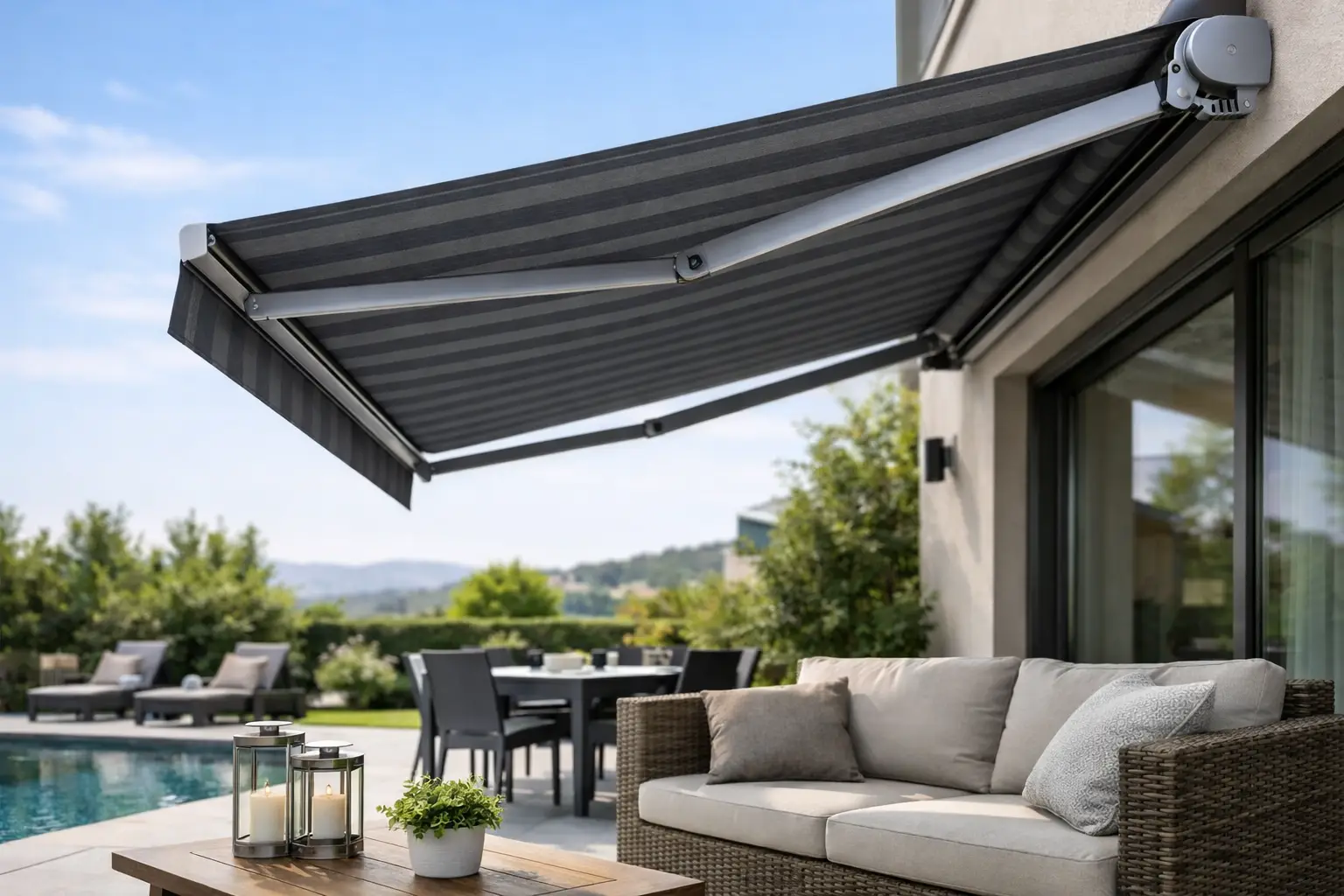
A Smart Guide to Retractable Awnings
A west-facing patio can look perfect at 10 a.m. and feel unusable by 3 p.m. That is usually the moment homeowners start looking for a real guide to retractable awnings – not just a product pitch, but practical help on what works, what lasts, and what actually fits the way they live.
Retractable awnings sit in an interesting category. They are part shading system, part design feature, and part comfort upgrade. When chosen well, they extend the usefulness of a deck, terrace, balcony, or backyard seating area without committing you to a permanent roof structure. They also give you flexibility that fixed systems cannot. You can open them when the sun is intense, close them during storms, and keep the visual profile cleaner when shade is not needed.
For homeowners and design professionals, the challenge is rarely whether an awning is useful. It is deciding which configuration, fabric, control option, and mounting approach make sense for the space.
Guide to retractable awnings: start with how you use the space
The best specification starts with lifestyle, not hardware. A retractable awning over a dining terrace has different demands than one covering a condo balcony or a poolside lounging area. If the goal is afternoon dining comfort, projection and sun angle matter more than full-day coverage. If the space is used for entertaining, you may want a broader span and integrated lighting. If it is a compact urban balcony, cassette size, mounting clearance, and visual scale become more important.
This is where many buyers go wrong. They focus on width first because it is easy to measure, but projection is often what determines whether the awning solves the actual problem. A wide awning with shallow projection may leave seating exposed during peak sun hours. On the other hand, a deep projection on a small facade can look oversized if proportions are ignored.
Orientation matters too. South- and west-facing exposures usually need more deliberate sun management than shaded north-facing patios. If your outdoor area gets strong afternoon heat, a higher-performance fabric and a carefully chosen pitch can make a significant difference in comfort.
What makes retractable awnings different from fixed shade systems
A retractable awning is built to provide on-demand coverage. The frame extends from the building when needed and retracts into a compact profile when not in use. That flexibility is the core benefit, but it also creates trade-offs.
Compared with a fixed canopy or pergola cover, retractable awnings preserve openness. They do not permanently darken adjacent interior rooms as much, and they maintain a cleaner exterior look when closed. They also tend to be a strong option for homeowners who want seasonal shading without a year-round overhead structure.
The trade-off is that retractable systems are not meant to function like heavy permanent roofing. They need proper operation, appropriate wind awareness, and correct installation. Motorized models with wind sensors can help protect the system, but no awning should be treated as a storm structure.
Choosing the right awning style
The main style decision often comes down to cassette design. A full cassette retractable awning encloses the fabric and arms more completely when retracted, offering stronger protection from weather and debris. This is often a smart choice for exposed elevations and for buyers who prioritize a streamlined appearance.
A semi-cassette design gives partial enclosure and can be a practical middle ground between protection and budget. Open-style systems are more economical, but they leave components more exposed. In covered conditions, that may be acceptable. On fully open facades, a more protective cassette usually makes better long-term sense.
You should also consider arm strength and overall engineering. Larger widths and projections place more demand on the frame. Premium systems tend to justify their cost through smoother operation, better tensioning, stronger hardware, and more refined finishing details. For design-focused projects, those details are not minor. They affect both appearance and longevity.
Fabric selection affects more than appearance
In any serious guide to retractable awnings, fabric deserves more attention than it usually gets. Most buyers begin with stripe patterns, solids, and neutral tones, but performance characteristics are just as important.
The right fabric helps control glare, reduce heat, and maintain color over time. UV resistance, mildew resistance, water repellency, and dimensional stability all matter. Depending on the use case, a darker fabric may reduce glare effectively, while a lighter tone may keep the space feeling brighter underneath. Neither is universally better. It depends on the atmosphere you want and how much direct brightness the area receives.
Fabric choice also affects the relationship between the awning and the home. On a modern facade, solid neutrals often feel architectural and restrained. Traditional homes may suit classic stripe patterns or softer tonal variation. Designers usually look at the awning as part of the exterior palette, not an accessory added at the end.
Manual or motorized operation?
For smaller applications, manual crank operation can work well. It is simple, dependable, and often cost-effective. That said, motorization is now the preferred choice for many larger residential awnings, especially when convenience and daily usability matter.
A motorized awning encourages regular use because extending and retracting it takes almost no effort. That may sound like a small advantage, but it changes behavior. Systems that are easy to use get used more consistently, which means homeowners get more value from the investment.
Automation also supports better protection. Sun and wind sensors can trigger movement based on weather conditions, helping reduce unnecessary exposure and improving day-to-day performance. If the project already includes motorized shades, lighting controls, or smart-home integration, a motorized awning fits naturally into that ecosystem.
Sizing, pitch, and clearance are where planning pays off
An awning can be beautifully made and still perform poorly if sizing is off. Width must align with the usable zone you want to cover, but projection, mounting height, and pitch work together to determine shade effectiveness.
Mounting too high without adjusting pitch may reduce useful shade where people actually sit. Mounting too low may interfere with door swing, sightlines, or circulation. Homes with soffits, brick detailing, uneven facades, or limited structural backing need careful review before anything is ordered.
This is one reason quote-driven, custom specification matters. Retractable awnings are not one-size-fits-all products. Site conditions, structural support, desired coverage, and control options all influence the right build. On attached housing, condos, and urban properties, these details become even more critical because clearances and facade limitations can narrow the options quickly.
Installation and durability considerations
A quality awning depends on more than the fabric and frame. Proper mounting is essential. The wall structure, fasteners, bracket spacing, and load distribution all need to be aligned with the system size and projection.
Professional installation is usually the right path for a custom retractable awning. It protects performance, helps preserve manufacturer requirements, and reduces the risk of cosmetic or structural problems later. Even the best awning will struggle if mounted incorrectly or specified for conditions it was not designed to handle.
Maintenance is typically straightforward. Keep the fabric reasonably clean, retract the awning during severe weather, and have moving components checked if operation changes over time. Premium systems are designed for repeat use, but they still benefit from sensible care.
How to know you are choosing the right system
A good awning decision balances five factors: how the space is used, the level of sun exposure, the visual style of the property, the desired convenience level, and the budget. If one of those factors dominates too heavily, the result can feel off. A beautiful awning that does not project far enough will disappoint. A large, highly motorized system that overwhelms the facade may solve shade but hurt the design.
For many homeowners, the best process is to view retractable awnings the same way they would approach custom shades or shutters – as a made-to-fit solution rather than a generic add-on. That means reviewing the exposure, considering fabric samples in context, discussing motorization early, and being honest about how often the space is really used.
For designers and builders, coordination matters just as much. Exterior shading should work with lighting plans, door locations, facade materials, and sightlines from inside the home. The most successful projects feel integrated, not appended.
At Window Fashions Depot, this is usually where the value of consultation becomes clear. When a retractable awning is selected with equal attention to design, engineering, and everyday use, it stops being just shade coverage and starts functioning like a real extension of the home.
If your patio or balcony is only comfortable for a few hours a day, the right awning can change that quickly – and the right specification is what makes the change last.