
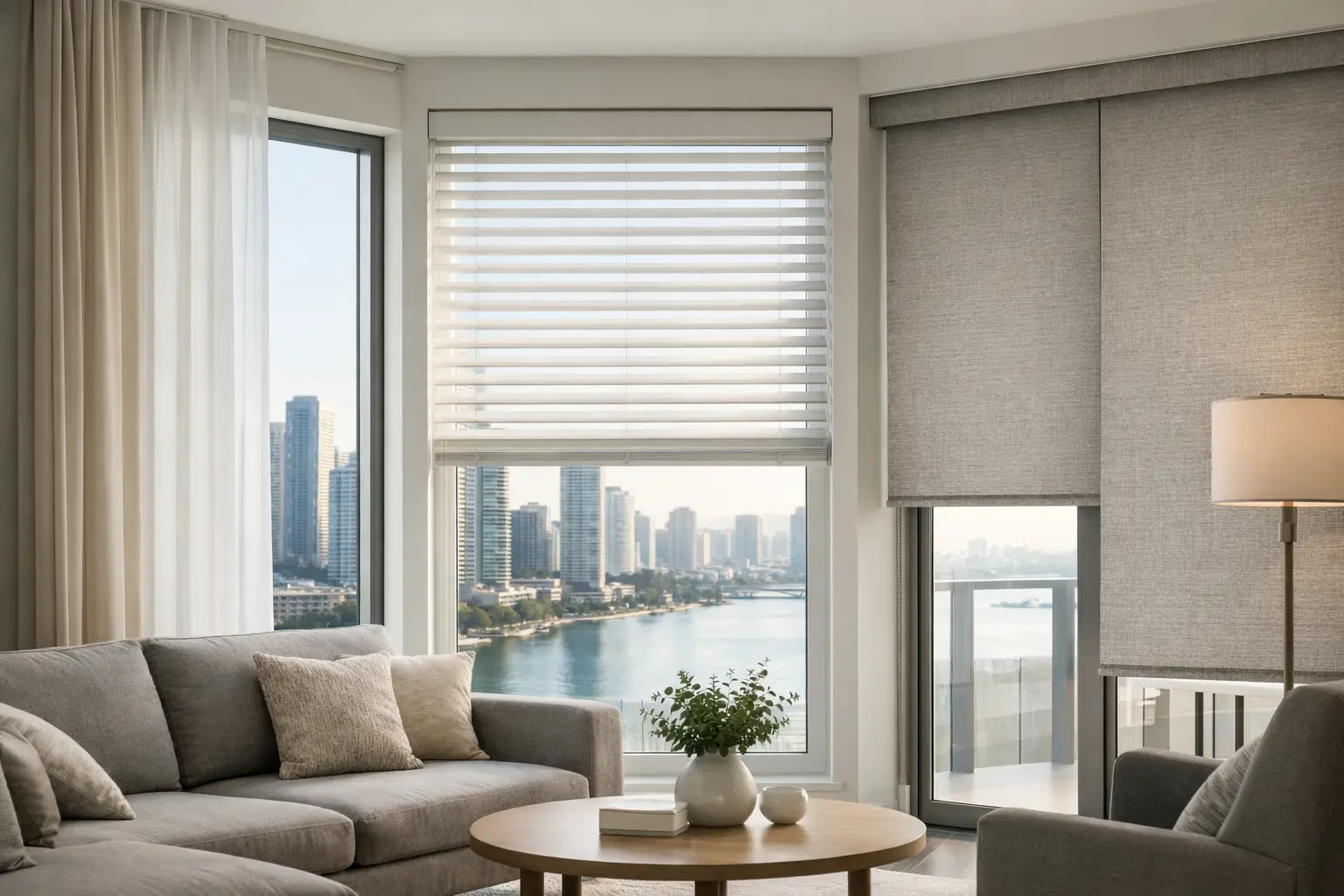
Best Window Treatments for Condos
Floor-to-ceiling glass looks great in a condo until the afternoon sun turns the living room into a hot box, or the building across the street gives you a direct view into your bedroom. Choosing the right window treatments for condos is less about filling a window and more about solving a set of very specific problems – privacy, glare, heat, UV protection, operation, and clean design in a compact space.
Condo windows often demand more precision than window coverings in detached homes. There may be limited mounting depth, large expanses of glass, strict condo board rules, and an overall design scheme that needs to feel streamlined rather than bulky. That is why custom specification matters. The right product should look intentional, operate smoothly every day, and perform well in the exact conditions of your unit.
What makes window treatments for condos different
In a condo, the windows are often one of the strongest architectural features in the space. That can be a major advantage, but it also means your treatment choice is always visible. A heavy, poorly fitted blind can make a modern room feel crowded. A beautiful sheer with no privacy function may work during the day and fail completely at night.
There is also the issue of scale. Condo windows tend to be either quite large or unusually shaped, and many units combine living, dining, and kitchen spaces into one open area. That means your window treatments need to work together visually across multiple exposures. If one wall gets intense western sun and another faces neighboring towers, the products may need different performance features while still looking coordinated.
Motorization is often more valuable in condos as well. Tall windows, hard-to-reach openings, and the desire for a polished, uncluttered look make automated shades a practical upgrade rather than a luxury add-on.
The best product types for condo living
There is no single best answer for every unit. The right solution depends on orientation, room use, window size, and how much softness or structure you want in the design.
Roller shades for a clean architectural look
Roller shades are one of the strongest choices for condos because they are compact, modern, and easy to coordinate room to room. They sit close to the window, which helps preserve clean lines and keeps the space feeling open. In living rooms and kitchens, solar screen fabrics can reduce glare and protect interiors while still maintaining some outward view during the day.
For bedrooms or media areas, blackout roller shades are often the better fit. If the condo gets strong morning sun, blackout fabrics can make a real difference in sleep quality and comfort. The trade-off is that a true blackout fabric will also fully block the view when lowered, so many homeowners layer the solution or specify different opacity levels by room.
Dual shades for flexibility
Dual shades are especially useful in condos where one room needs to do several jobs. They combine alternating sheer and solid bands, allowing you to shift between filtered light and more privacy without fully raising the shade. They suit contemporary interiors well and work nicely in living areas where you want daytime softness but still need control over glare on screens.
They are less ideal if full blackout is the top priority. For that, a dedicated blackout shade will perform better.
Honeycomb shades for comfort and efficiency
Honeycomb shades are often overlooked in design-driven condo projects, but they are excellent where insulation and softness matter. Their cellular construction helps reduce heat gain in summer and can improve comfort near large windows in winter. In a bedroom, den, or quieter reading space, they bring a softer visual texture than a basic blind.
The main consideration is style. If your condo interior leans very sleek and minimal, you may prefer the simpler profile of a roller shade. If comfort, energy performance, and light diffusion are higher priorities, honeycomb shades deserve serious consideration.
Roman shades for warmth and decoration
Roman shades work well in condos that need more fabric presence without the fullness of drapery. They can soften a room, introduce color or pattern, and still fit within a relatively compact footprint. In primary bedrooms, dining areas, or design-focused living rooms, they are a strong option when you want the window treatment to feel more furnished.
Because they stack upward, Romans do require more visual space when raised than roller shades. In small condos with dramatic views, that matters. The fabric and fold style also affect how tailored or relaxed the final look will be.
Drapery panels for scale and finish
Many condo owners assume drapery is too heavy for their space. That is not always true. Well-designed drapery panels can make a condo feel taller, more refined, and more complete, especially when paired with shades underneath. Ripplefold and other contemporary headings keep the look controlled rather than traditional.
Drapery alone is rarely the most practical answer for high-exposure windows, but as a layered element it can add light control, acoustical softness, and visual depth. This is particularly useful in open-plan condos where hard surfaces dominate.
Sheer shades and woven textures for softer light
If the goal is gentle daylight rather than full darkness, sheer shades and woven wood styles can bring character to condo interiors. These are often selected for spaces where ambiance matters as much as privacy. They work best when the room does not require complete blackout and when the material choice supports the overall design palette.
The caution here is performance. Natural-looking materials and soft sheers can be beautiful, but they need to be chosen with realistic expectations about privacy at night and sun control during peak hours.
How to choose by room and exposure
Living rooms usually need the most balance. You want daylight, some view retention, and enough privacy to feel comfortable after dark. Roller shades in light-filtering or solar fabrics are often the most efficient choice, sometimes combined with drapery panels for a finished look.
Bedrooms are less forgiving. If sleep is the goal, blackout shades or lined Roman shades are usually the better direction. Side channels or tighter installation details may be worth considering if light leakage is a concern.
Home offices need glare control first. A screen fabric roller shade can make computer work more comfortable without making the room feel closed in. In a condo with strong south or west exposure, this can significantly improve daytime usability.
For dining spaces or multi-use great rooms, consistency matters. Even if one side of the unit needs blackout and another only needs filtering, the products should still relate visually. That is where a broader assortment and custom fabric coordination become valuable.
Privacy, building rules, and installation details
Condo living comes with constraints, and window treatments need to respect them. Some buildings limit what is visible from the exterior, especially if the backing color faces outward. Others have rules affecting drilling, attachment methods, or uniform street-facing appearance.
That is one reason custom consultation is worth it. Before you commit to a style, it helps to verify mounting conditions, depth, obstructions, and any building requirements. A product can look perfect in a showroom and still be the wrong choice if the headrail projects too far, the stack blocks too much glass, or the fabric backing conflicts with condo guidelines.
Measurement is another area where condos leave little room for error. Narrow jambs, concrete construction, and oversized glass panels can all complicate installation. Precise measuring is what separates a treatment that looks integrated from one that looks added on.
Why motorized window treatments for condos make sense
Motorization is one of the most practical upgrades for condo projects, especially with large windows and modern interiors. It removes dangling cords, improves child and pet safety, and makes it easy to adjust several shades at once. In a unit with multiple front-facing windows, that daily convenience adds up quickly.
It also supports better light management. Instead of leaving shades in one position all day because they are annoying to adjust, you can program them to respond to your routine. Lower them when the afternoon glare hits. Raise them in the morning for natural light. Set scenes for entertaining, sleeping, or watching TV.
Systems from brands such as Hunter Douglas, Lutron, Somfy, Graber, Alta, and Maxxmar offer different control options depending on the project. The best fit depends on whether you want battery power, hardwiring, app control, voice integration, or whole-home automation.
Custom beats off-the-shelf in condo spaces
Ready-made blinds can seem appealing until they leave light gaps, interfere with handles, or fail to align across a wall of windows. Condos are less forgiving than many homes because the architecture is exposed and every detail is easier to see.
Custom treatments allow you to match the product to the exact width, height, opacity, control type, and finish that the room requires. They also give you access to better fabrics, smoother operation, and coordinated solutions across rooms. If you are furnishing a condo you plan to live in for years, or preparing one for resale with a more polished look, that difference shows.
If you are comparing options for a Toronto condo or a high-rise anywhere else, start with how the room actually behaves throughout the day rather than with a single product trend. The best choice is the one that respects the architecture, solves the light and privacy issues, and still makes the space feel like home. For tailored guidance, product comparisons, or a quote-driven consultation, Window Fashions Depot can help you narrow the field and specify a solution that fits your windows properly the first time.