
9 Best Smart Shades for Homes
Morning light is great until it hits the bedroom at 6 a.m., washes out the TV by noon, and leaves the west-facing living room too warm by late afternoon. That is usually the point when homeowners start asking about the best smart shades for homes – not just which styles look good, but which ones actually make daily life easier.
Smart shades do more than raise and lower on command. The right system can improve privacy, reduce glare, support energy efficiency, and make large or hard-to-reach windows much more practical. But there is no single best option for every room. The right answer depends on your windows, your design style, your control preferences, and how much performance you need from the fabric itself.
What makes the best smart shades for homes?
The best products combine three things well: the shade style, the fabric performance, and the motorization platform. If one of those is off, the result can feel disappointing even if the product looks attractive in the showroom.
For example, a sleek roller shade with a strong motor may still be the wrong choice for a bedroom if the fabric does not block enough light. A beautiful Roman shade may fit the room perfectly from a design standpoint, but if the window is oversized or the stack is too bulky, another style may perform better. Smart shading works best when the technology supports the room rather than leading the decision.
That is why custom specification matters. Smart shades are not just about adding an app. They are about matching room conditions, window sizes, mounting details, fabric opacity, and automation goals into one finished system.
Roller shades are often the most versatile choice
If a homeowner wants a clean modern look and reliable automation, motorized roller shades are usually the first place to start. They suit living rooms, bedrooms, kitchens, offices, and condos particularly well because the profile is simple and the fabric range is broad.
Roller shades also offer one of the widest performance spreads. You can choose light-filtering fabrics for soft daylight, room-darkening materials for bedrooms, or solar screen fabrics that preserve outward views while reducing glare. In open-concept homes, that flexibility matters because different zones often need different light control even when the design should stay consistent.
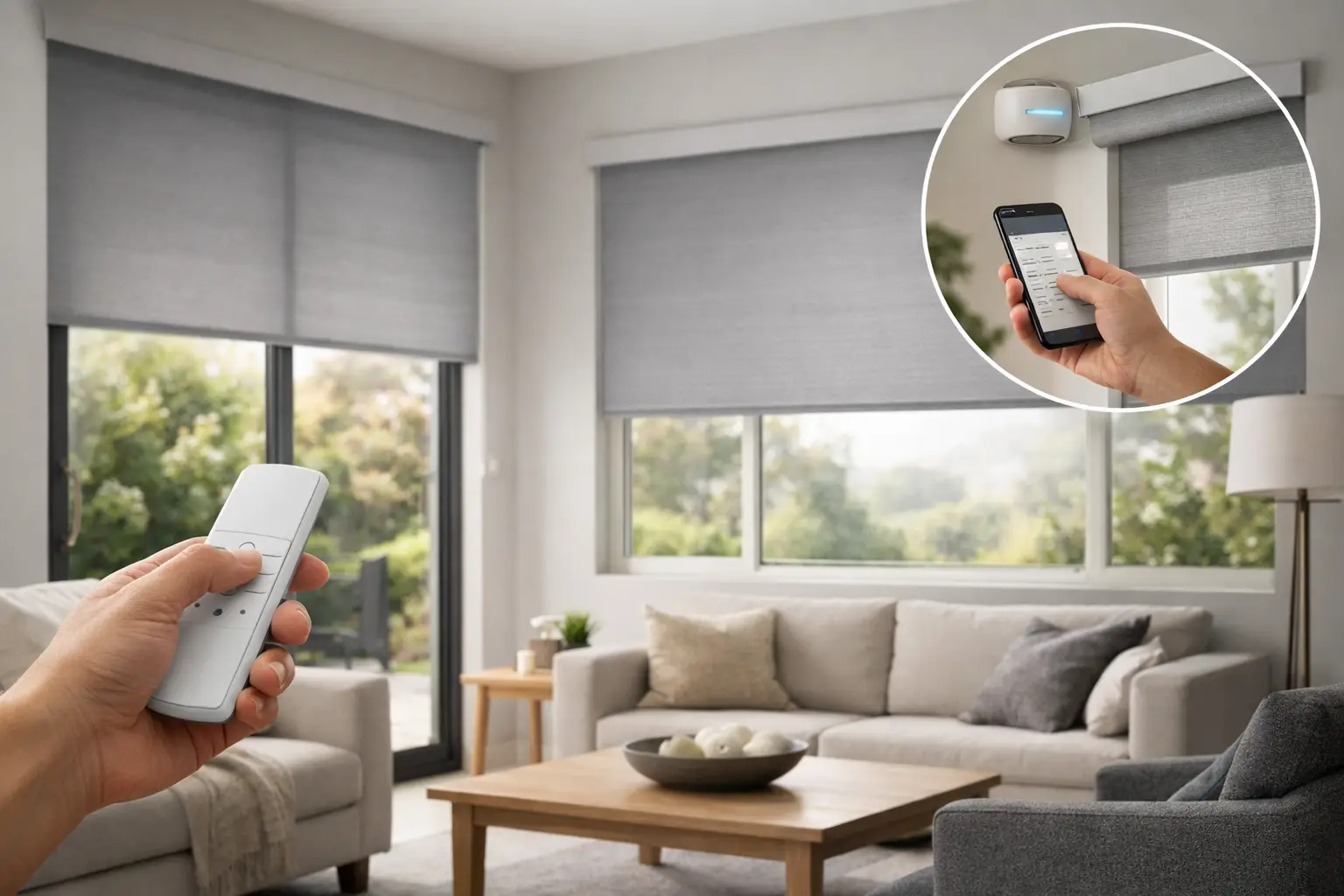
From a smart-home standpoint, roller shades are also a strong fit for battery motors, hardwired systems, and integration with platforms from major automation brands such as Somfy and Lutron. If you want scheduling, voice control, grouped operation, or scene setting, this category is typically one of the easiest to specify.
Cellular shades are strong for energy performance
When insulation is a priority, cellular shades deserve serious attention. Their honeycomb construction traps air and helps reduce heat gain and heat loss better than many flatter shade styles. For homeowners dealing with drafty windows, large glass areas, or rooms that overheat in direct sun, that added efficiency can be noticeable.
Motorized cellular shades work especially well in bedrooms, nurseries, and upper-floor rooms where comfort is tied closely to temperature and light control. They also tend to suit homes where a softer, quieter appearance is preferred over a sharper contemporary line.
The trade-off is aesthetic preference. Cellular shades do not have the same tailored fabric-forward presence as a Roman shade or the architectural simplicity of a roller shade. Some clients love the texture and uniformity. Others see them as more functional than decorative. In many homes, they are an excellent solution, but not always the best design statement.
Roman shades bring softness to smart window treatments
For homeowners who want smart functionality without giving up a more decorative look, motorized Roman shades are often the right answer. They add depth, fabric character, and a custom furnished feel that works beautifully in bedrooms, dining rooms, and formal living spaces.
This is one of the most appealing categories for design-conscious interiors because the fabric selection has such a strong impact on the room. Linen blends, textured neutrals, subtle patterns, and tailored folds can make the window treatment feel fully integrated with the rest of the design.
There are, however, practical considerations. Roman shades tend to stack higher when raised, and that can matter on shorter windows or where preserving glass exposure is important. They can also be heavier depending on fabric and size, so motor selection and fabrication quality matter. Done well, they are elegant and highly functional. Done poorly, they can feel bulky.
Solar shades are ideal for glare control and view preservation
Some rooms do not need privacy and blackout as much as they need comfortable daylight. That is where motorized solar shades stand out. In media rooms, home offices, kitchens, and living spaces with large windows, they help cut glare and UV exposure while maintaining a connection to the outdoors.
This is especially useful in urban homes and condos with expansive glass. You can lower the shades during peak sun hours and still keep the room visually open. That makes solar shades one of the best smart shades for homes with strong views, large window walls, or daytime brightness issues.
The key is choosing the right openness factor. A more open fabric preserves more view but allows more light in. A tighter weave increases glare control and privacy during the day but may reduce visibility outward. There is no universal right setting. It depends on orientation, neighboring buildings, and how the room is used.
Sheer and dual shades offer a more layered effect
Some homeowners want more adjustability than a basic up-and-down shade provides. Sheer shades and dual shades meet that need in different ways.
Sheer shades soften incoming light through fabric vanes suspended between layers, creating a refined and airy look. They work well in living rooms and primary bedrooms where filtered light is preferred and the window treatment itself should feel elevated. Dual shades, sometimes called zebra shades, alternate solid and sheer bands so users can shift between view-through and privacy positions.
Both styles can be motorized and scheduled, and both appeal to clients who want visual interest along with convenience. The trade-off is that they are not always the strongest option for full blackout or maximum insulation. They are more about light modulation and style than hard-working room darkening.
Key features to compare before you choose
Motorization quality is not the only factor, but it should be high on the list. Quiet operation, dependable limits, battery life, and integration capability all matter over time. A smart shade that works well for the first month but needs constant adjustment is not a premium solution.
Power source is another major decision. Battery-powered shades are easier to install in many existing homes and can be excellent for retrofit projects. Hardwired shades are often preferred for new construction, large window packages, or homeowners who want to avoid battery replacement and plan a more built-in automation system.
Control options also vary. Some clients are happy with a remote and scheduled scenes. Others want app control, voice assistants, and full-home integration with lighting and climate systems. The best setup is the one you will actually use. More technology is not always better if it adds complexity without improving daily comfort.
Best smart shades for homes by room
In bedrooms, room-darkening roller shades, blackout cellular shades, and select Roman shades tend to lead because sleep quality and privacy are top priorities. In living rooms, light-filtering rollers, solar shades, and sheers are often stronger choices because they manage daylight without making the space feel closed off.
For kitchens and bathrooms, durable fabrics and easy operation matter more than decorative fullness. Roller shades usually perform well here. In home offices, solar shades are often the best answer because glare reduction can make screens much easier to use throughout the day.
For large sliding doors or wide expanses of glass, the conversation may shift toward panel track systems, motorized drapery, or coordinated shading plans that combine more than one product type. The best solution is sometimes not one shade style repeated everywhere, but a whole-home approach that keeps the design cohesive while adjusting performance room by room.
Why custom specification usually wins
Off-the-shelf smart shades can look appealing at first because they promise speed and a lower starting cost. But sizing limitations, fewer fabric options, weaker motors, and narrower integration choices can become frustrating quickly, especially in homes with oversized windows, layered design plans, or inconsistent natural light.
Custom smart shades allow for more precise fit, better fabric coordination, cleaner installation, and stronger alignment with how the home is actually used. That matters to homeowners, and it matters even more to designers and builders who need reliable results across an entire project.
At Window Fashions Depot, this is typically where consultation adds the most value. The best product is not chosen by trend alone. It is chosen by how well it solves the real conditions at the window while supporting the look of the room.
If you are narrowing down your options, start with the room that frustrates you most. The right smart shade there will usually tell you a lot about what the rest of the home needs.
0 comments