
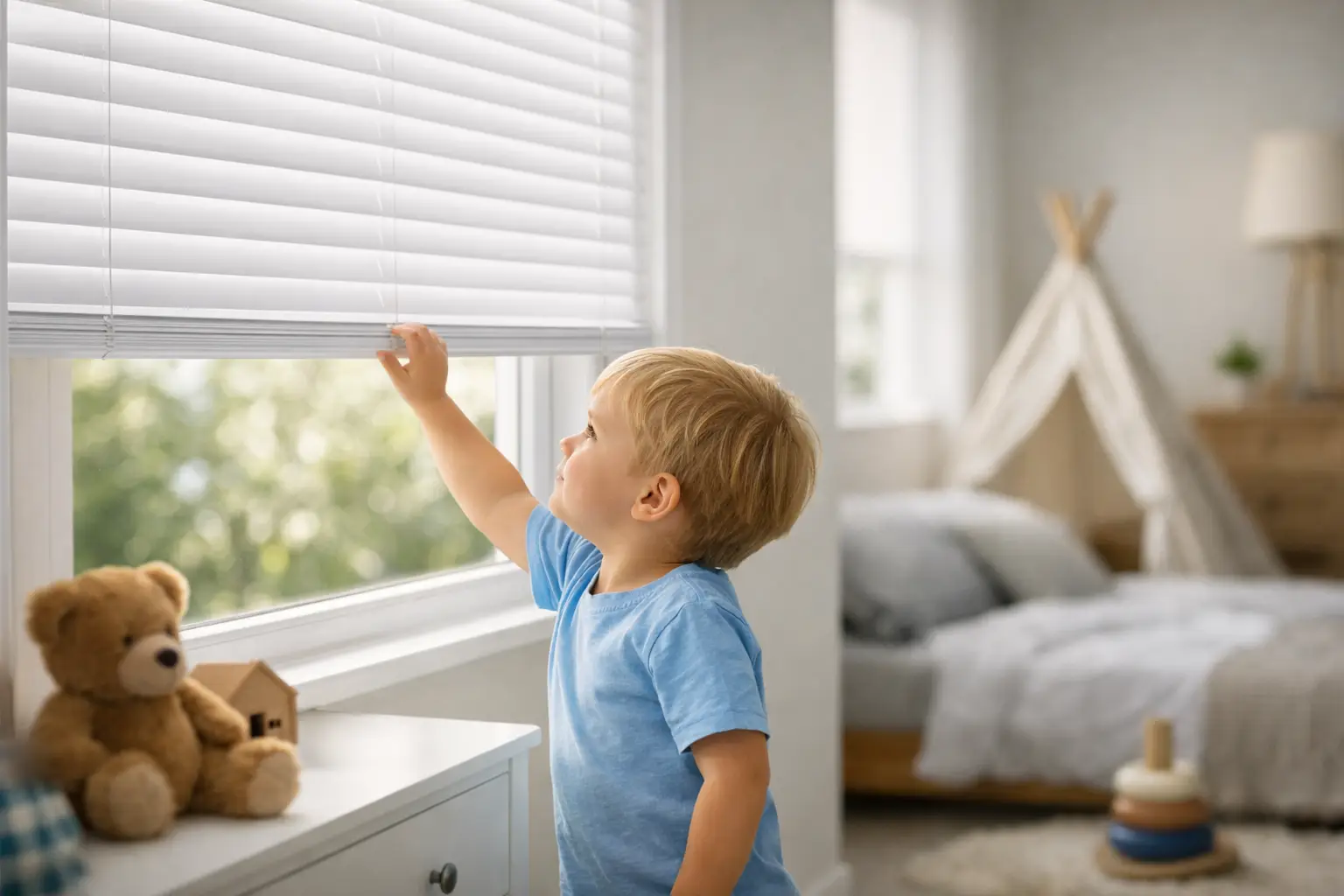
Child Safe Cordless Blinds for Every Room
A nursery can be beautifully furnished and still have one overlooked hazard at the window: an exposed lift cord. Child safe cordless blinds remove that concern while giving parents, designers, and homeowners far more control over light, privacy, and the overall look of a room. The best choice is not simply the first cordless product available. It is a custom treatment with the right operating system, fabric or material, fit, and everyday performance for the space.
Cordless does not have to mean limited, plain, or difficult to use. From clean-lined roller shades to insulating honeycomb shades, tailored Roman shades, and motorized systems, modern options can suit nearly every interior style. The key is selecting a window covering that protects little ones without compromising how your home feels and functions.
Why Child Safe Cordless Blinds Matter
Window-covering cords can pose a strangulation risk to young children, particularly in bedrooms, playrooms, and any space where a crib, bed, chair, or climbing furniture sits near a window. A cordless lift system eliminates hanging pull cords and continuous loop chains from the window area. For many households, that makes it the most straightforward choice for accessible lower-level windows and rooms used by children.
Safety is also one part of a wider design decision. A cordless treatment creates a cleaner visual line. There is no chain hanging against a carefully selected wall color, no cord gathering at the sill, and no need to work around dangling hardware when arranging furniture. This quieter appearance works especially well in contemporary condos, transitional family homes, and professionally designed interiors where every detail is meant to feel considered.
That said, child safety is not limited to the shade itself. Keep cribs, beds, benches, and other climbable furniture away from windows whenever possible. Consider the entire opening too, including window locks, screens, and access to balconies or upper-floor windows. A well-specified cordless shade is an excellent layer of protection, not a substitute for thoughtful room planning and supervision.
Child Safe Cordless Blinds: Choosing the Right Lift
The operating system determines how your treatment feels day after day. It should be easy enough for the people using the room, appropriate for the window size, and suited to the level of light control you need.
Cordless lift and lower systems
Many cellular shades, Roman shades, and certain roller shade styles can be raised or lowered by gently lifting or pulling the bottom rail. This is a practical, uncluttered choice for standard-size windows. It is particularly appealing in a child’s bedroom because the shade can be positioned at any height for privacy while still allowing daylight into the room.
The trade-off is reach. On tall windows, or where furniture blocks the lower portion of the opening, manually operating a cordless bottom rail may be less convenient. A consultation can help determine whether the rail will be comfortable to access once the room is furnished.
Wand-operated blinds
A wand replaces traditional cords for tilting slats on products such as horizontal blinds and some vertical blind systems. It keeps the control contained at the side of the window and offers direct adjustment of light and privacy. Wands are often a sensible choice where you want the crisp structure of blinds but do not want exposed tilt cords.
For family rooms, kitchens, and patio doors, this can be a durable, familiar operating method. The final specification depends on the blind style and manufacturer, since not every product uses the same control configuration.
Motorized and automated shades
Motorization is often the most polished cordless option, especially for large windows, high windows, or multi-window rooms. With a remote, wall control, app, or integrated smart-home system, shades can be raised, lowered, or adjusted without touching the fabric or reaching across furniture.
Motorized roller shades, cellular shades, Romans, and drapery systems are particularly valuable in bedrooms and nurseries. You can lower room-darkening shades for nap time, bring in morning light gradually, or group multiple windows into one scene. Battery-powered systems can be ideal when wiring is impractical, while hardwired motorization is worth considering during a renovation or new build.
Automation adds cost, and it is not necessary for every window. But for hard-to-reach openings, wide shade banks, or clients building a connected home, it can deliver a level of convenience that manual systems cannot match.
Match the Shade Style to the Room
A child-safe operating system should support the room’s purpose rather than dictate the entire design. Start with how the room is used, when privacy matters, and how much natural light you want to preserve.
In nurseries and children’s bedrooms, cordless cellular shades are a strong all-around option. Their honeycomb construction can help reduce heat loss and soften exterior noise, while room-darkening fabrics support more consistent sleep. For full light control, pair a room-darkening shade with a carefully fitted outside mount or choose a dual-shade approach that offers both filtering and blackout performance.
Roller shades are a natural fit for modern bedrooms, playrooms, and living areas. Available in light-filtering, solar screen, and blackout materials, they provide a clean profile with extensive fabric choices. A solar roller shade can reduce glare while preserving some daytime view, but it will not provide the nighttime privacy of an opaque blackout fabric. This distinction matters for street-facing rooms and condo bedrooms.
Roman shades introduce softness and texture. They work well when the room calls for a more decorative treatment but still needs a cordless or motorized operation. Consider washable or performance-oriented fabrics in spaces where small hands, pets, or frequent use are expected.
For family rooms and dining spaces, woven wood shades can add warmth and natural character. Because their light filtering varies with the weave, a privacy liner may be the better choice for windows facing neighboring homes. A custom liner also changes the visual weight of the shade, so it is worth viewing material samples in the room before finalizing the selection.
Details That Make a Custom Treatment Work Better
The difference between a good window covering and a well-planned one often comes down to specification. Measure the window precisely, but also account for handles, trim depth, mullions, radiators, and furniture placement. An inside mount offers a tailored, built-in look when the window has sufficient depth and square openings. An outside mount can make a narrow window appear larger and may improve light blocking by extending beyond the glass.
Fabric direction and color deserve equal attention. White and soft neutral shades tend to keep a room bright and visually open. Darker fabrics can add contrast and may better conceal nighttime views, but they can make a compact room feel more enclosed. In a south- or west-facing space, solar screen fabrics and light-filtering materials can manage glare without losing all daylight.
For blackout needs, ask how much edge light is acceptable. Even a blackout fabric can allow light around the sides of an inside-mounted shade. A wider outside mount, side channels on compatible systems, or layering with drapery can improve the result. There is no single answer because each window, sleep routine, and design plan is different.
Also consider who will operate the shade. A cordless manual system may be ideal in a child’s room, while a motorized option could be the better investment for a tall stairwell window or a wall of glass behind a sofa. The right product is the one that will be used easily and consistently.
Plan for Safe Installation and Daily Use
Proper installation matters as much as product selection. Mounting brackets must be securely fastened to the appropriate surface, especially for wider or heavier treatments. A custom installer can confirm that the shade is level, clears the window hardware, and operates smoothly from the first use.
Once installed, check the room from a child’s perspective. Move furniture that creates access to the window, and make sure a child cannot easily climb to reach the treatment or window opening. If the room includes older corded products elsewhere, they should be evaluated separately and updated with appropriate safety solutions where possible.
For designers and builders, specifying cordless systems early avoids last-minute substitutions. It allows time to coordinate power for motorization, select fabrics alongside finishes, and plan mounting before trim, millwork, or furniture is finalized. This is especially useful in whole-home renovations, where consistent control styles create a more intentional look from room to room.
A well-chosen cordless shade should feel almost invisible in the best way: safe for the family, easy to live with, and completely at home in the design. Window Fashions Depot can help compare custom fabrics, lift systems, and motorization options so the treatment suits both the window and the life happening around it.