
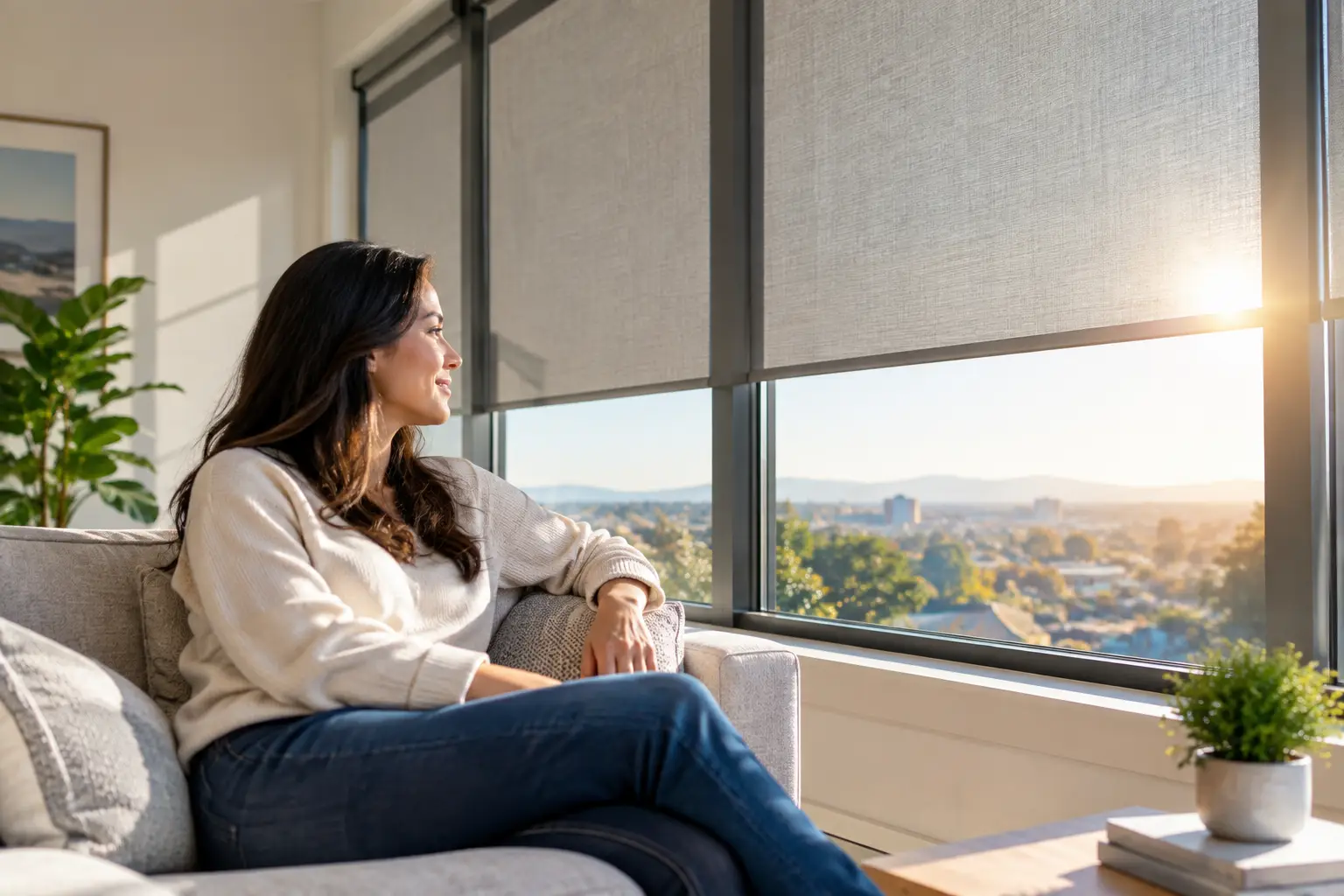
Do Solar Shades Reduce Glare? The Right Fit
A bright room can look exceptional until sunlight turns a laptop screen into a mirror, washes out the television, or makes a dining table uncomfortable at noon. Do solar shades reduce glare? Yes, when the fabric, openness factor, color, and installation are selected for the direction and purpose of the window. They filter direct sun before it reaches the room, preserving more daylight and view than many opaque window coverings.
The key is setting the right expectation. Solar shades are not blackout shades. Their purpose is controlled daylight: reducing harsh visual contrast, softening sunlight, and protecting interiors while maintaining an outward view during the day. For living rooms, home offices, kitchens, and condos with broad glass exposures, that balance is often exactly what makes the room usable.
How Solar Shades Reduce Glare
Glare happens when a very bright surface or beam of light creates a sharp contrast with what you are trying to see. A sunlit window behind a television, for example, can make the screen feel dim even when the room itself is not overly bright. Direct light across a desk can make computer work tiring long before the room feels hot.
Solar shade fabrics are woven with small openings between their yarns. The material intercepts and diffuses incoming sunlight, reducing the intensity of direct rays and lowering the contrast between the window and the rest of the room. The result is softer daylight rather than a fully darkened space.
Because the fabric is designed for light management, it can also help reduce UV exposure that contributes to fading on wood floors, upholstery, artwork, and rugs. Glare control and UV management are related, but they are not identical. A fabric may offer strong UV protection and still allow a fair amount of visible light into the space, depending on its weave and openness.
The Openness Factor Makes the Biggest Difference
The most important solar shade specification is the openness factor. It refers to the percentage of open space in the fabric weave. Lower percentages have smaller openings and provide stronger glare reduction, more daytime privacy, and less visible light. Higher percentages have larger openings and preserve a clearer view, but admit more light.
A 1% or 3% openness fabric is often a strong choice for rooms with demanding screen use, intense afternoon exposure, or nearby buildings where privacy matters. It offers a more substantial filtering effect, though the exterior view will look softer.
A 5% openness fabric is a popular middle ground. It reduces much of the sharp glare that affects television viewing and daily tasks while keeping the room visually connected to the outdoors. For many living rooms and kitchens, it provides a practical balance of performance and openness.
A 10% openness fabric prioritizes a more open view and a lighter appearance. It can work beautifully where glare is moderate, but it may not be enough for a west-facing office or a media room with low-angle afternoon sun. In those spaces, the light can remain too strong at certain times of day.
The right choice depends on more than the window orientation. Consider how close the glass is to your workspace, how reflective your screens and finishes are, whether neighboring homes are visible, and when the room is used most often. A showroom sample can show color and texture, but a professional consultation helps connect that sample to the actual light conditions in your home.
Fabric Color Changes Performance and Appearance
Color affects the experience of a solar shade in two important ways. Darker fabrics generally provide a sharper outward view because they reduce internal reflection on the shade surface. They can make the exterior view feel more defined, particularly during the day.
Lighter fabrics create a brighter, softer interior effect and can blend more quietly into pale walls or contemporary neutral palettes. However, they may reflect more light within the room and can make the view less crisp. For a dedicated office or TV area, a darker charcoal, bronze, or gray fabric is often worth considering, even in a light interior.
This does not mean dark is automatically better. In a north-facing room with limited natural light, an overly dark and tightly woven shade can make the space feel flat. The best fabric supports both the room’s design direction and its practical light-control needs.
Where Solar Shades Work Best
Solar shades are particularly effective on large windows, sliding doors, urban condo glazing, and rooms with an uninterrupted view. Their clean roller-shade profile keeps the window architecture visible while giving the room a tailored, modern finish.
In a home office, they can minimize screen reflections without forcing you to work under artificial lighting all day. In a family room, they reduce the glare that makes daytime television frustrating. In kitchens and dining areas, they temper direct sunlight while maintaining a pleasant connection to the backyard, patio, or skyline.
They are also an excellent starting point for designers who want quiet, architectural window treatments. A solar roller shade can stand alone for a minimal look, sit discreetly behind decorative drapery panels, or pair with side panels when a room needs additional softness and nighttime privacy.
What Solar Shades Will Not Do on Their Own
Solar shades reduce glare well, but they have limits. At night, interior lights can make silhouettes visible from outside, especially with lighter fabrics and higher openness. If privacy after dark is important, consider layering solar shades with drapery, curtains, or a secondary privacy shade.
They also do not create a true blackout condition. Even a low-openness solar fabric may allow some light through its weave and around the edges of the shade. Bedrooms, nurseries, and media rooms that need near-total darkness are better served by blackout roller shades, blackout Roman shades, cellular shades, or a layered system designed with side gaps in mind.
For extreme heat gain, solar shades help by filtering solar energy, but they are only one part of the solution. The glass type, window direction, exterior overhangs, and how the shade is mounted all influence comfort. Exterior shading systems can be especially effective where the goal is to stop sun before it reaches the glass.
Custom Fit Is Part of Glare Control
A poorly fitted shade can leave bright strips of light at the sides or fail to cover the portion of glass causing the problem. For the most effective glare reduction, the shade should be specified to match the window type and mounting conditions.
An inside mount offers a streamlined, built-in appearance, but it requires sufficient depth and leaves small light gaps along the sides. An outside mount can cover more of the window opening and may improve glare control, particularly when trim, shallow frames, or uneven openings limit an inside installation.
Roll direction also matters. Depending on the product, fabric can roll close to the window or farther forward from it. A close roll often provides a cleaner profile, while a forward roll may clear handles, cranks, or projecting trim. These details are easy to overlook, yet they affect both performance and the finished appearance.
Motorization adds another practical advantage. Glare changes throughout the day, and automated shades can lower at the times when sun hits a screen or seating area most directly. Battery-powered, hardwired, and smart-home integrated options from leading systems such as Lutron and Somfy allow shades to operate on schedules, wall controls, remotes, or app-based commands. That is especially useful for tall windows, multi-window rooms, and homes where convenience encourages consistent use.
Choosing the Right Solar Shade for Your Room
Start by identifying the exact problem instead of simply choosing a fabric from a swatch. Is the issue a reflection on a monitor, a hot late-afternoon seating area, fading near a picture window, or loss of daytime privacy? Each calls for a slightly different specification.
Then look at the window orientation and the room’s schedule. East-facing windows can cause intense morning glare, while west-facing glass often creates the most difficult late-day conditions. South-facing windows receive longer periods of sun, though overhangs and seasonal sun angles can change how that light enters the room.
Finally, evaluate the shade as part of the entire interior. The fabric should relate to wall color, flooring, furniture, and any drapery or hardware in the plan. Custom solar shades are available in a broad range of textures, neutrals, and performance fabrics, so glare control does not have to look utilitarian.
The best solar shade is the one that lets you enjoy the view without arranging your day around the sun. Bring photos, window measurements, and a sense of when glare is worst to a Window Fashions Depot consultation, and the fabric, openness, mounting, and control options can be specified around the way the room is actually lived in.
0 comments