
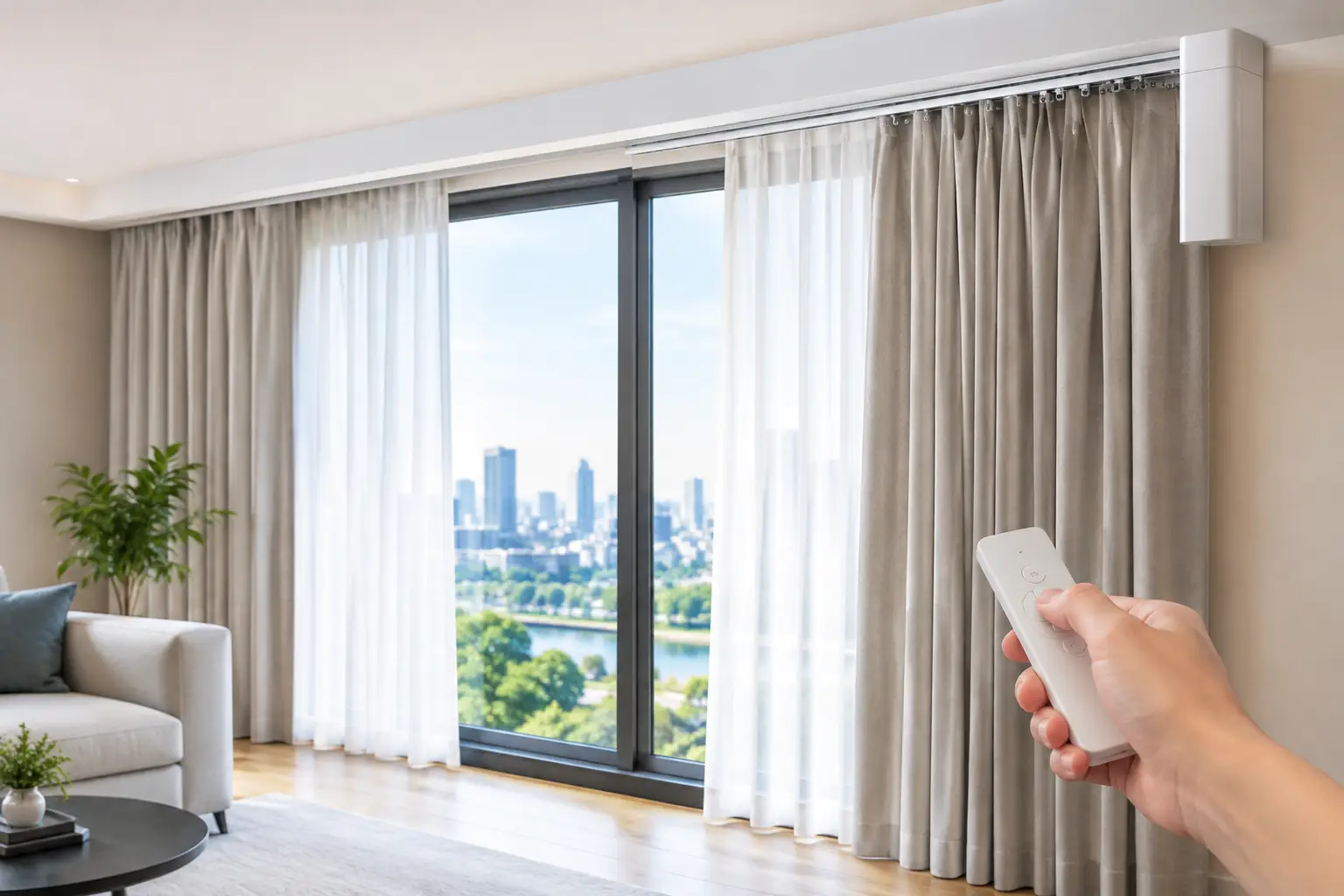
Motorized Curtain Tracks for Better Window Design
A floor-to-ceiling window can be the best feature in a room until its drapery becomes difficult to reach, heavy to pull, or left closed because operating it takes too much effort. Motorized curtain tracks solve that practical problem while giving designers and homeowners more freedom to use generous fabric panels, wider openings, and layered window treatments without compromising daily convenience.
Unlike a standard decorative curtain rod, a motorized track is an engineered system. A concealed or exposed rail guides the carriers, while a quiet motor opens and closes the drapery by remote, wall control, app, voice command, or programmed schedule. The result can look understated and tailored, but the specification behind it deserves careful attention.
Where Motorized Curtain Tracks Make the Biggest Difference
Motorization is not only a luxury feature for dramatic windows. It is particularly useful wherever drapery is difficult to operate consistently. Tall windows, stair landings, double-height rooms, bay windows, and wide sliding doors are obvious examples. In these applications, hand-drawn panels can snag, stack unevenly, or simply go unused.
Bedrooms are another strong fit. Scheduled opening can bring in morning light without pulling a cord or crossing the room, while closing the drapery in the evening supports privacy and a more restful environment. In living rooms and media spaces, motorized drapery provides fast glare control for changing sun conditions and screen viewing.
For condos and urban homes, the appeal is often privacy as much as convenience. A scheduled close at dusk can make a large glass wall feel more comfortable without asking the homeowner to remember each evening. For designers and builders, automation also helps maintain a polished presentation: every panel closes evenly, every time.
Start With the Drapery, Not the Motor
The motor must be matched to the drapery weight, width, fullness, and movement. Choosing a motor before confirming the fabric and heading style can lead to an underpowered system or an unnecessarily visible track. This is why custom specification matters.
Heavier lined drapery, blackout fabrics, interlining, and extra-wide openings all increase the load on the system. Ripplefold and pinch-pleat headings create different stacking behavior, and the amount of fullness affects both the drapery’s appearance and total weight. A consultation should account for the finished treatment, not just the window measurement.
Track configuration matters just as much. A one-way draw moves all panels toward one side, while a center draw opens from the middle and stacks at both ends. For very wide glass walls, a split draw often gives a more balanced look. Curved and angled track options can also be specified for bay windows or architectural conditions that a straight rod cannot accommodate.
Plan for Stackback
Stackback is the space occupied by drapery when it is fully open. It is easy to overlook, yet it affects daylight, views, and access to doors. Full panels with generous fullness can cover part of the glass even when opened. A properly planned track extends beyond the window where possible so the panels can clear more of the opening.
This detail becomes especially important beside patio doors. The drapery should open far enough for comfortable passage, and the selected control should make that operation simple for everyone in the household.
Choosing Power and Control Options
Most motorized curtain tracks are available with hardwired, plug-in, or rechargeable battery power. The right choice depends on the project stage, window location, desired controls, and how often the drapery will be used.
Hardwired systems are typically the cleanest choice for new construction and major renovations. The power connection is concealed, and there is no battery to recharge. They are well suited to whole-home automation projects, especially when electrical planning happens before drywall and millwork are completed.
Plug-in motors can be a practical option when an outlet is available near the track location. They avoid some electrical work, although cord routing should be planned carefully so it does not detract from the finished window treatment. Rechargeable battery systems are often useful for completed homes where running new wiring is disruptive or impractical. Battery life varies with the system, drapery weight, window size, and frequency of operation, so homeowners should be comfortable with periodic charging.
Control options should reflect how the room is used. A handheld remote is straightforward and familiar. A wall keypad provides a dedicated, polished control point. App and voice control can be valuable for homeowners who already use connected lighting, climate, and security products. Timed schedules are often the feature people appreciate most after installation because they make light management automatic rather than another task.
Established automation platforms from names such as Lutron and Somfy can be considered when coordinating drapery with shades, lighting, and broader smart-home controls. Compatibility should be confirmed before products are selected, particularly in homes with an existing automation ecosystem.
Motorized Drapery and Shades Work Better Together
Drapery does not need to carry every performance requirement on its own. In many rooms, a layered solution delivers better control and a more finished design. A motorized roller shade or honeycomb shade can manage daytime glare, UV exposure, and privacy while preserving a clean view. Drapery then adds softness, acoustic comfort, insulation, and a decorative frame around the window.
This pairing is especially effective on large south- or west-facing glass. The shade can lower during the brightest hours, while the drapery remains open to preserve the room’s architecture. In the evening, the drapery can close for privacy and atmosphere. Each layer has a clear role rather than asking one treatment to do everything.
For bedrooms, a blackout lining paired with a room-darkening shade may be appropriate when sleep conditions are the priority. But blackout is not always necessary. A light-filtering fabric may be the better choice in a living room where softness and filtered daylight matter more than complete darkness.
Details That Determine the Finished Look
A motorized track can be recessed into a ceiling pocket for a clean, hotel-inspired effect, mounted behind a valance, or installed as a visible track when the design calls for it. Recessed tracks are elegant, but they require early coordination with ceiling construction, window trim, sprinkler locations, and electrical access. Retrofitting a pocket later is possible in some cases, but it is more involved than planning one from the start.
Fabric selection should balance visual character with performance. Linen-look fabrics offer an airy, relaxed appearance but may require lining for greater body and privacy. Textured woven fabrics add depth to contemporary spaces. Velvet and heavier decorative fabrics create more drama and can improve light control, though their weight needs to be calculated accurately.
Hardware color and track placement deserve the same attention as the fabric. A white track may disappear against a white ceiling, while black or bronze can become an intentional architectural line. The best choice depends on whether the goal is concealment or contrast.
What to Expect From Professional Specification
Custom motorized curtain tracks are not a one-size-fits-all purchase. Accurate field measurements, mounting conditions, fabric weight, track layout, stackback, power source, and controls all need to work together. For builders and designers, this coordination is best completed early enough to inform electrical and ceiling details. For homeowners renovating an existing room, an on-site assessment can identify the most practical path without overcomplicating the project.
At Window Fashions Depot, consultations can help narrow the choices across fabric, track style, motorization platform, and complementary shades. The goal is not to add automation for its own sake. It is to specify a system that looks appropriate for the room and performs reliably every day.
The most successful installation is one you stop thinking about: drapery that opens when the room needs light, closes when privacy matters, and hangs beautifully whether it is moving or at rest. Before choosing a fabric or control, consider how the window is actually used. That answer will lead to the right track, the right motor, and a window treatment that earns its place in the design.
0 comments