
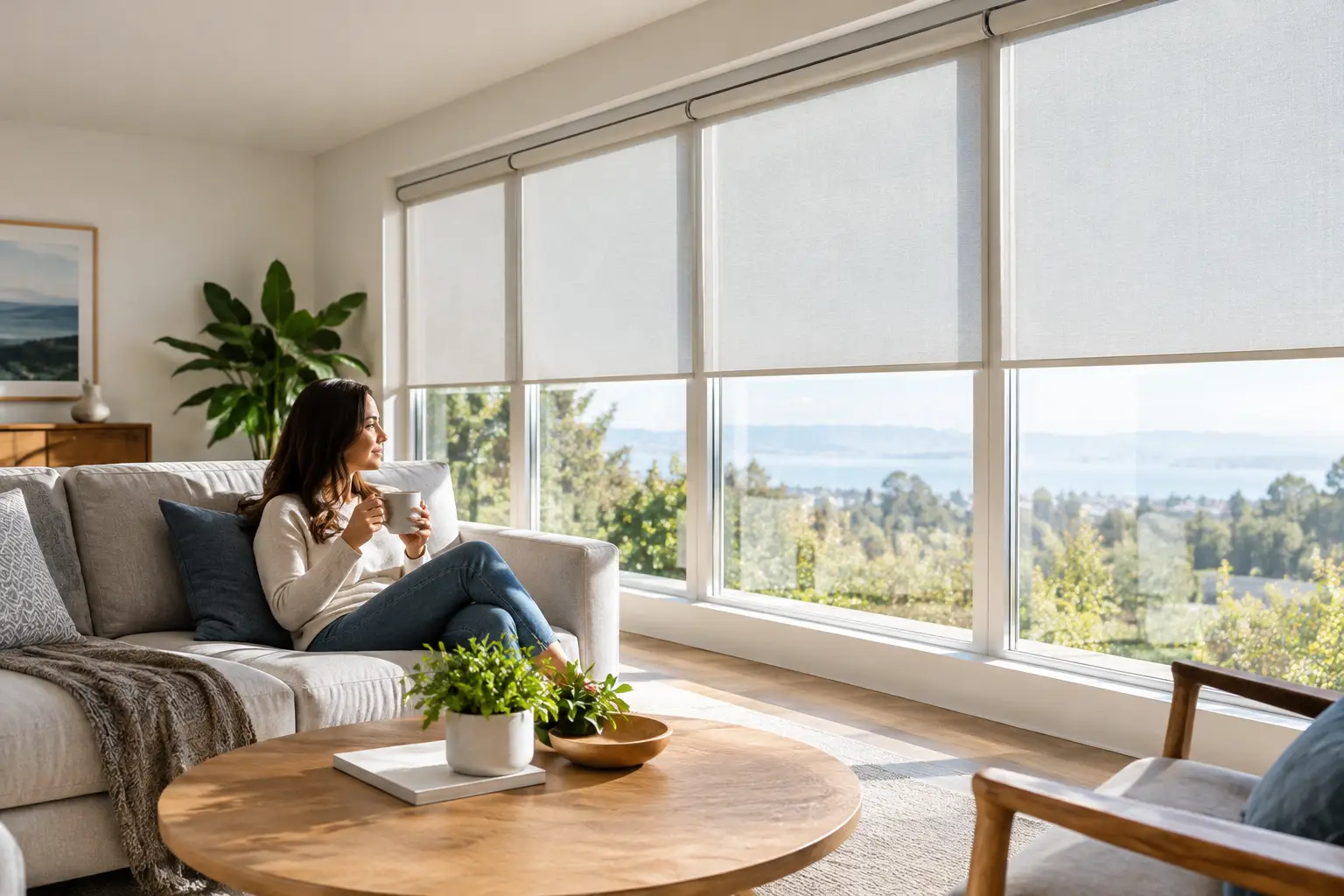
Shade Glare Reduction for Brighter, Better Rooms
A sunny room can be one of a home’s best features until the television becomes a mirror, a laptop screen is impossible to read, or afternoon light washes out the dining table. Effective shade glare reduction solves that problem without turning a bright, welcoming space into a dark one. The right treatment filters, redirects, or blocks harsh direct light while preserving the daylight, view, privacy, and design character you want.
The best choice is rarely the darkest shade. It depends on window direction, glass size, room use, nearby reflective surfaces, and how much view-through you are willing to trade for visual comfort. A custom approach gives homeowners and design professionals far more control than a one-size-fits-all blind.
What Causes Window Glare?
Glare is not simply brightness. It is excessive contrast: a strong source of light in your field of vision compared with the surrounding room. Direct sun is the obvious cause, but glare can also bounce off pale flooring, glossy countertops, water, neighboring buildings, and large expanses of glass.
East-facing windows often create sharp morning glare, while west-facing rooms can be challenging in the late afternoon when the sun sits low. South-facing windows receive prolonged light that changes throughout the day. North-facing rooms usually have softer light, though reflections from nearby surfaces can still affect screens and artwork.
Room function matters just as much. In a media room, even a small band of sunlight can interfere with a projected image. In a home office, glare may arrive at a different angle than the light needed for video calls. Kitchens and living rooms tend to need flexible control because daylight is desirable, but direct sun can be uncomfortable at a table or seating area.
Shade Glare Reduction Without Losing the View
For many large windows, roller shades with solar screen fabrics offer the most balanced approach to shade glare reduction. These fabrics are designed to reduce solar intensity and diffuse light while maintaining an outward view during the day. Openness factor is a key specification: a more open weave provides a clearer view and more daylight, while a tighter weave offers stronger glare control and greater daytime privacy.
A 1% or 3% openness fabric is often appropriate for rooms with intense sun, computer workstations, or media use. A 5% openness fabric can be an excellent middle ground for living areas where the view remains a priority. Higher openness options may look airy and preserve visibility, but they will not control glare as aggressively. Fabric color also matters. Darker solar fabrics generally provide a sharper view outward, while lighter fabrics may brighten the room more evenly.
Solar shades are especially effective in condos and contemporary homes with floor-to-ceiling glazing. They create a clean architectural line, fit neatly within window openings, and are available in manual, cordless, and motorized operating systems. They are not, however, the best answer where complete nighttime privacy or near-blackout darkness is required. In those situations, a dual-shade system or layered treatment is usually more practical.
Dual Shades for Day-to-Night Control
Dual roller shades combine a light-filtering or solar shade with a room-darkening or blackout shade on the same window. During the day, the front solar fabric cuts glare and softens the light. At night, the blackout layer provides privacy and darkness.
This configuration is particularly useful in bedrooms, street-facing rooms, nurseries, and multipurpose spaces. It avoids forcing one fabric to perform two conflicting jobs. A solar shade can preserve the view at noon, while a blackout shade handles sleep, movie nights, and privacy after sunset.
When Light Filtering Is Better Than Solar Fabric
Light-filtering roller shades, Roman shades, and cellular shades diffuse incoming light rather than maintaining a clear view through the fabric. They are an excellent choice when the goal is to soften a room, reduce contrast, and protect finishes from harsh light while keeping a warm, decorative effect.
For example, a light-filtering Roman shade can reduce glare across a breakfast nook while adding texture and color to the space. A woven wood shade with an appropriate liner can create a relaxed, layered look while tempering strong daylight. These choices are ideal when the window itself is not a focal view or when interior style is as important as technical light control.
The trade-off is visibility. If you need to see clearly outdoors during the day, solar roller shades usually outperform opaque light-filtering fabrics. If a soft, tailored interior is the priority, Roman shades, woven woods, and drapery panels may be the better design decision.
Cellular Shades and Blinds for Adjustable Light
Cellular, or honeycomb, shades are a strong option for glare reduction where insulation and privacy also matter. Their pleated construction diffuses sunlight effectively, and top-down/bottom-up operation can be especially useful. Lower the shade from the top to block high-angle sun while allowing light through the lower part of the window, or raise it from the bottom to maintain privacy.
Horizontal blinds offer another form of adjustment. Wood, faux wood, and aluminum blinds allow the slats to tilt, directing light toward the ceiling or away from a work surface. This can be useful in offices, kitchens, and rooms where the sun angle changes rapidly. The trade-off is a more segmented view and more visible stack than a roller shade provides.
For wide patio doors and large window walls, vertical blinds, panel track systems, and vertical cellular shades can offer practical glare control with easy access to the door. The right system depends on how often the opening is used and whether a clean contemporary look or a more traditional treatment is preferred.
Layering Adds Performance and Design Depth
A single shade is not always enough for a high-performance room. Layering a functional shade with side drapery panels or tailored drapery creates greater flexibility and a more finished interior. The shade manages everyday glare, while drapery can reduce side light, soften acoustics, frame the window, and add visual weight.
In bedrooms and media rooms, blackout drapery paired with a solar or light-filtering shade can address difficult edge light better than many shades alone. For large expanses of glass, layering also gives designers more opportunities to coordinate fabric, hardware, wall color, and furnishings.
Precise measuring is essential. Glare can slip through large side gaps, especially when the sun is low. An outside-mounted shade with sufficient overlap often performs better than an inside mount for room darkening, although an inside mount can offer a more minimal built-in appearance. The right mounting choice should be considered before fabric selection, not after.
Motorization Makes Glare Control More Consistent
The best shade cannot reduce glare if it stays open when the sun moves across the room. Motorized shades make it easy to adjust multiple windows together, schedule daily movement, and respond to changing light without interrupting work or entertaining.
Systems from Lutron, Somfy, Hunter Douglas, and other leading manufacturers can be specified with wall controls, remotes, apps, smart-home integration, and optional light sensors. A west-facing family room, for example, can lower solar shades automatically before the strongest afternoon sun arrives, then raise them again as daylight softens.
Motorization is particularly valuable for tall, hard-to-reach windows, multiwindow walls, and homes where glare management needs to happen repeatedly throughout the day. It also supports a cleaner design by eliminating dangling cords. Battery-powered, wired, and solar-powered options each have different installation considerations, so the best choice depends on access, construction stage, and window layout.
Choose by Room, Exposure, and Priorities
There is no universal “best” glare-reducing shade. A home office may benefit from a dark 3% solar roller shade that keeps monitors comfortable. A living room with a valued skyline view may call for 5% solar fabric paired with decorative drapery. A bedroom may need dual shades or blackout-lined drapery, while a kitchen might be better served by adjustable blinds or a light-filtering cellular shade.
Before selecting a treatment, consider when glare occurs, whether you need a view, how much nighttime privacy is required, and whether the room needs insulation or darkness as well. Bring photos of the windows, note their orientation, and observe the light at the time of day when it causes the most frustration. Those details make a consultation substantially more accurate.
Window Fashions Depot can help specify custom fabrics, operating systems, and mounting solutions that suit both the architecture and the way each room is used. A well-chosen shade should let you enjoy the light in your home on your terms, not spend every sunny afternoon avoiding it.
0 comments