
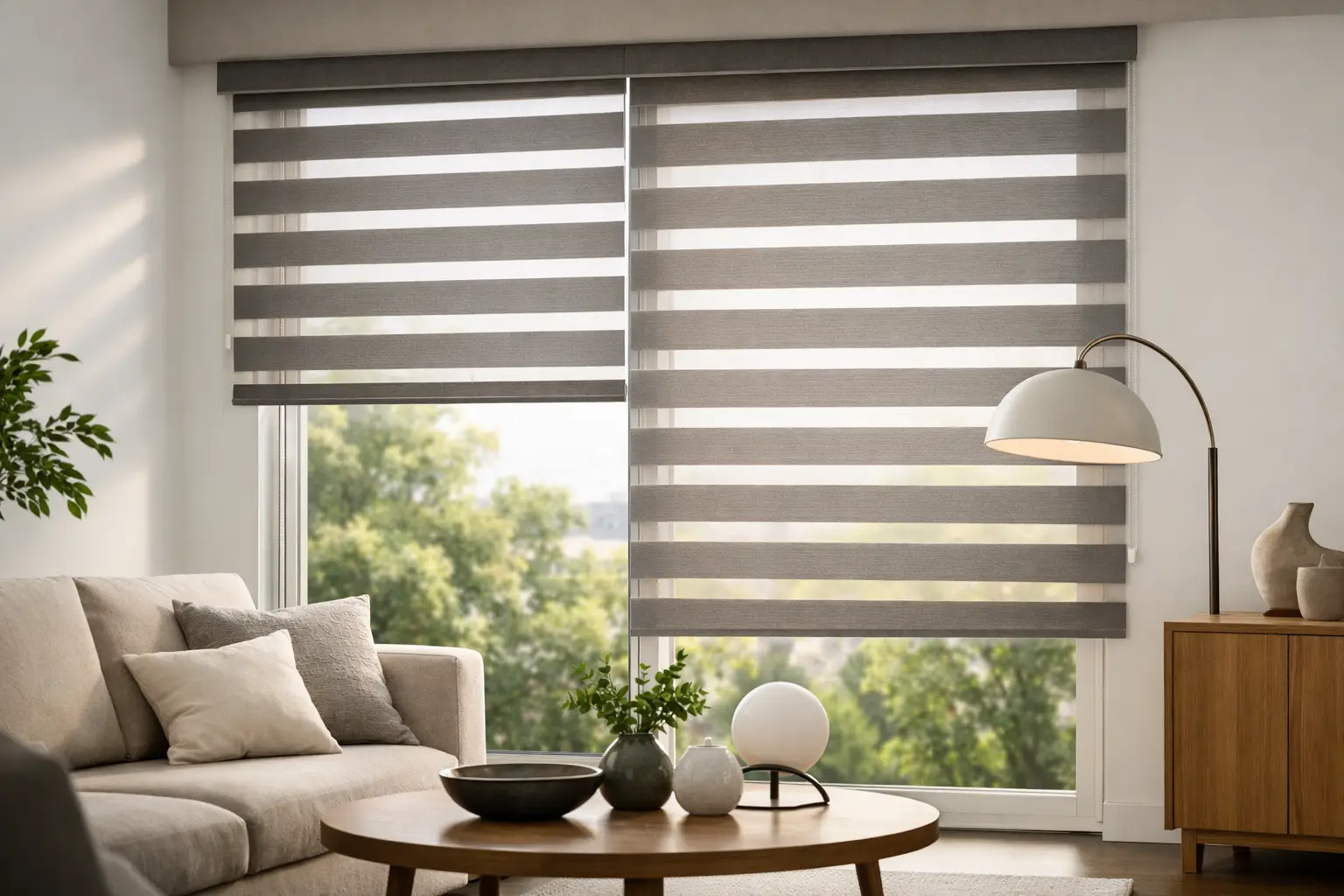
What Are Zebra Shades? Smart Light Control for Modern Rooms
A sunny living room should not force you to choose between a beautiful view and a screen full of glare. What are zebra shades designed to do? They give you a more precise way to soften daylight, add privacy, and maintain a clean contemporary window treatment. Their distinctive striped appearance is not just decorative. It is the mechanism that lets you shift a room from open and bright to private and filtered with one smooth adjustment.
For homeowners, designers, and builders selecting coverings for large windows, condos, bedrooms, and open-plan spaces, zebra shades offer a polished alternative to conventional blinds. They are especially appealing when a roller shade feels too simple but slatted blinds feel too busy.
What Are Zebra Shades?
Zebra shades, also called dual shades, banded shades, or layered shades, are made from a continuous fabric loop with alternating sheer and opaque horizontal bands. The fabric moves through a roller system, creating two layers at the window. As those layers shift past each other, the sheer bands can line up to admit filtered light, or the opaque bands can overlap to create more privacy and shade.
The result is a single shade with several useful positions. You can align the sheer sections to enjoy daylight and an outside view, offset the opaque sections for privacy, or raise the entire shade when you want the window fully exposed. Rather than tilting individual slats, as you would with a horizontal blind, you adjust the alignment of the fabric bands.
The name comes from the alternating light and dark stripes seen across the shade. Yet zebra shades are available in far more than black and white. Custom collections include soft neutrals, textured weaves, muted colors, room-darkening fabrics, and decorative finishes that can coordinate with modern, transitional, and minimalist interiors.
How Zebra Shades Control Light and Privacy
The main advantage of a zebra shade is graduated control. In its open alignment, sunlight passes through the sheer bands, reducing harsh brightness while preserving a connection to the outdoors. This setting works well in a kitchen, home office, or living room where total blackout would make the space feel closed off.
When the opaque bands overlap, they cover more of the window and reduce visibility from outside. This is useful in street-facing rooms, condos with nearby neighbors, and bedrooms where evening privacy matters. You can also stop the shade between these positions to tailor the amount of light entering the room.
That flexibility comes with a realistic trade-off. Standard zebra shades provide strong light filtering and privacy, but they do not create a perfectly blacked-out room. Light can still enter around the sides of the shade, particularly with an inside mount, and some light may pass through the fabric itself. For media rooms, nurseries, or bedrooms where near-total darkness is the goal, a room-darkening zebra fabric, outside mount, side channels, or layered drapery may be the better specification.
Where Zebra Shades Work Best
Zebra shades are often selected for rooms that need to perform differently throughout the day. In a living room, they can manage afternoon glare without hiding the view. In a dining area, their smooth fabric surface keeps the window treatment visually quiet while still adding softness to the room. In a home office, they help reduce direct light on screens while maintaining comfortable natural illumination.
They also suit contemporary condo interiors, where clean lines and limited floor space make bulky window treatments less appealing. Because the shade rolls neatly into a compact headrail, it offers a streamlined profile on narrow windows, large expanses of glass, and sliding-door applications when the proper system is selected.
Bedrooms can benefit from zebra shades, especially when privacy and soft morning light are priorities. Still, the fabric and installation details should match the room’s needs. A light-filtering fabric may be ideal for a guest room, while a room-darkening option is more practical for a primary bedroom or a space used by shift workers.
Choosing the Right Zebra Shades for Your Windows
A well-chosen zebra shade starts with the window, not the fabric swatch. Window depth, trim, glass exposure, nearby buildings, and the room’s intended use all affect the right configuration. Custom specification also helps the shade operate properly and look proportionate to the window.
Inside Mount or Outside Mount
An inside mount places the shade within the window frame for a tailored, architectural appearance. It is a strong choice when the frame is deep enough and you want to preserve trim details. However, every inside-mounted shade has small side gaps, so it will allow more edge light than an outside mount.
An outside mount installs on the wall or molding beyond the window opening. This approach can cover more glass, reduce light leakage, and make a small window appear larger. It is often worth considering when room darkening or maximum privacy is a priority, or when a shallow frame cannot accommodate the hardware.
Fabric Opacity and Color
Fabric selection changes both the look and performance of the shade. Sheer bands vary in openness, which affects outward visibility and the amount of daylight that enters. Opaque bands range from light-filtering to room-darkening. A pale fabric can keep a room airy, while darker or more textured materials can add visual weight and support a more dramatic interior scheme.
Look at samples against the actual window before making a final choice. A color that appears warm under showroom lighting can look cooler in a north-facing room, and a subtle weave may become more noticeable when afternoon sun shines through it.
Manual or Motorized Operation
Zebra shades can be operated with a chain loop, cordless lift system, or motorization, depending on the product line and window size. Cordless options create a clean look and remove hanging control chains. Motorized shades are especially practical for tall windows, hard-to-reach clerestory windows, and wide multi-window arrangements.
For connected homes, motorization can be integrated with compatible control systems and programmed around routines. A morning setting can bring in filtered daylight, while an evening setting can close the opaque bands for privacy. This is also valuable for designers and builders planning a coordinated whole-home shading system rather than treating each room as a separate purchase.
Zebra Shades Compared With Other Window Treatments
Compared with traditional roller shades, zebra shades offer more variable light control without raising the shade completely. A roller shade is often the more minimal choice and may be better for true blackout applications, especially with blackout fabric and side channels. Zebra shades add another layer of adjustability and a distinct horizontal design element.
Compared with horizontal blinds, zebra shades have a softer, more fabric-forward appearance and no individual slats to tilt or dust. Blinds may offer a clearer view through open slats and can be a practical choice in certain high-moisture or highly durable applications. Zebra shades, meanwhile, are often chosen for their refined look and easy transition between filtered light and privacy.
Cellular shades are generally stronger candidates when insulation is the main priority because their honeycomb construction creates air pockets at the window. Roman shades are better suited to rooms where fabric fullness and decorative tailoring lead the design. Zebra shades sit in the middle ground: modern, functional, and visually controlled.
Installation and Care Considerations
Accurate measuring is essential. A small measuring error can affect band alignment, mounting clearance, and how much light appears at the edges. Wider shades may also require specific hardware or fabric limits, which is one reason custom consultation is useful for large windows and multi-unit projects.
For routine care, use a feather duster, clean microfiber cloth, or the soft brush attachment on a vacuum at low suction. Avoid saturating the fabric or using harsh household cleaners, as they can affect the material or leave visible marks. In kitchens and other high-use areas, choosing a fabric suited to the environment will help preserve its appearance.
The best zebra shade is one that suits how the room is actually used, not simply how it looks in a sample display. At Window Fashions Depot, a custom consultation can help narrow down fabric opacity, mounting style, operating system, and coordinating treatments so your windows deliver the light, privacy, and finish your space needs.
0 comments