
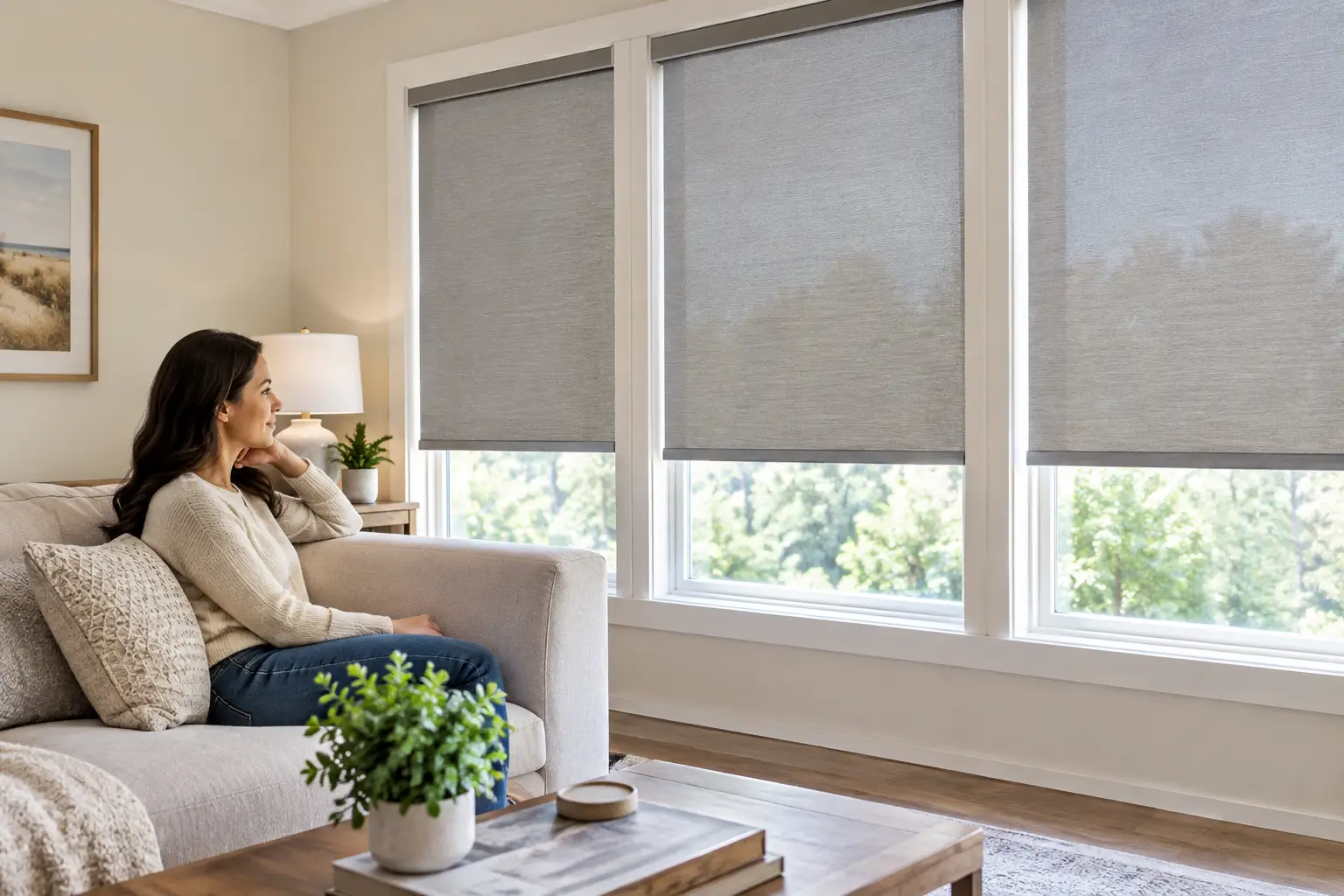
Graber Shade Review: Are They Worth It?
A window covering can look excellent in a sample book and still disappoint once it has to manage afternoon glare, bedroom privacy, or a difficult patio door. That is the useful lens for a Graber shade review: not whether the brand makes attractive shades, but how well its custom options perform in the rooms where light, privacy, and daily operation matter most.
Graber is a well-established custom window treatment manufacturer with a broad range of shade styles, fabrics, operating systems, and coordinating solutions. It is a strong option for homeowners and designers who want more flexibility than a ready-made shade offers, without treating every window as a purely decorative decision. The best results come from matching the product category, fabric openness, lift system, and mounting details to the specific room.
What Sets Graber Shades Apart?
Graber’s range is the main advantage. Rather than offering one roller shade in a few colors, the collection spans roller and solar shades, cellular shades, Roman shades, natural woven shades, layered shades, and more specialized configurations. This allows a project to solve different problems room by room while maintaining a cohesive visual direction.
Customization is equally central. Fabric selection affects glare control, privacy, texture, and the amount of heat entering a space. Hardware, valances, cassette options, control type, and mounting style affect the finished appearance. For a living room with large glazing, a designer may specify a refined solar fabric to preserve the view. In a bedroom, that same fabric would likely be insufficient on its own, making room-darkening cellular shades or a layered treatment the better choice.
This is not a one-product-fits-all brand. That is a benefit for a full-home project, but it also means that the purchasing decision requires more guidance than buying a standard-size blind online.
Graber Shade Review: Style and Material Options
Roller and solar shades
Graber roller shades are among the most versatile choices for contemporary interiors. Their clean profile works especially well in condos, kitchens, great rooms, and spaces where the window treatment should feel quiet rather than heavily decorative. Available fabrics range from light-filtering to room-darkening, with solar materials designed to soften harsh sunlight while retaining outward visibility during the day.
Solar shades deserve careful specification. Openness factor determines how much view and daylight the fabric permits. A more open weave can reduce glare while maintaining a connection to the outdoors, but it offers less daytime sun blockage and very limited nighttime privacy. A tighter weave provides stronger light control and privacy, though it reduces the view. For street-facing windows, west-facing rooms, and media spaces, that trade-off matters more than the fabric color alone.
Roller shades can also be fitted with a cassette or fascia that conceals the rolled fabric. This detail creates a more tailored architectural look and is particularly worthwhile where shades are highly visible or installed across a row of large windows.
Cellular shades
Cellular shades are a practical standout in the Graber collection. Their honeycomb-shaped construction creates air pockets that help reduce heat transfer at the window, making them a smart consideration for bedrooms, nurseries, home offices, and rooms with older or expansive glazing.
They are available in light-filtering and room-darkening options, and top-down/bottom-up operation can provide an excellent balance of daylight and privacy. In a bedroom or bathroom, the shade can remain lowered at the bottom while opening from the top to admit natural light.
The trade-off is visual. Cellular shades have a softer, more functional appearance than a sleek roller shade or textured woven wood. They suit many interiors beautifully, but a homeowner seeking a strong decorative statement may prefer Roman shades or pair cellular shades with drapery panels.
Roman and natural woven shades
For rooms that need warmth, texture, or a more tailored decorative element, Graber Roman shades and natural woven shades are compelling options. Roman shades bring softness to formal living rooms, dining spaces, and primary bedrooms, with fabric choices that can coordinate with upholstery, wall color, and drapery. Natural woven shades introduce organic texture through materials and weaves that complement transitional, coastal, relaxed contemporary, and layered interiors.
These styles require a clear understanding of lining and privacy needs. A beautiful woven material may filter light wonderfully yet reveal silhouettes at night. A lined Roman shade can improve privacy and light control, but may change the way the fabric reads in daylight. Sample viewing at the window is valuable here, especially when the room receives direct sun.
Layered shades
Layered shades use alternating sheer and opaque fabric bands to create adjustable light control. They offer a modern alternative to traditional horizontal blinds and can shift from softly filtered daylight to greater privacy without fully raising the shade.
They are particularly effective in living rooms and offices where occupants want to fine-tune incoming light throughout the day. Their contemporary horizontal lines are not right for every design scheme, however, and they generally do not create the same blackout performance as a dedicated room-darkening treatment with appropriate side coverage.
Light Control and Privacy: Read the Fine Print
The most common disappointment with any shade is expecting it to perform like a different category of product. Light-filtering is not blackout. Room-darkening is not always complete darkness. Solar fabric can reduce glare dramatically while still allowing people outside to see in after dark when interior lights are on.
For bedrooms, nurseries, and media rooms, ask about the complete installation rather than the fabric label alone. Light can enter around shade edges, through the top of the treatment, and beneath the hem bar. An inside-mounted shade often has small side gaps by design. For stronger room-darkening performance, an outside mount, carefully sized shade, cassette, side channels where appropriate, or layered drapery may be part of the specification.
Privacy also changes by time of day. During daylight hours, a darker interior behind a solar shade often remains well protected from outside views. At night, that relationship reverses when the room is illuminated. A second privacy layer may be necessary for bathrooms, bedrooms, and ground-floor windows facing neighbors or sidewalks.
Motorization and Everyday Operation
Graber offers cordless and motorized control options across many shade categories. For families, cordless operation removes dangling lift cords and creates a cleaner window appearance. It is also convenient on windows behind furniture or above countertops.
Motorization becomes especially valuable for tall windows, hard-to-reach clerestory windows, wide banks of shades, and rooms with changing sun exposure. Depending on the system and configuration, shades can be operated by remote, wall control, app, or integrated smart-home control. Scheduled operation can help manage morning brightness, afternoon heat, and evening privacy without adjusting each shade manually.
It is worth deciding how you want shades to operate before placing an order. Battery-powered motors can be an excellent retrofit solution and avoid electrical work, while hardwired systems may be preferable during new construction or major renovation. Motorization adds cost, and batteries require periodic attention, but the convenience is often meaningful in a large or frequently used installation.
Fit, Installation, and Value
Graber shades are custom made, so precise measuring is central to their appearance and performance. An inside mount depends on accurate opening measurements and adequate depth. An outside mount provides more flexibility, can cover uneven window trim, and may improve light control. Door handles, window cranks, tile, moldings, and nearby furniture all need to be considered before finalizing the order.
Value depends on the product selected. A basic manually operated roller shade will sit in a different budget range than a motorized, room-darkening cellular shade or a lined Roman shade in premium fabric. The brand is best viewed as a custom solution rather than a bargain window covering. You are paying for made-to-measure sizing, broader fabric choice, coordinated details, and system options that solve specific conditions.
For a single uncomplicated window, the level of customization may be more than necessary. For a renovation, a large room with challenging sun exposure, or a full-home design plan, it can prevent expensive compromises later.
Who Should Choose Graber Shades?
Graber is a particularly good fit for homeowners and design professionals who want coordinated custom treatments across several rooms, practical control over sunlight and privacy, and the option to add motorization where it makes sense. The collection also works well when a home needs different shade types in different spaces but should still feel visually connected.
It may be less suitable for a shopper whose only priority is the lowest upfront price or immediate off-the-shelf availability. Custom shades involve lead time, decisions, and careful measuring. Those steps are worthwhile when the goal is a finished result that fits both the window and the way the room is used.
Before choosing a fabric from a small swatch, view it against your actual windows at different times of day and discuss privacy, mounting, and operation as one decision. A consultation with Window Fashions Depot can help turn a beautiful sample into a shade that performs just as well after installation.
0 comments