
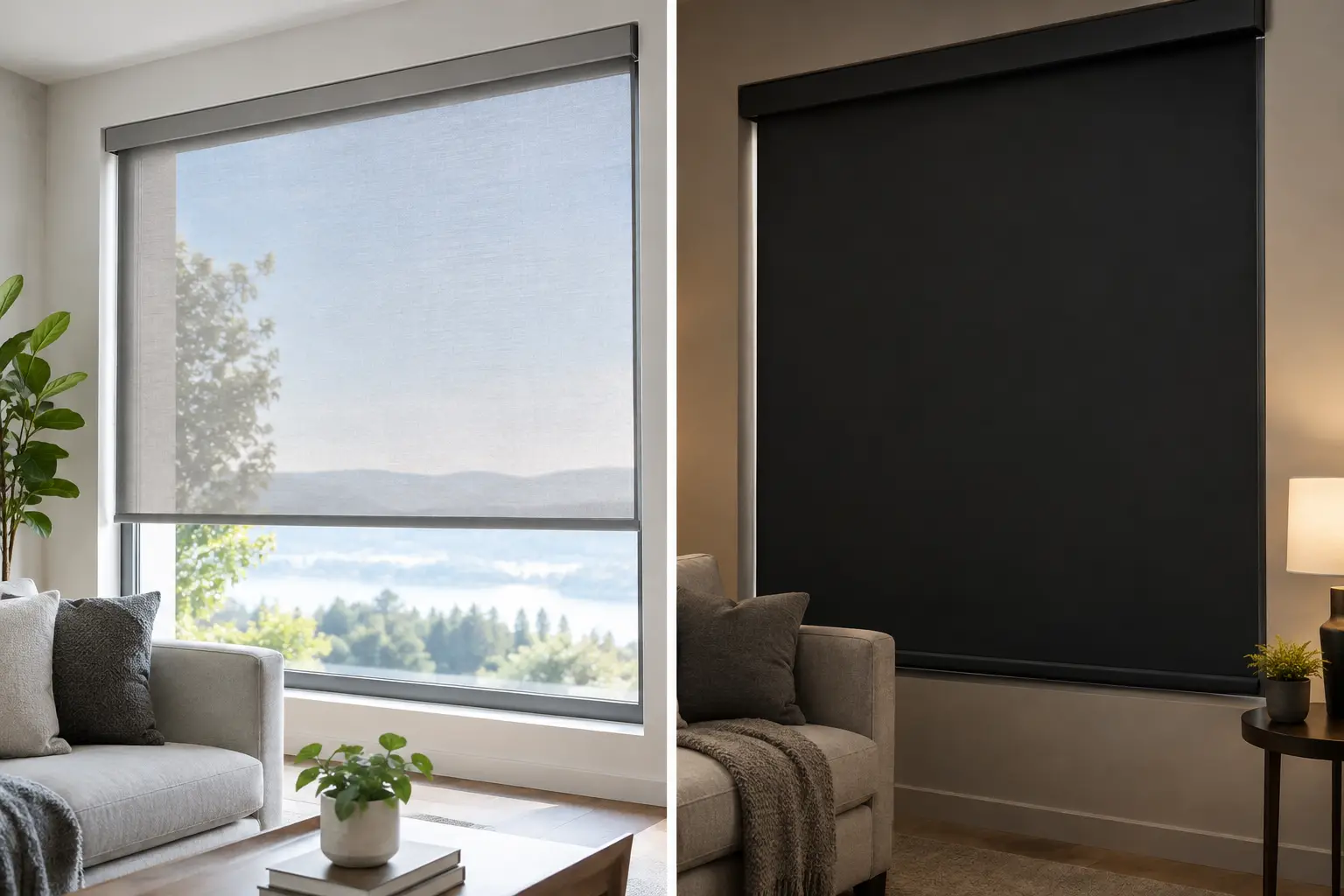
Solar Shades Versus Blackout Shades: Which Fits?
A bright south-facing living room and a bedroom have very different window-treatment demands. That is why the choice between solar shades versus blackout shades should start with how you use the room, not simply with the look of the fabric. One preserves a view while softening sunlight; the other is built to make a space darker, more private, and better suited to rest.
Both can be clean, modern additions to a custom window-covering plan. The right option depends on your exposure, privacy needs, décor direction, and whether light control needs to change throughout the day.
Solar Shades Versus Blackout Shades: The Core Difference
Solar shades are roller shades made with a woven, screen-like fabric. They filter sunlight, reduce glare, and help manage solar heat gain while maintaining an outward view during the day. Their openness factor – commonly available in options such as 1%, 3%, 5%, or 10% – determines how tightly the fabric is woven and how much light and visibility pass through.
Blackout shades use opaque material designed to block light from passing through the fabric. They are a strong choice for bedrooms, nurseries, media rooms, and any room where outside light disrupts sleep, screen viewing, or privacy. Blackout fabrics are available in roller shades, cellular shades, Roman shades, and layered shade systems, so a room does not have to look utilitarian to perform well.
The distinction is simple: solar shades manage daylight, while blackout shades substantially eliminate it. But actual performance depends on the fabric, mounting method, window shape, and the gaps around the shade.
What Solar Shades Do Best
Solar shades are especially effective in rooms with large windows, city views, waterfront exposure, or strong afternoon sun. Rather than closing off the room, they soften the intensity of daylight. A 3% openness fabric, for example, can provide meaningful glare reduction while retaining a fairly clear connection to the exterior.
That makes solar shades a popular choice for living rooms, kitchens, home offices, and condos with expansive glazing. They can reduce reflections on televisions and computer screens without creating the enclosed feel that a room-darkening treatment may bring during the day.
View preservation and daytime privacy
A solar shade gives you a view outward in daylight because exterior light is generally stronger than interior light. At night, that relationship reverses. With lights on inside, people outside may be able to see silhouettes or more detail through the fabric.
For this reason, solar shades alone are not the best answer for a street-level room, a bathroom, or a bedroom that needs reliable nighttime privacy. Choosing a lower openness factor improves daytime privacy and light filtering, but it does not turn a solar fabric into a true blackout treatment.
Heat and glare management
Solar fabrics can help reduce direct solar heat and UV exposure, protecting furnishings, flooring, and artwork from harsh sunlight. They are particularly useful on west-facing windows where late-day sun can make a room uncomfortable.
Still, a solar shade is only one part of a heat-management strategy. Fabric color, openness factor, window glazing, and whether the shade is mounted inside or outside the frame all affect results. For severe sun exposure, a consultation may also point toward exterior shades, awnings, or a layered interior solution.
Where Blackout Shades Make the Difference
Blackout shades are chosen when darkness is the priority. They are common in primary bedrooms, children’s rooms, guest rooms, and home theaters, but they can also be valuable in any space with shift workers, early summer sunrises, or nearby exterior lighting.
A blackout fabric blocks light through the material itself, but the word “blackout” deserves a practical clarification: most standard roller shades can still allow light around the edges, above the top, or below the bottom rail. An inside-mounted shade may create a narrow halo of light along the window frame. That may be perfectly acceptable for many bedrooms, but it is not the same as near-total darkness.
How to get better blackout performance
For the darkest result, the shade system matters as much as the fabric. An outside mount that overlaps the window opening can reduce side gaps. Side channels, fascia systems, and carefully specified cassette shades can further limit light leakage. Cellular shades with room-darkening fabrics may also deliver excellent insulation and light control, depending on the product configuration.
When specifying a nursery or media room, it is worth discussing the exact expectation. Do you want a dimmer room, a sleep-friendly room, or a nearly dark environment at midday? Those are different targets, and they may require different hardware choices.
Privacy after dark
Blackout shades provide much stronger nighttime privacy than solar shades because the fabric is opaque. They are often the straightforward choice for bedroom windows facing neighboring homes or busy streets.
For spaces where privacy is essential but daylight is still welcome, consider combining a blackout shade with drapery panels or pairing a solar shade with a secondary blackout treatment. The layered approach gives you filtered daylight when you want it and dependable privacy when you need it.
Design Considerations for Each Shade Type
Solar shades have a refined, architectural look. Their smooth profile works well with contemporary interiors, minimalist spaces, and large banks of windows. Fabric collections range from subtle neutral weaves to darker charcoal tones and textured patterns, making it possible to coordinate the shade with trim, upholstery, or exterior views.
Blackout shades offer more visual flexibility than many homeowners expect. A blackout roller shade can remain streamlined and modern, while a blackout-lined Roman shade brings softness and tailored fabric detail. Blackout cellular shades add insulation, and drapery with blackout lining can create a more layered, formal, or hospitality-inspired look.
Color also changes the experience. Dark solar fabrics often reduce glare effectively and preserve views well during the day, but they can make a room feel more visually defined when lowered. Lighter fabrics may blend more quietly into the room and reflect more light, though view clarity and glare reduction vary by collection. Seeing full-size samples at the window is more useful than selecting from a small swatch under showroom lighting.
Should You Choose Solar or Blackout Shades?
Choose solar shades when your priority is preserving a daytime view, reducing glare, and moderating sunlight in frequently used spaces. They are ideal when you want a polished window treatment that works quietly in the background rather than turning the room dark.
Choose blackout shades when sleep, privacy, or screen viewing comes first. They are better suited to rooms where daylight is unwelcome at certain times and where a stronger barrier between indoors and outdoors matters.
Many homes benefit from both. A main living area may use solar roller shades to protect against afternoon glare, while bedrooms use blackout shades for rest. In a multipurpose room, dual shades can be an especially practical solution: a solar fabric for daytime and a blackout fabric for evenings. This setup avoids forcing one shade to solve two opposing needs.
Motorization Makes Layered Light Control Easier
Motorization is useful for solar shades on tall windows and hard-to-reach glazing, but it is equally valuable in bedrooms where blackout shades need to operate on a daily schedule. Automated shades can lower before bedtime, rise gradually in the morning, or respond to a wall control, remote, app, or compatible smart-home system.
For large projects, motorization also creates a more consistent appearance across multiple windows. Systems from manufacturers such as Lutron, Somfy, Hunter Douglas, and Graber offer different control options, power choices, and fabric programs. The best specification depends on window access, wiring opportunities, and how the room will be used.
Start With the Window, Then Specify the Shade
The most successful choice is rarely made from a product name alone. Measure the window, note its direction, observe when glare occurs, and consider how the room looks after dark. A west-facing office may need solar protection during business hours, while a nearby bedroom may need blackout coverage and tighter edge control.
A custom consultation helps translate those details into the right fabric openness, mounting style, hardware, and operating system. Window Fashions Depot can help homeowners and design professionals compare full-size materials and build a solution that looks considered in daylight and performs when the sun goes down.
The best shade is the one that supports the way you actually live in the room – open to the view when you want it, private and restful when you do not.
0 comments